Newsletter: September 2026 – Time with Family, and Authentic Sicilian Experiences

“Il tempo passato con famiglia e amici non è mai tempo perso.” Time spent with family & friends is never time wasted.

As Courtney and I left Vancouver Island, we made a stop in Ontario to have some much-needed family time before heading back across the Atlantic to Sicily.

I stayed with my mom and we enjoyed time together, and even managed a few road trips—to Colasanti’s Tropical Gardens and several estate sales where we did some “treasure hunting” for antiques.

Courtney had the opportunity to play “Captain” aboard her mom’s boat. I’ll let Courtney tell that story herself. She also got some wonderful time with her nieces and nephew, her siblings and one of her longest friendships dating all the way back to her school days.

And then, once again, it was time to go home.

Except “home” has become a complicated word for us.

For us, over the past few years, has been all around the world.

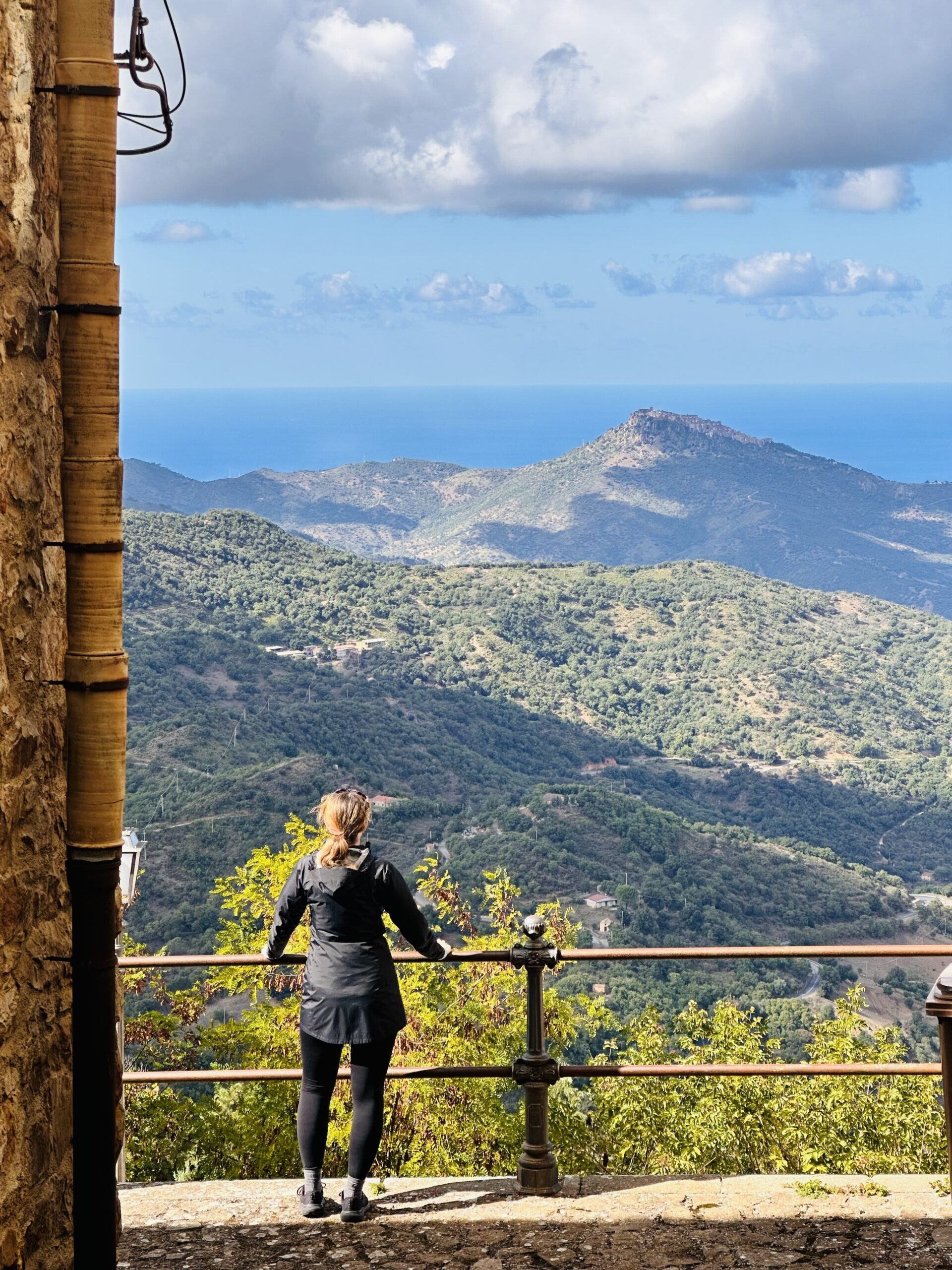
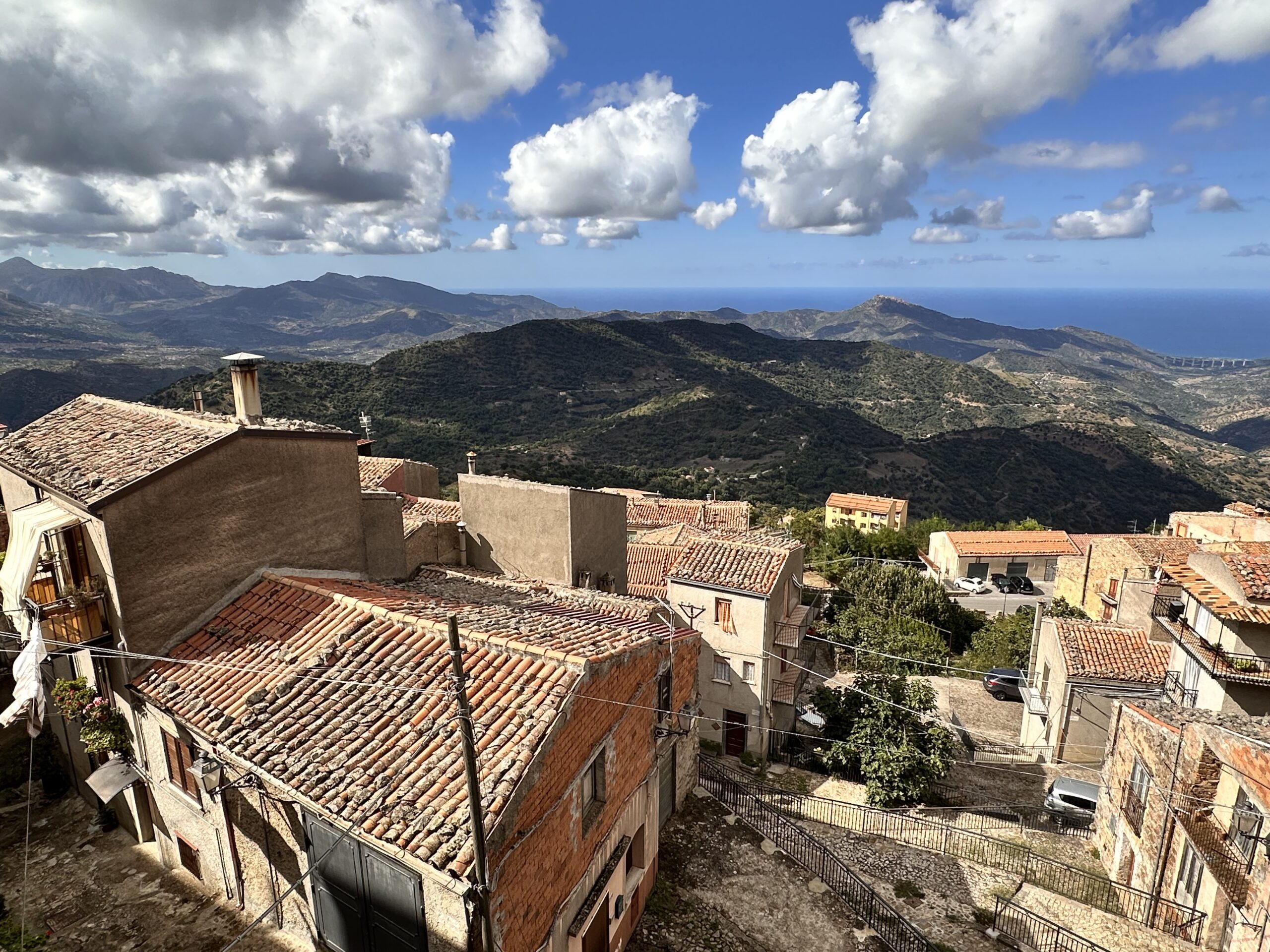
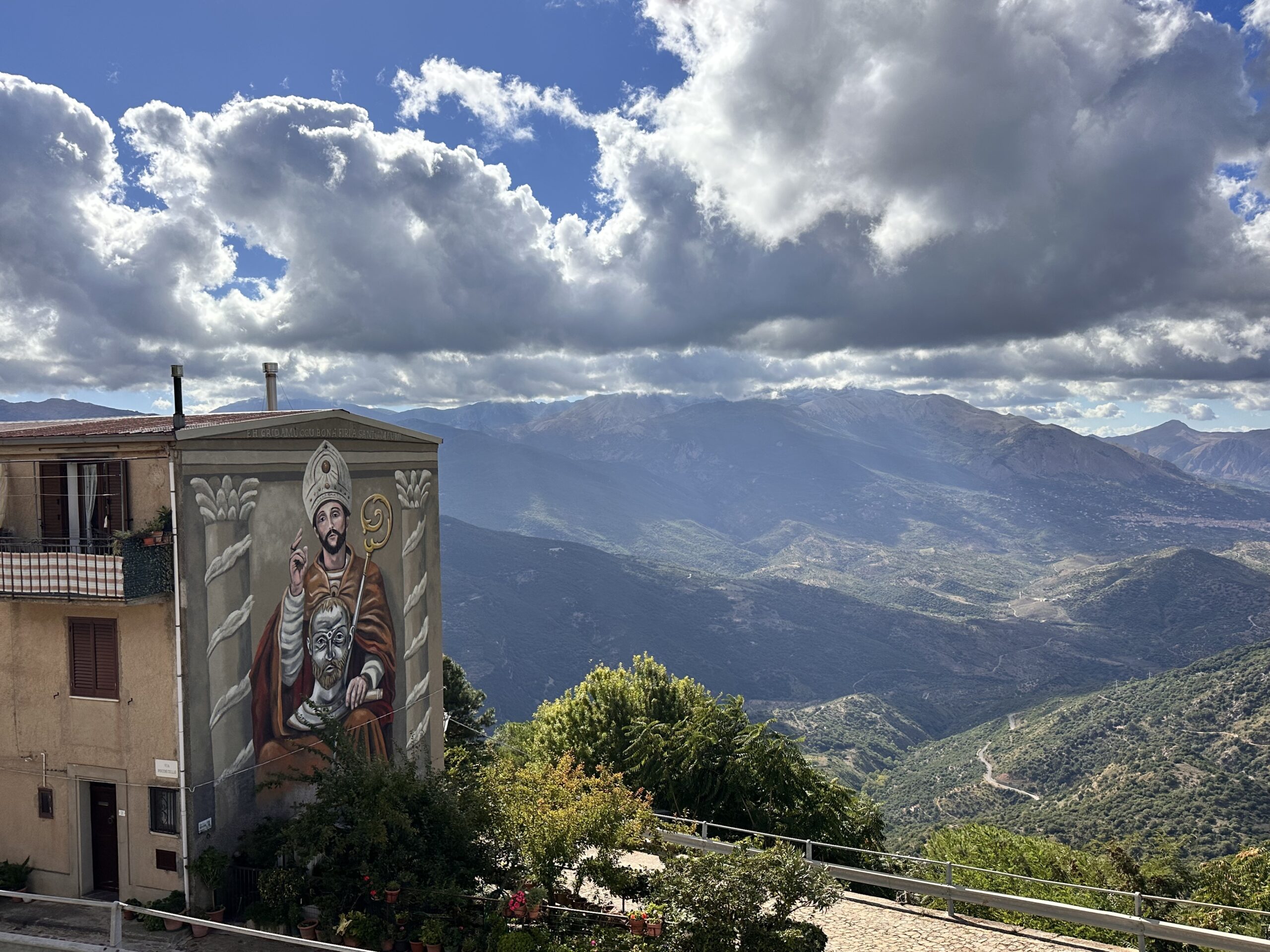
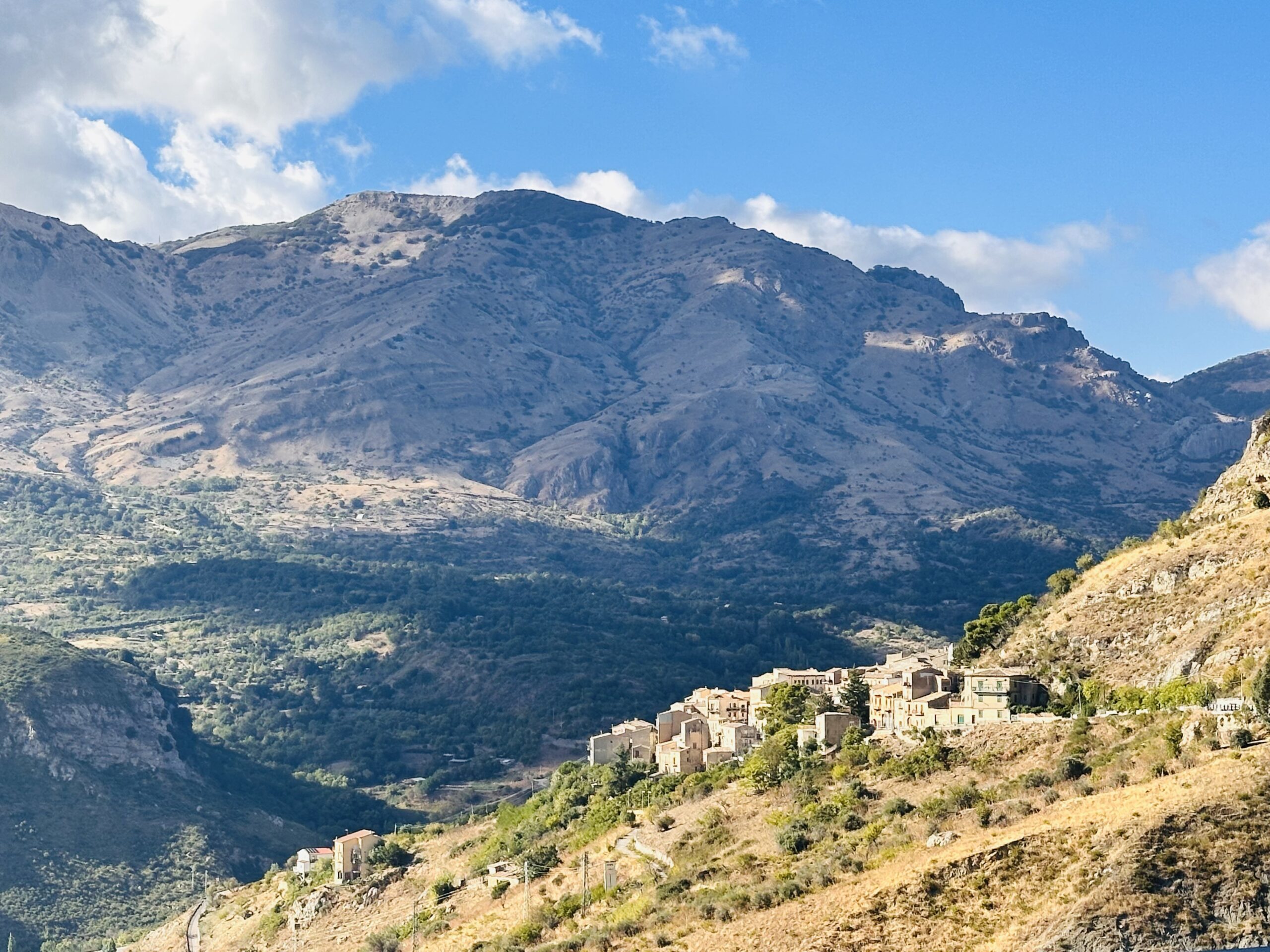
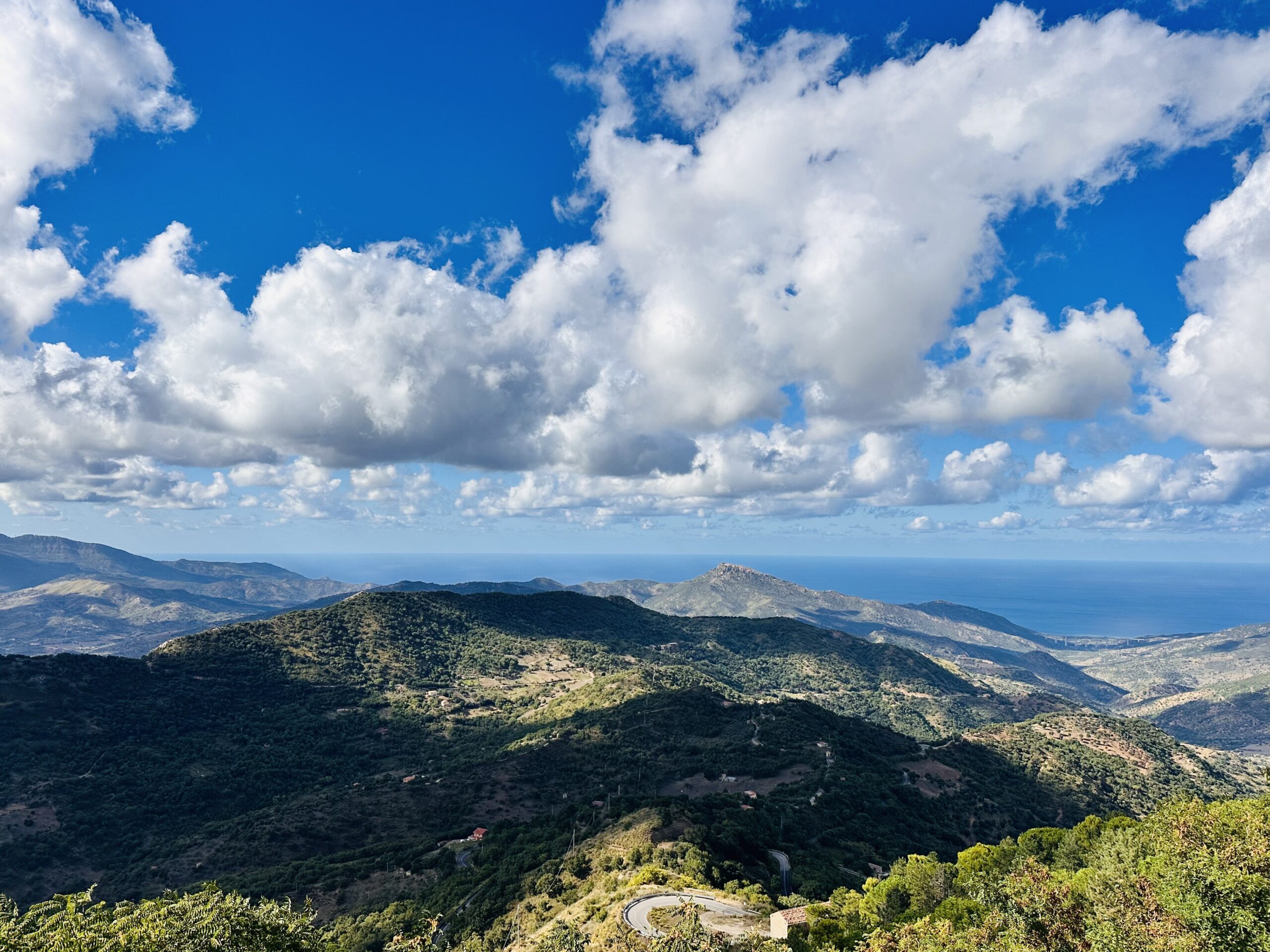
View of the Valley San Mauro Castelverde
View towards the Tyrrhenian Sea from San Mauro Castelverde
View from San Mauro Castelverde to the Sea
View from San Mauro Castelverde

Our Seventh (Wow…7th!) Trip to Sicily

This is now our seventh trip to Sicily. Most of those visits have been close to three months at a time—minus the obligatory day or two required to keep ourselves on the correct side of the Schengen 90-day rule.

Over the past 3½ years of travelling, we’ve spent roughly 18 months here.


Somewhere along the way, Sicily stopped feeling like a place we were visiting. It simply started feeling like home. It’s an interesting feeling when you return to a foreign country and recognize the mountains. You know which road to take. You recognize people in the piazza. You have favourite cafés and restaurants. You know where to buy bread. (In Italy, that means practically everywhere!)

Occasionally someone waves at you before you have the chance to wave at them.  I think that might be the moment when a place stops being somewhere you travel to and starts becoming somewhere you belong.

Courtney has also been working very hard all summer on a project that will have us travelling throughout the Madonie Mountains, searching for experiences, traditions, food, people and stories.

Admittedly, this is not a particularly difficult assignment for us to accept.

For those trying to follow along with our increasingly complicated relationship with Sicily, yes—we also bought land here. About 7.7 acres, including an old house. And when I say old, I mean very old.  More than 150 years old. We hope to renovate it someday soon. But this is Sicily. And as the Sicilians wisely say: “Piano, piano.” (Slowly, slowly.)

The longer we spend here, the more I realize this isn’t merely a phrase. It might just be an entire change in the philosophy of life as we know it.

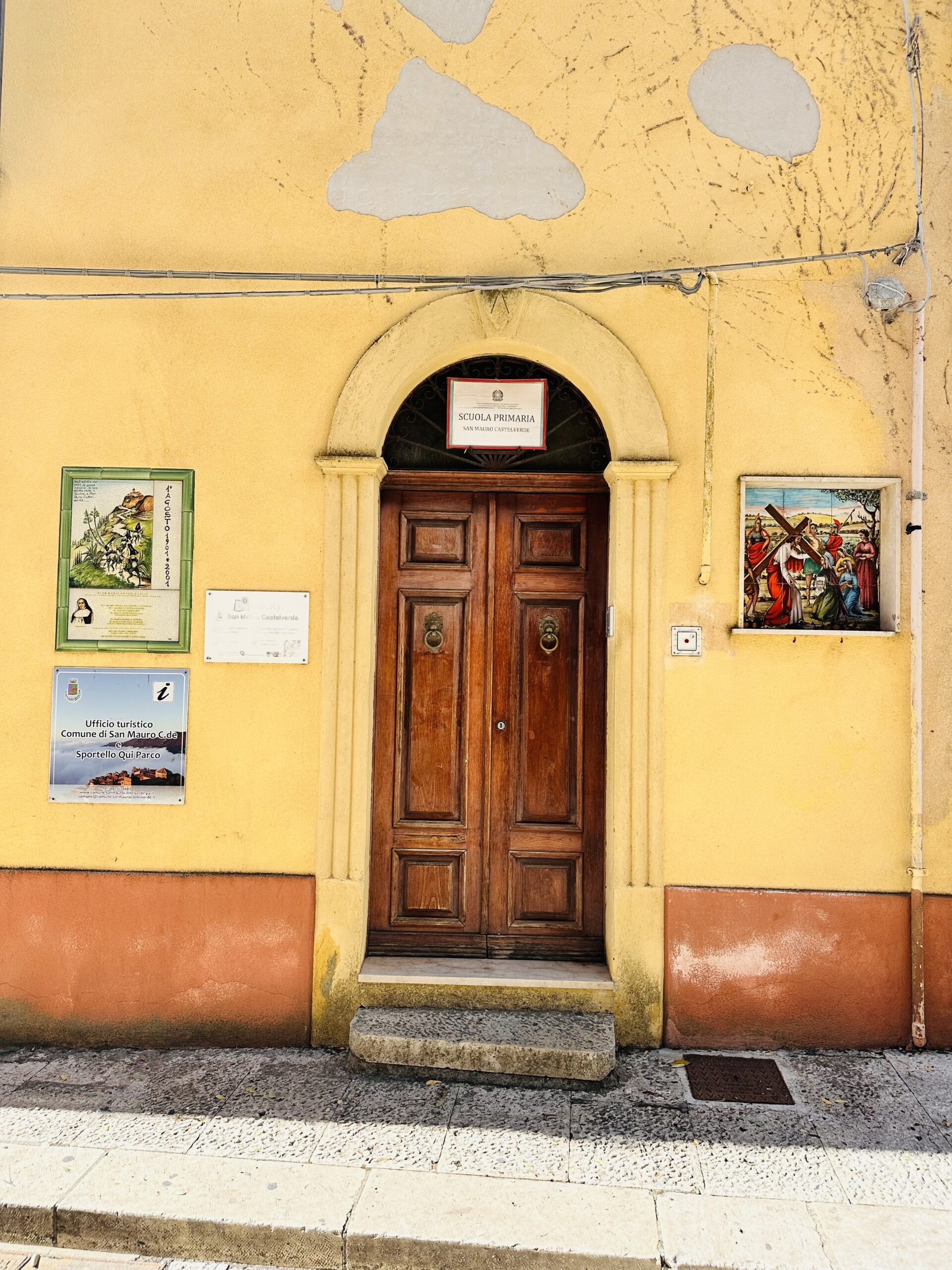
San Mauro Castelverde Historic Village
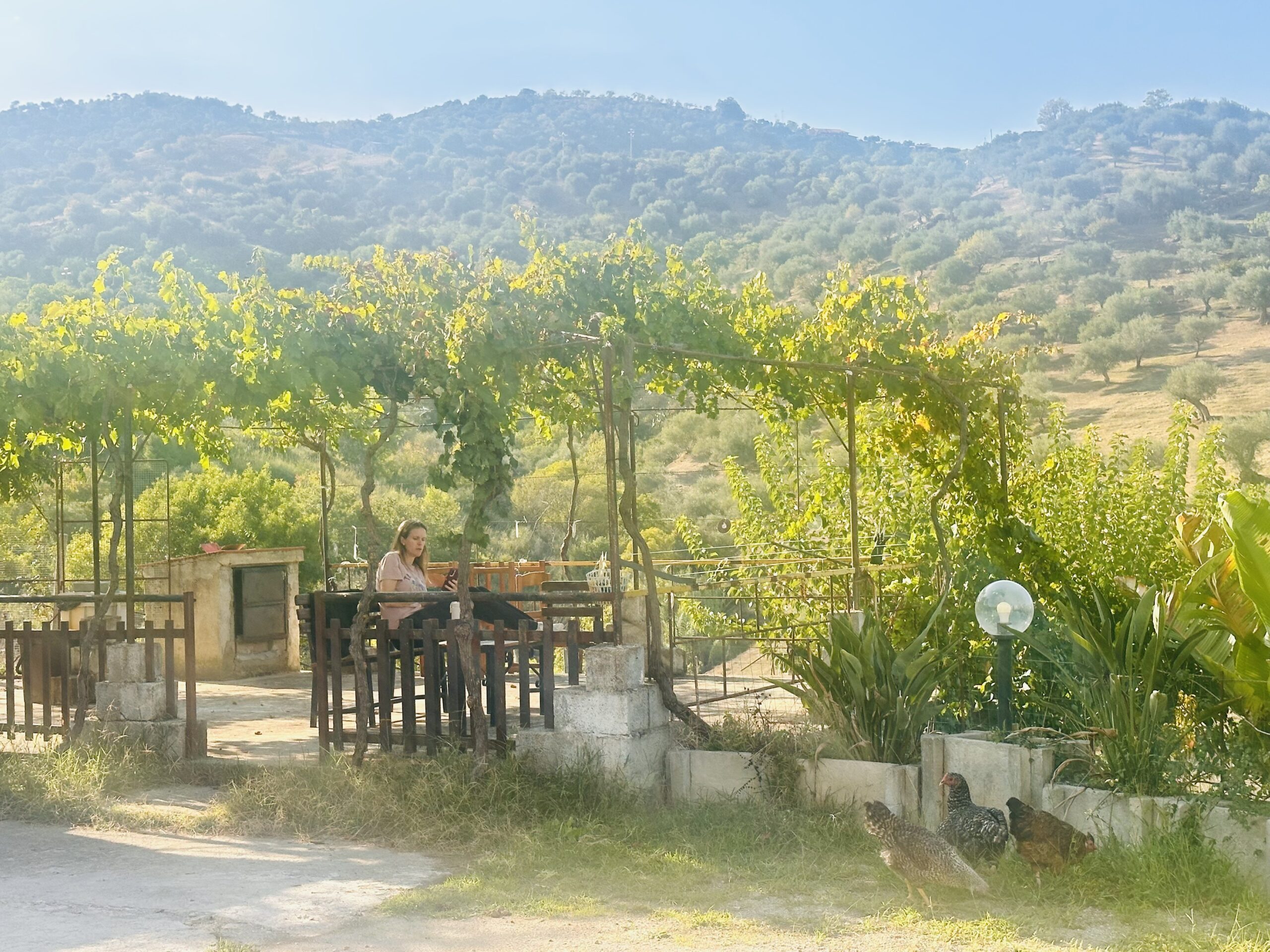
We have 2 new "chicks" on the farm!

An “Open Door” Invitation in San Maura Castelverde, Sicily

Not far from us, on the edge of the Madonie Mountains, there is a mountain peak where, more than a thousand years ago, some ambitious Sicilians apparently looked up and thought: “That seems like a convenient place to build a town.”

So they did.

That village is San Mauro Castelverde.

We hiked all over the village, checking out various shops, bakeries, restaurants, and after walking through villages like San Mauro, you quickly realize that Sicily’s history isn’t found only inside churches or written on plaques. A lot of it is sitting around tables.

As Courtney and I wandered through town, we noticed five elderly men playing a local version of Scopa inside a small club. The door was open. So we peeked inside. The elderly men inside invited us in like old friends.

Soon, three more men arrived.

Then five more.

Then another group of seven arrived.

Before long there were somewhere between 25 and 30 men crowded around… with Courtney the only woman in the room.

Thankfully, after 2½ years of Italian lessons, we could actually participate in the conversation.

Well, mostly.

Sometimes we still smile and nod enthusiastically, but over time, we found that the duration of our conversations have expanded. First, we could only say a few words. Then it was 2-3 minute conversations. On our next trip, suddenly we could have 5-10 minute conversations before we ran out of words that we knew. After another year, we’re now at the point where we can tend to have a conversation in Italian for about 30 minutes before we exhaust all our Italian words. We’ve been tested on this while getting my e-bike modified by our friend Giuseppe, and thankfully his mother was at the shop and willing to chat with me for about 30 minutes while I waited for Giuseppe to finish his work on my e-bike.

Here in San Mauro, while watching these men play Scopa, for the next half hour we talked, laughed and watched the cards fly across the table while the village champions battled their way toward 21 points. At one point, one player accused another of cheating. The cards had to be cut. Then reshuffled. There were accusations. There were protests. There was considerable laughter.

As far as we could tell, nobody was actually cheating. Judging by the seriousness of the discussion, there may have been unresolved Scopa disputes going back several decades.

Eventually, the champions reached 21 points.

Courtney and I said goodbye and headed toward the door. Then one elderly gentleman called after us in carefully chosen English: “Tank you for a visit to us.”

We smiled about that sentence for the rest of the day. Sometimes someone can say something in imperfect English that somehow feels more perfect than anything they could have said correctly. He wasn’t thanking us for visiting San Mauro. He was thanking us for taking the time in San Mauro to share it with them. Maybe that’s the difference. We hadn’t really visited a town that afternoon. We had visited people. All because a door happened to be open and we decided to stop.

Playing Scopa with the Elders of San Mauro
Finding an Open Door in San Mauro to Play Scopa
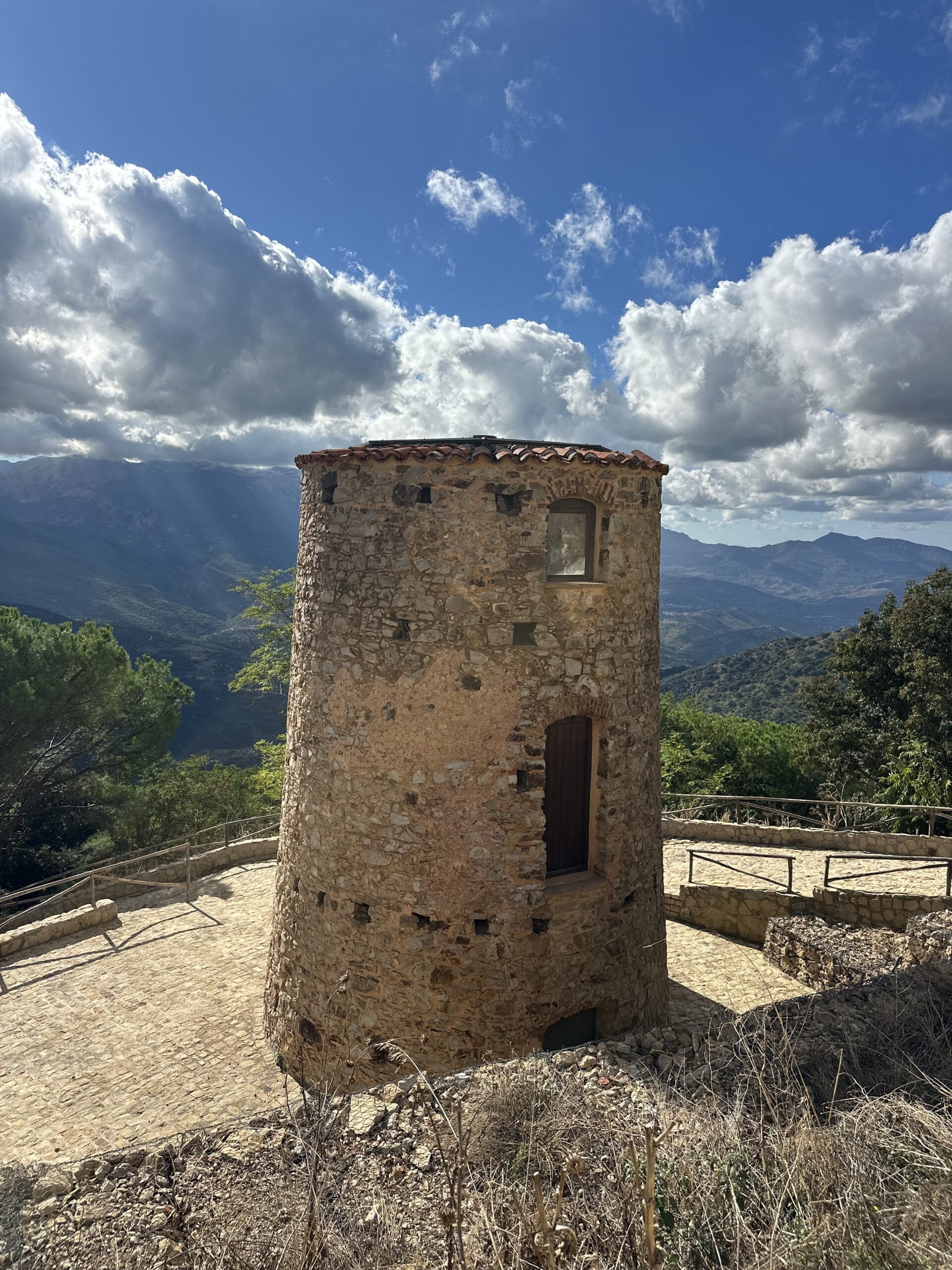
The Old Mill Powered by Wind in San Mauro
San Mauro towards Castelbuono and The Madonie Mountains
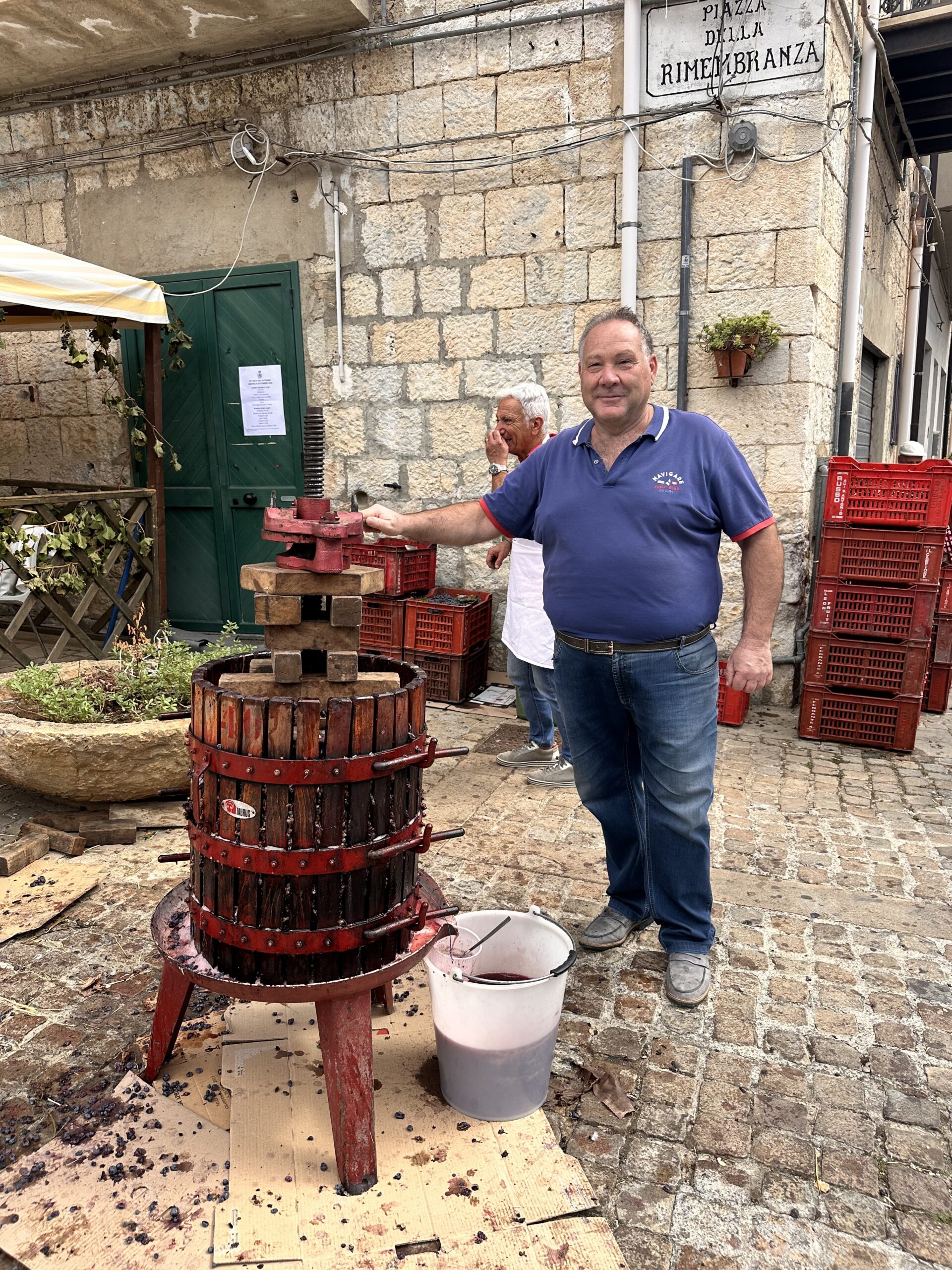
Bompietro Winemaker
Bompietro Winemaker
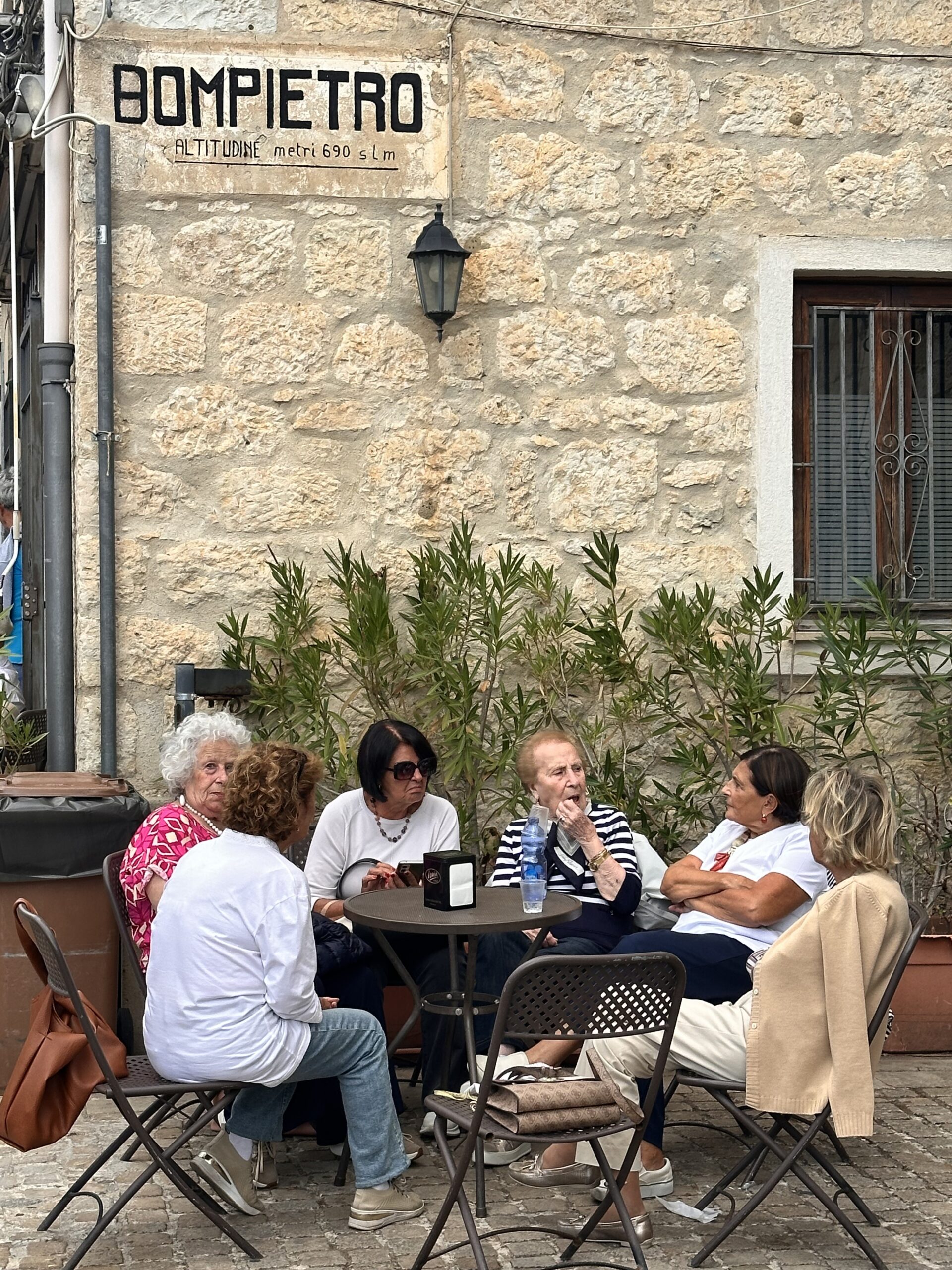
Ladies Gather in Bompietro - Altitude 690m

An Authentic “Sicilian Family” Experience in Bompietro, Sicily

Another day this month in our quest to experience more “authentic Sicily” took us to the small mountain village of Bompietro. There are Sicilian festivals that attract thousands of visitors. This wasn’t one of them. There were perhaps 200 people gathered in the centre of town. It didn’t really feel like a festival.


It felt like we had accidentally wandered into an enormous Sicilian family reunion.


Throughout the centro, booths had been set up for each course of the typical Sicilian meal. We moved from antipasto to pasta, then to a wonderfully simple ricotta soup, and eventually to the course everyone seemed to be waiting for:  A freshly filled cannolo.


There was also local wine being poured from grapes pressed right there in the centre of town. We’ve all heard of “farm to table.” This was closer to grape to glass while you’re watching.


Once again, although food in Sicily always seems to be “centre stage” of the daily life here, the food wasn’t really what we remembered most.


It was the people we met.


Neighbours constantly bumped into one another and stopped for conversations, laughter and hugs. Children raced through the streets blowing bubbles and inventing games. Their parents seemed remarkably unconcerned about exactly where they were. There was simply an assumption that somebody was watching. Maybe everybody was.


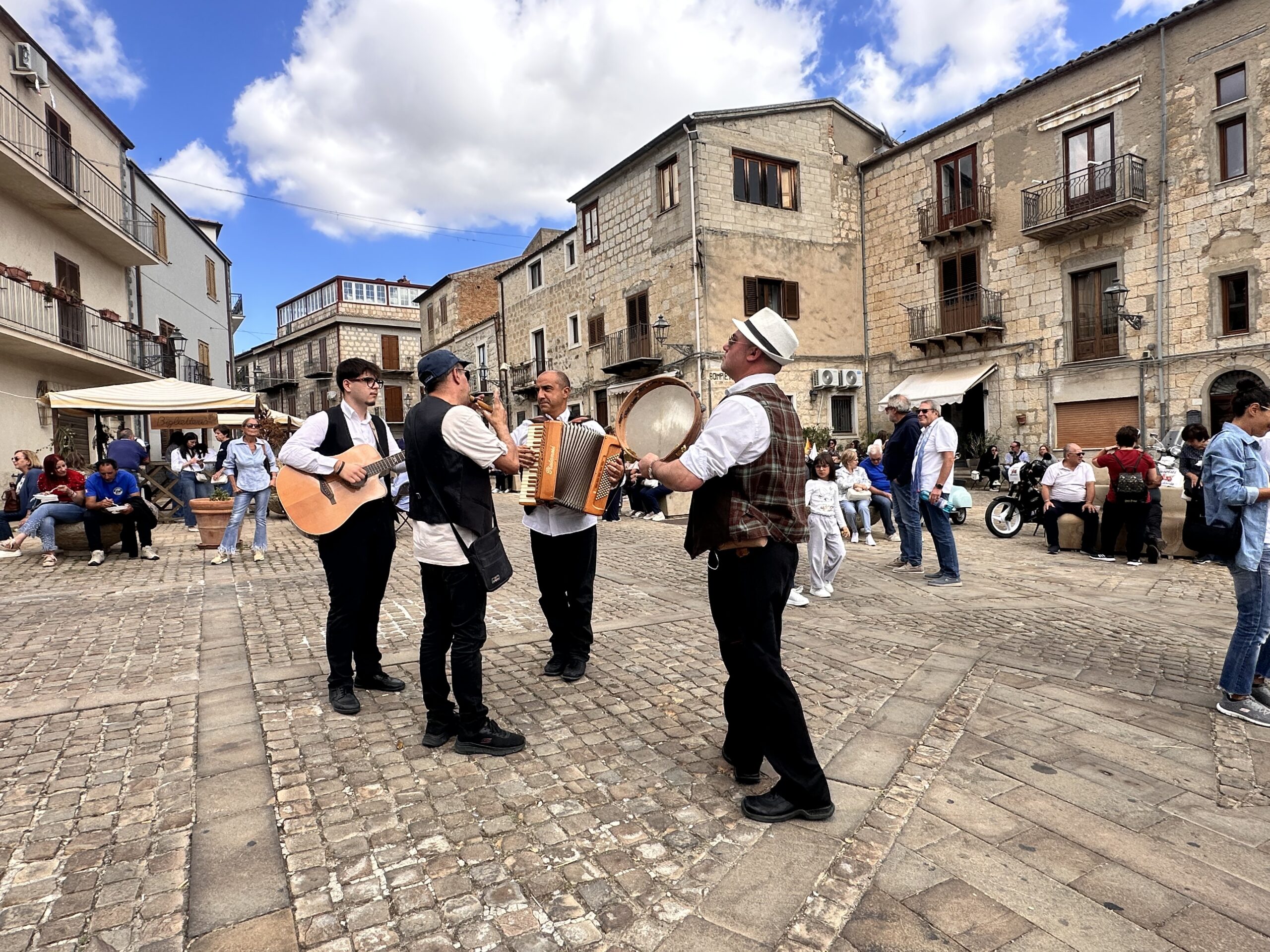
A small group of musicians wandered through the streets playing a specialized “Sicilian flute” known as a “friscalettu” (also spelled friscaletto in standard Italian) as well as a couple of Sicilians playing guitar and tambourine.


Did you know:
The “Friscoletto” flute is a high-pitched cane recorder traditionally handcrafted by shepherds. It is made from wild Mediterranean giant reed plants and features a wooden cap or plug typically carved from olive, fig or oleander wood. Unlike many simple folk flutes, the friscalettu features 9 holes, 7 on the front and 2 on the back, giving it a distinctive tone and surprising agility. It is a core symbol of Sicilian folk music, most famously heard cutting through the rhythm and beat of the tambourine and accordion in a fast-paced traditional “taranatella.”


At one point, Courtney was handed the tambourine and recruited into the band
.


This is another thing we have learned about Sicily. If you stand somewhere long enough, there’s a reasonable chance someone will eventually hand you food, wine or a musical instrument. Sometimes all three.


Later, walking around with our cameras, we discovered Bompietro’s next generation of entrepreneurs. In Canada, kids might set up a lemonade stand. These children had apparently decided that lemonade lacked sufficient profit potential. They were selling playing cards, copper wire and carpentry tape.


It was, indeed, an interesting inventory strategy.


I’m not sure how many people arrive at a Sicilian food festival thinking: “You know what I really need today? Three metres of copper wire.”


I admired their entrepreneurialism and optimism.

For a few hours, Bompietro didn’t feel like somewhere we had come to visit. It felt like a very large family. Somehow nobody seemed to mind that two Canadians had wandered into the middle of it.

Bompietro Musicians at Authentic Sicilian Festival
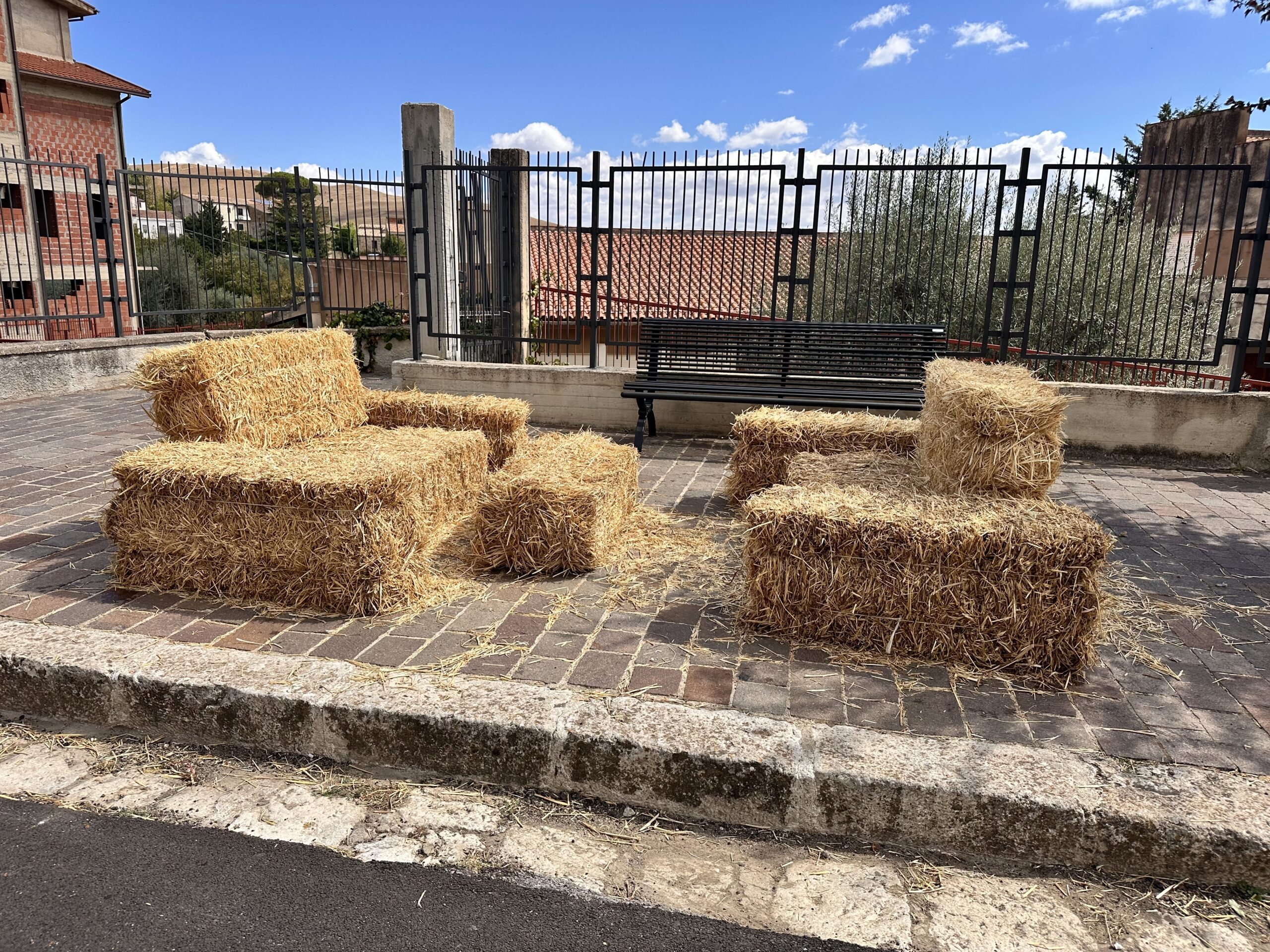
A Place to Relax in Bompietro

That Moment When All the Music Suddenly Stopped


Late in the afternoon, everything suddenly changed.


An elderly woman became ill. Within seconds, the people around her reacted. A bench was cleared. She was gently laid down. Someone raised her feet. Others went looking for help. Two young women who appeared to have medical training arrived wearing gloves and calmly began checking her vital signs. The police came and cleared a path. Then an ambulance arrived. And the thing I remember most was this:


The music suddenly stopped.


The children stopped running. Conversations disappeared. Some people prayed. Others simply stood quietly nearby. Perhaps 200 people who had been laughing, eating, drinking and talking only minutes earlier were suddenly almost completely silent.  All afternoon, we had watched this community behave like one enormous family. They ate together. They laughed together. They watched each other’s children. They hugged when they met in the street. But now we saw the other side of that closeness.


When one person needed help, everybody seemed to feel it. It made me think about what community actually means. Maybe you don’t really understand a community by watching how people behave when everything is going well.  Maybe you understand it when something goes wrong. 


A community isn’t only defined by how well it celebrates together.


Sometimes you understand it best by watching how quickly everyone becomes quiet when one of their own needs help.

Petralia Sottana - Higher than 1000 meters Elevation

Beep Beep! The Cinema Experience in Petralia Sottana, Sicily

Our next village adventure this month took us to Petralia Sottana. It’s another of those Madonie towns where walking 100 metres can take half an hour because there seems to be something worth stopping to look at every few steps we take.


We wandered through town with our cameras until we reached the church and one of those viewpoints that reminds us why we keep coming back here.


Mountains behind mountains. In a word, breathtaking.


Valleys disappearing into the distance.


Villages perched on hillsides.


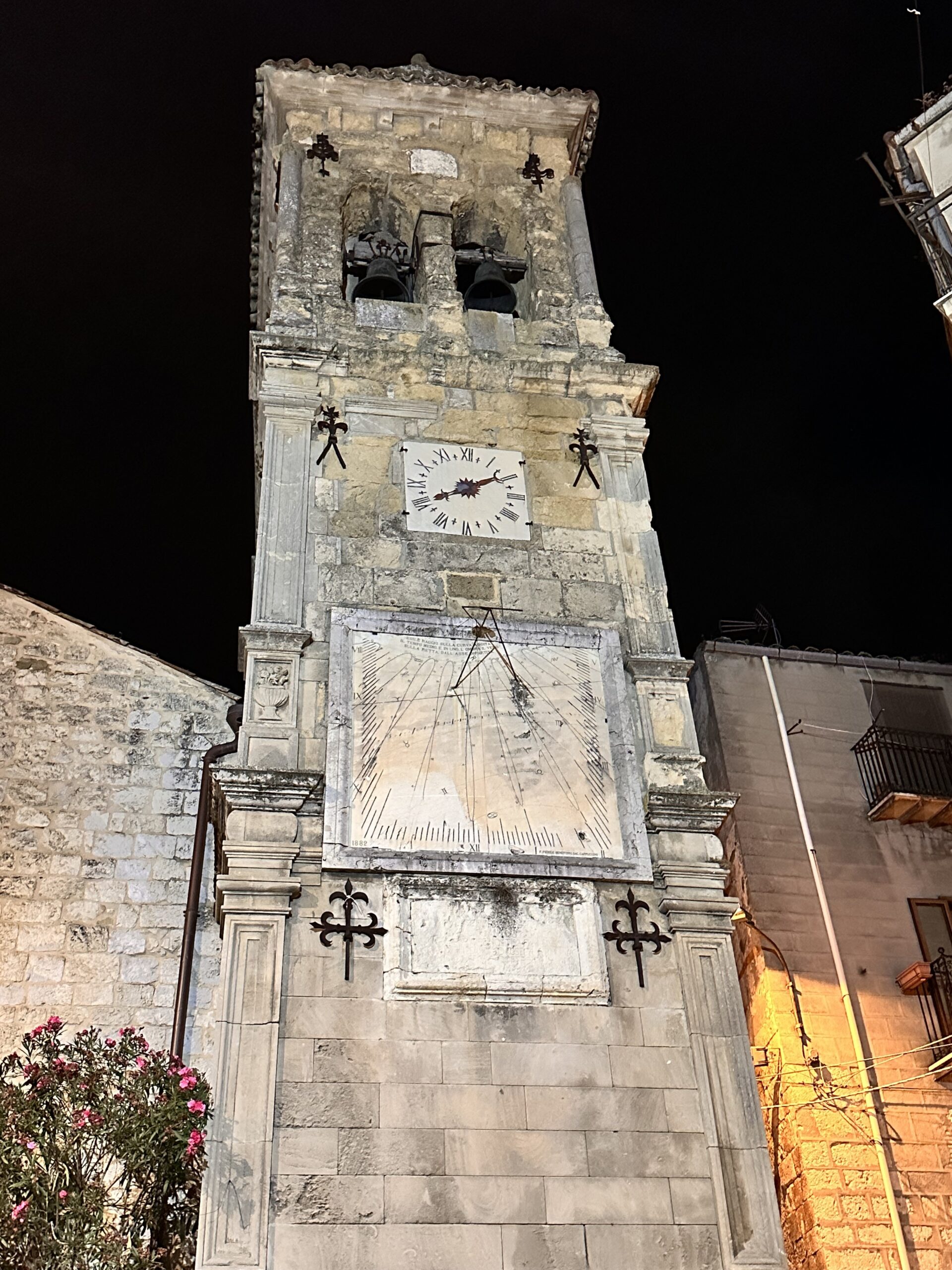
We had that feeling that people have been standing in exactly the same spot admiring exactly the same view for hundreds of years.  Nearby we found an old sundial at the base of the clock tower. There’s something rather appropriate about finding a sundial in a medieval Sicilian mountain village. Nobody seems terribly interested in knowing the exact time anyway.


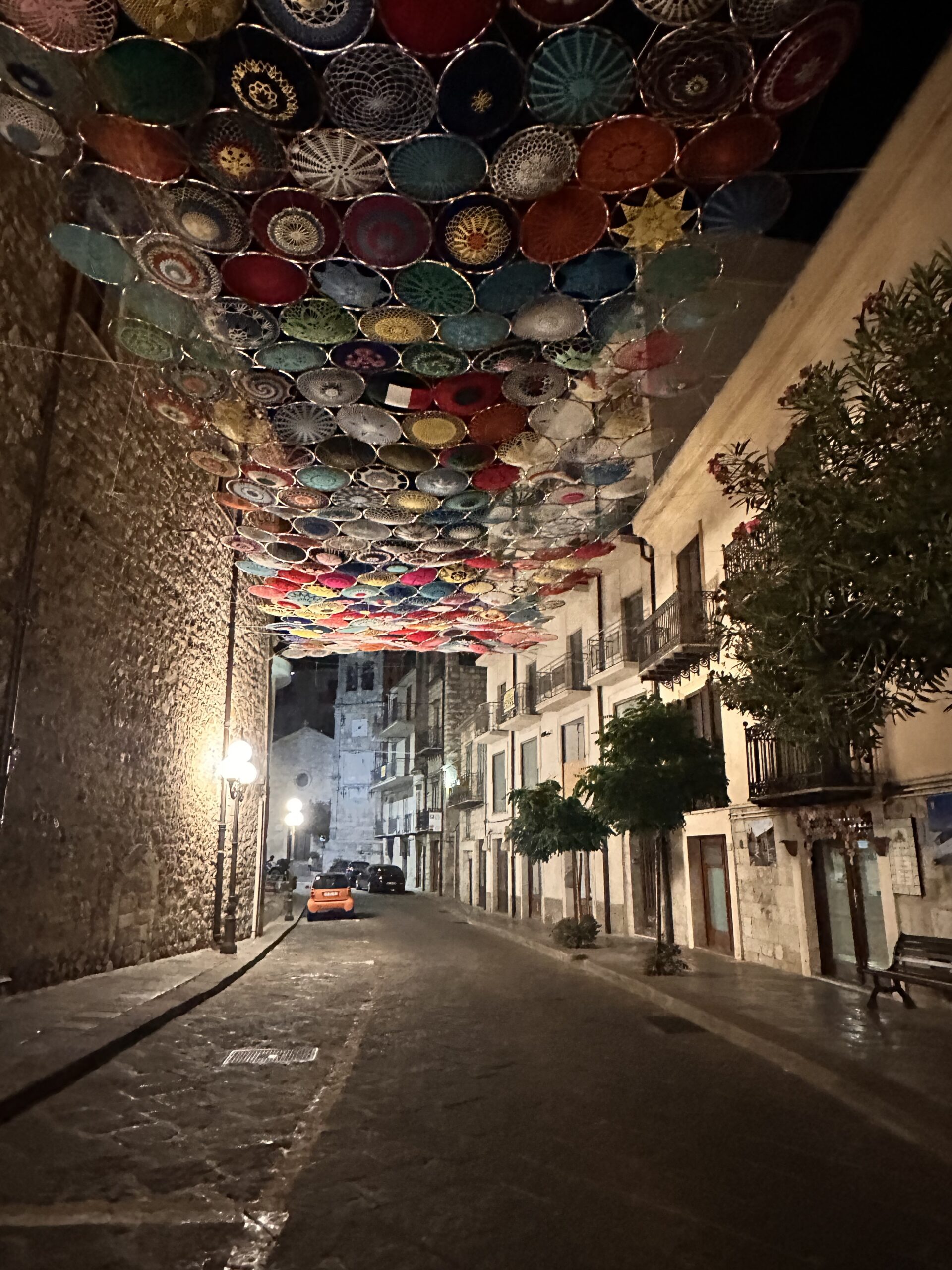
Elsewhere, locally made dream catchers hung above one of the streets, creating a colourful canopy over the stone buildings.


And then we did something we definitely hadn’t planned.


We went to the movies.


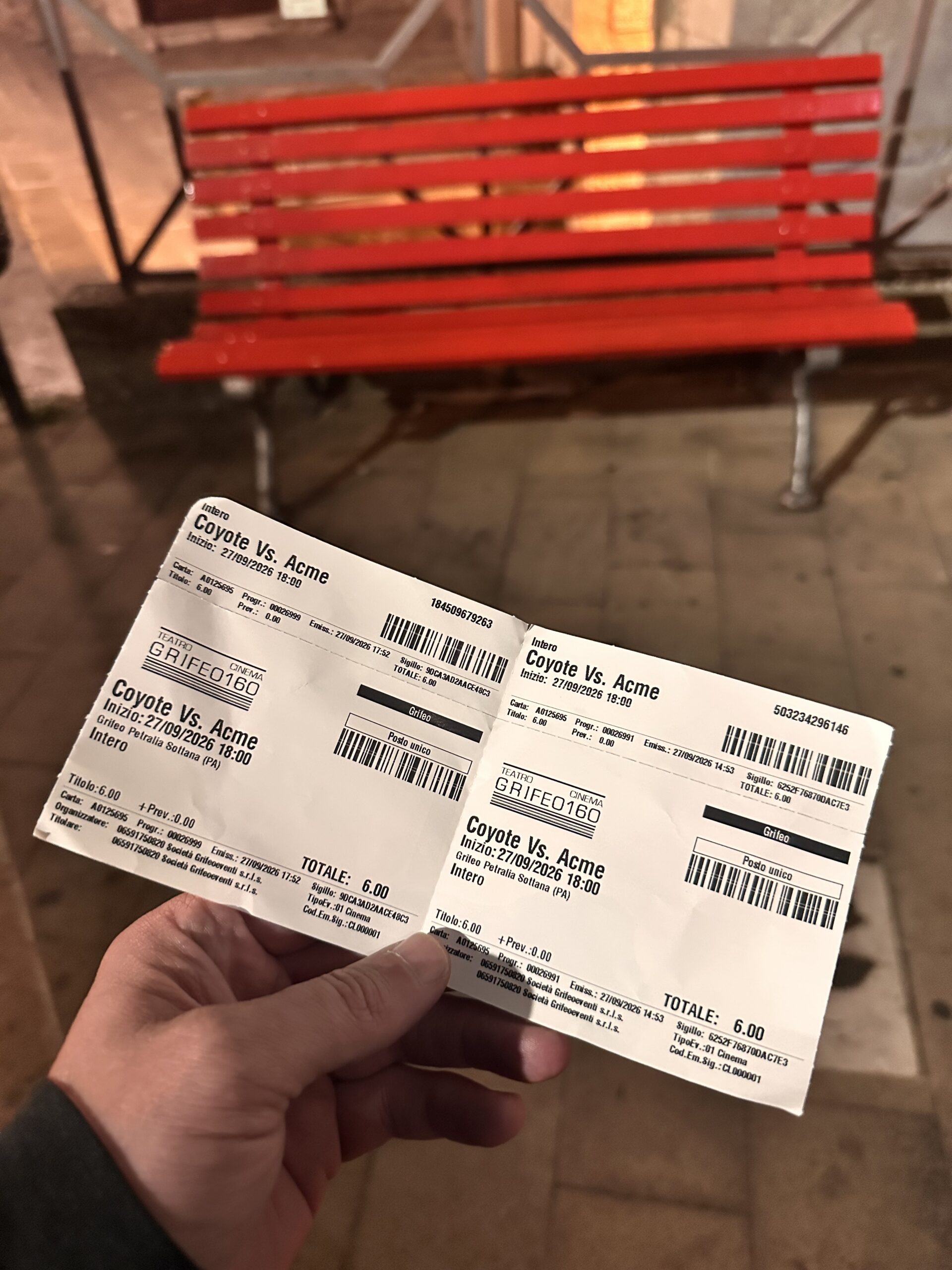
We joined some local children watching Coyote vs. ACME.


The premise is wonderfully ridiculous: After decades of ordering defective rockets, exploding contraptions and various other products that have nearly killed him, Wile E. Coyote finally does the sensible thing.  The Coyote hires a lawyer.  And sues ACME. Frankly, the only surprising part is that it took the Coyote this long to finally sue the ACME company after all those “failed” products in those countless cartoons we’ve all seen of the Coyote attempting to catch the Road Runner.


Fortunately for our Italian, there wasn’t an overwhelming amount of dialogue in the film for us to worry about. Watching the Wiley Coyote’s impossible-to-catch target, the Road Runner, dash across the cinema screen brought laughter from all the Sicilian children in the theatre.


We could hear the Sicilian kids repeatedly making the noise.


“Beep Beep!”


And there we were.


Two Canadians sitting in a small theatre in a Sicilian mountain village surrounded by children laughing at the same cartoon characters we had watched when we were their age. There are moments when travelling makes the world feel enormous. And then there are moments like that when it suddenly feels very quaint and relatable.

Going to the Cinema in Petralia Sottana Coyote vs. ACME
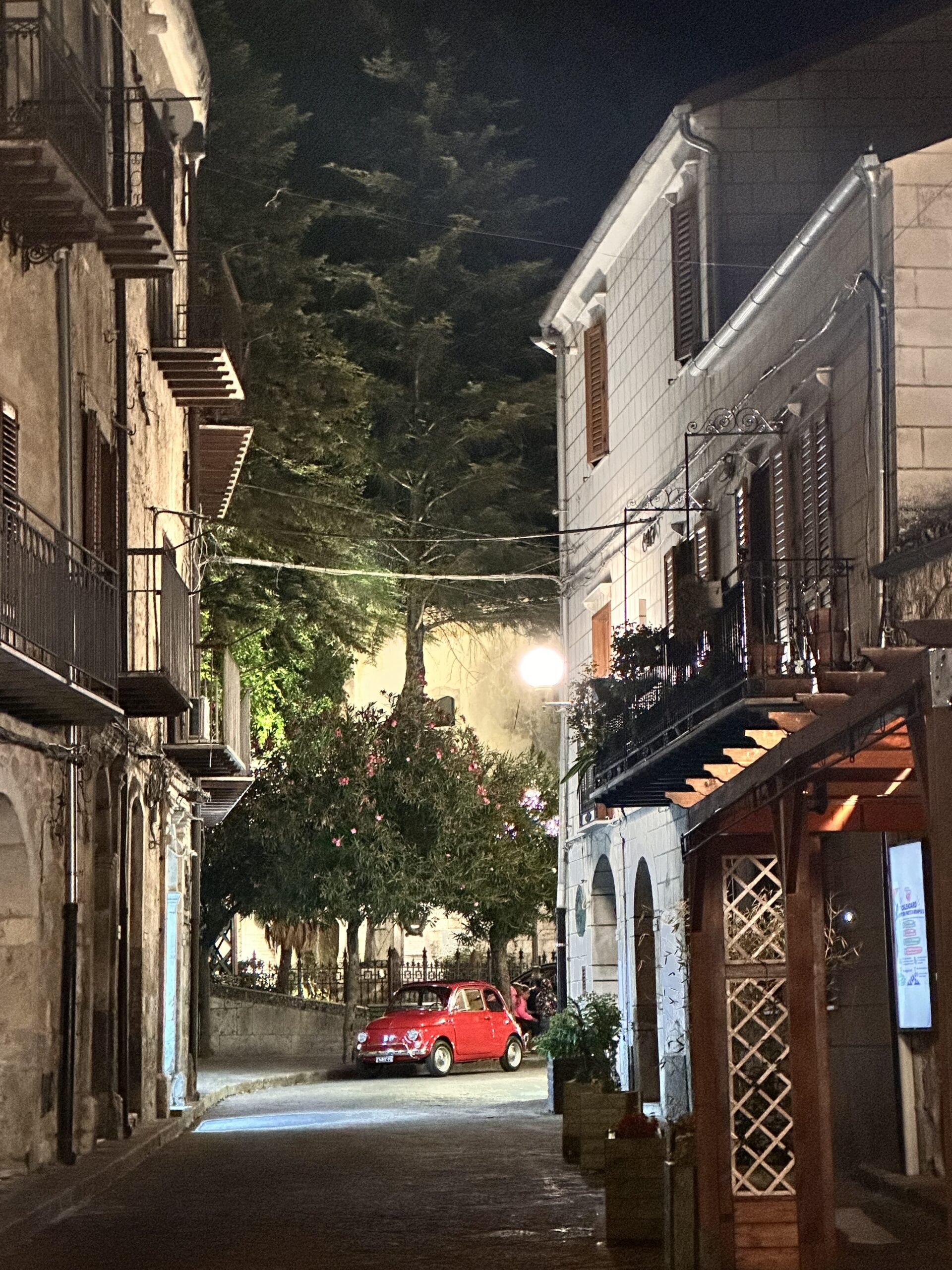
The Very Sicilian Streets of Petralia Sottana at Night
Dreamcatchers Made by People in Petralia Sottana
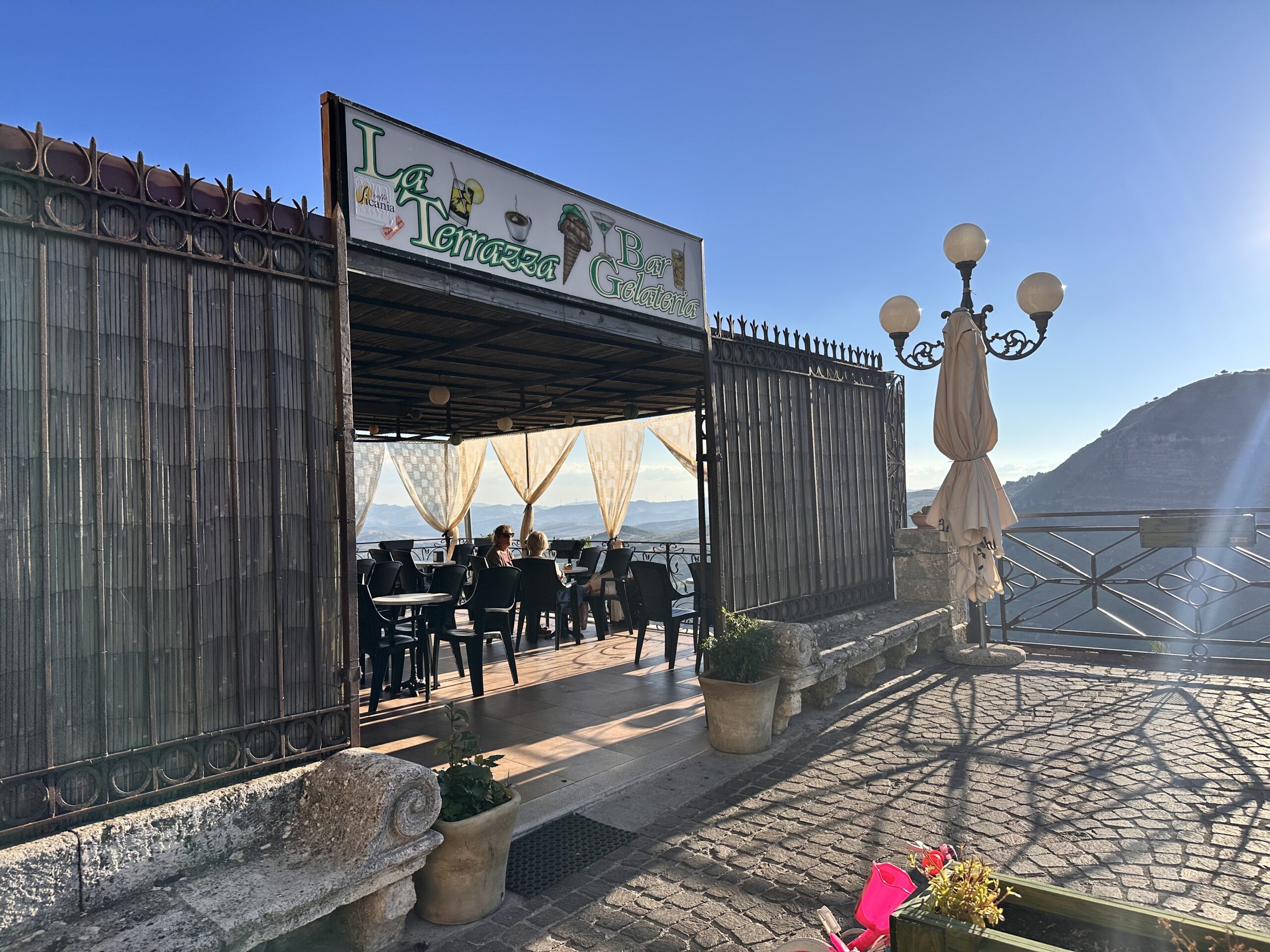
Time for Gelato at La Terrazza Bar in Petralia Sotanna
Clock Tower and Sundial in Petralia Sottana

Dinner at Nicuzzo’s and Seeing a Postcard from 1933


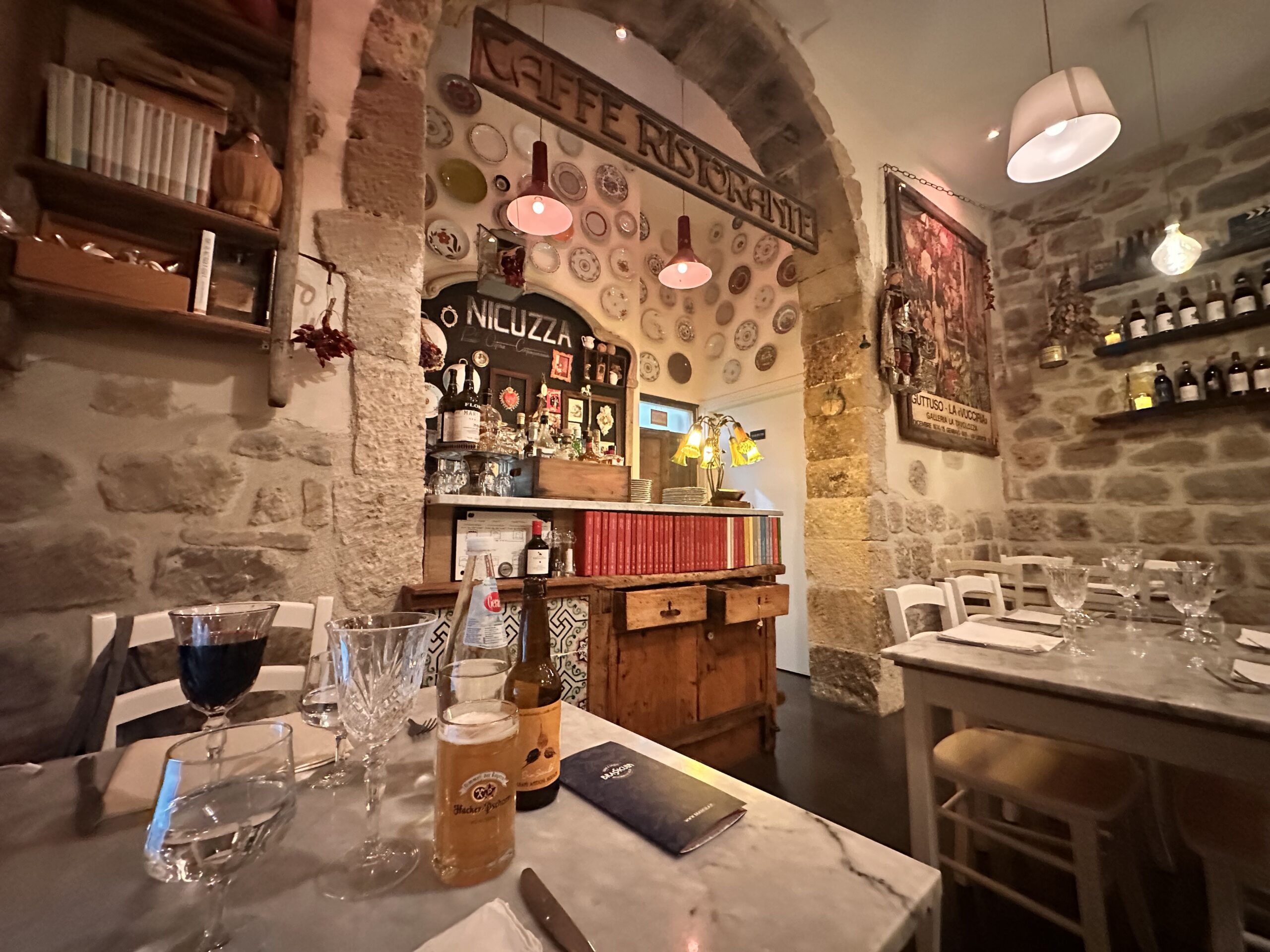
After the movie, we went for dinner at Nicuzza – Piccola Osteria Contemporanea.


Here’s what I had:


Antipasta: Pera avvolta cello speck, infornata, accompagnata con formaggio vaccino, miele e noci


(
Oven-baked pear wrapped in speck, served with cow’s milk cheese, honey, and walnuts.)


Primi: Madonie: Pasta con Ragú rustico a coltello, carne di Maialino madonita, con soffritto di carote, cipolla crema di patate senza pomodoro, con note fresche di Limone, e Ricotta fresca Locale


(
First Course (Madonie): Pasta with rustic hand-chopped ragù of Madonie suckling pig, sautéed carrots and onion, a potato-based sauce (tomato-free) with fresh lemon notes, and fresh local ricotta.)

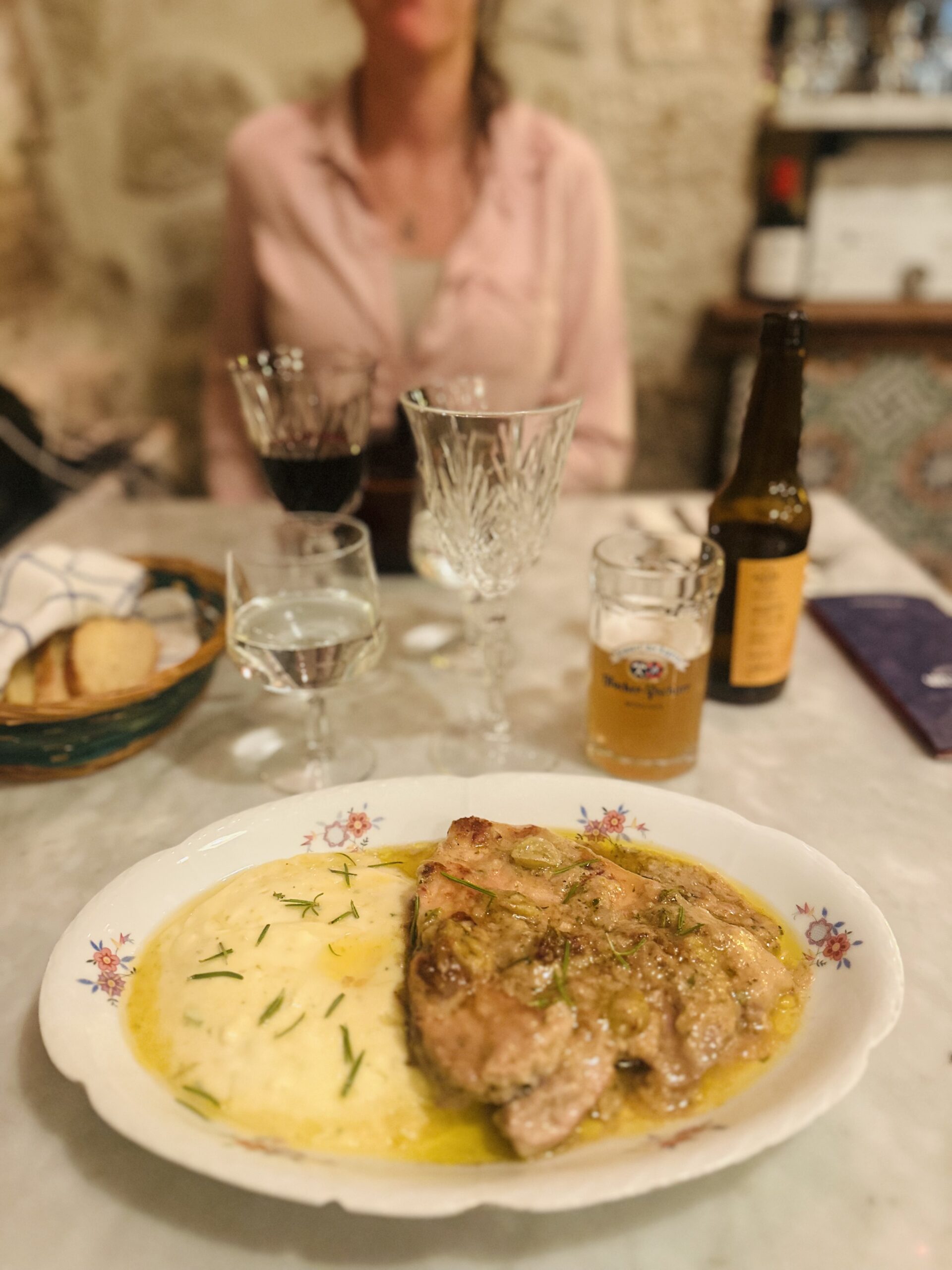
Seconda: Maialino mondonita al Forno con Senape, Miele e Uva

(Main Course: Oven-Roasted Mondonita Piglet with Mustard, Honey, and Grapes)

It was exquisite. But, once again, the food wasn’t what we ended up talking about afterward. It was the conversations with the owners Roberto Albanese and his wife Mattia Cozzo.  Originally raised in Palermo, being a lawyer and an architect, they decided to move to Petralia Sottana to open a restaurant in Roberto’s great-grandfather’s old Blacksmith shop.

During dinner, Roberto spoke with us about his great-grandfather. His great-grandfather had been the village blacksmith. He told us of his grandfather’s desire to visit America and the postcard the family received. Suddenly Roberto disappeared for a moment. When he returned, we could tell that he was holding something special.

It was the postcard from 1933. The postcard that his grandfather had sent to his great-grandfather on his trip to America.

What fascinated us was the address. There was no street name. No house number. No postal code. It basically was address to merely “the great-grandfather’s name, Francesco Antonio Leto” the blacksmith of Petralia Sottana, Sicily. Somehow the postcard got delivered with just those details. Across an ocean. In 1933.

Today I sometimes have trouble getting Amazon to find me with GPS coordinates and a cellphone number to call for clarification.

Yet somehow, in 1933, the Sicilian postal service knew exactly where to deliver it.

Perhaps that says something about a different time, when an address did not always need a street name and a house number because people knew one another—and knew where the blacksmith lived.

I wonder if there was something more at work, too. A letter arriving from America in 1933 was not simply another piece of mail. It had crossed an ocean. It had passed through countless hands, travelled by ship and train, and eventually found its way into the mountains of Sicily. Perhaps each person who handled it understood, in some small way, that somewhere at the end of its journey was a family waiting.

In those days, there were no text messages, no video calls, no instant reassurance that someone thousands of kilometres away was safe. Weeks or months could pass with nothing but silence. A letter from America might carry news of a birth, a marriage, work found or money earned. But sometimes the most important message contained within it may have been much simpler:


I am still here. I am alive. I have not forgotten you.

Perhaps that was reason enough to make certain the letter found its way to the blacksmith in Petralia Sottana.

Roberto opened the postcard from his grandfather and showed us the message. As his grandfather wrote his message on the paper by hand, his handwriting became smaller and smaller as the message continued. He was running out of room, but he wasn’t finished talking. So he simply kept squeezing more words into whatever space remained.

I loved that. There was no option, really, for thinking, “I’ll just send another message.” In 1933 I imagine that you had one shot at filling in the postcard that would bring the news back to the family in Sicily.  So every inch of white space needed to be utilized for all that needed to be said.

We had spent the day photographing churches, mountains, sundials and old stone streets. At one point after the film, a wild fox even trotted out from the back alley and dashed beside me without even so much as a flinch for its safety. It always stuns me when I see a fox in Sicily sneak by me. I’ve had so many encounters, I will write about it one day.

That all aside, it was just a restaurant that initially brought us to Petralia Sottana so that we could eat. The thing I remember most was something I never knew existed, a connection with the local restaurant owner, and his willingness to share an old family postcard with us. There really is something special about slow meals and long conversations. With a long dinner, the conversations tend to go in many unexpected ways.

Our Table at Nicuzza - Piccola Osteria Contemporanea in Petralia Sottana
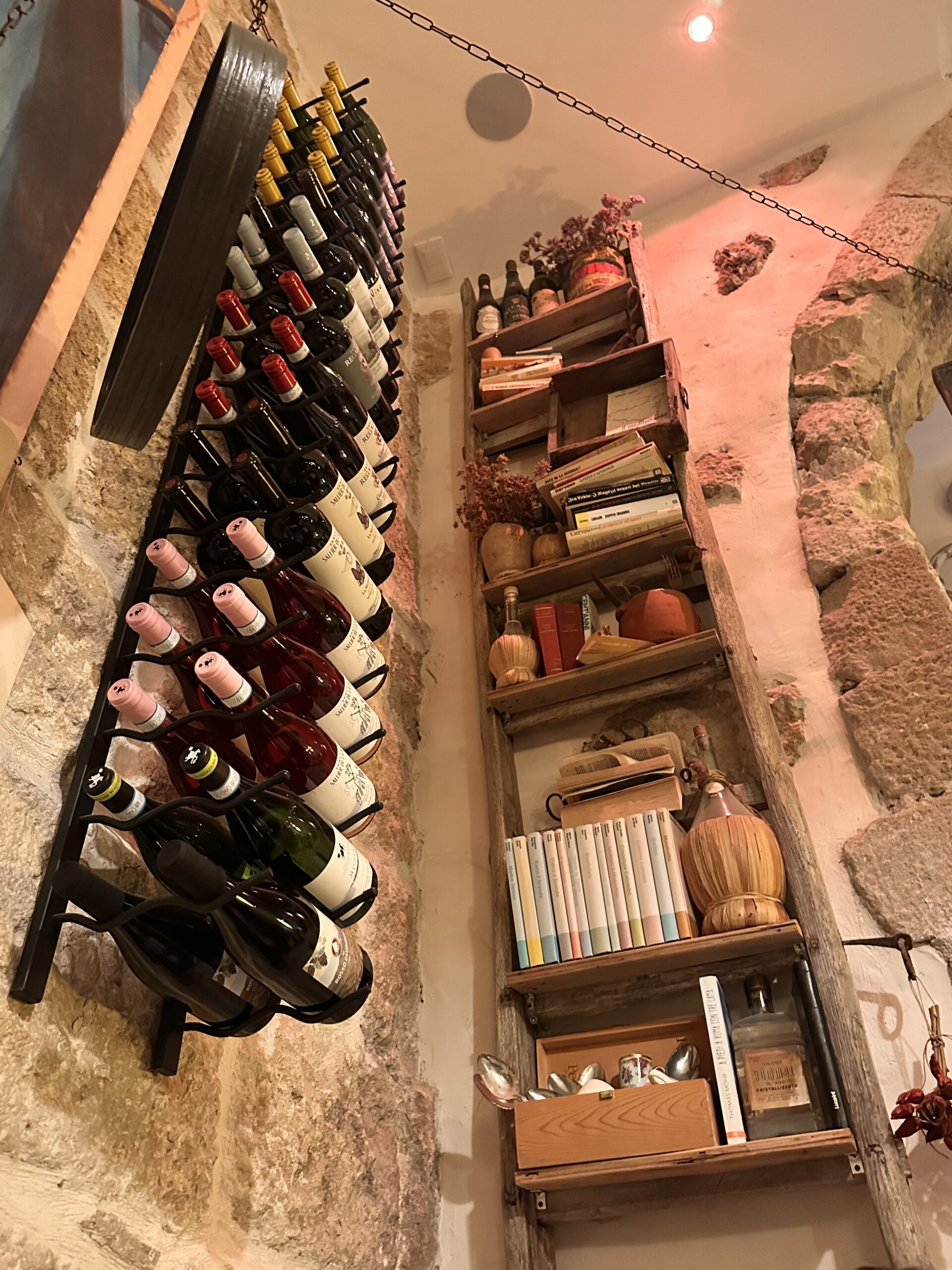
Our Wine Selection in Petralia Sottana
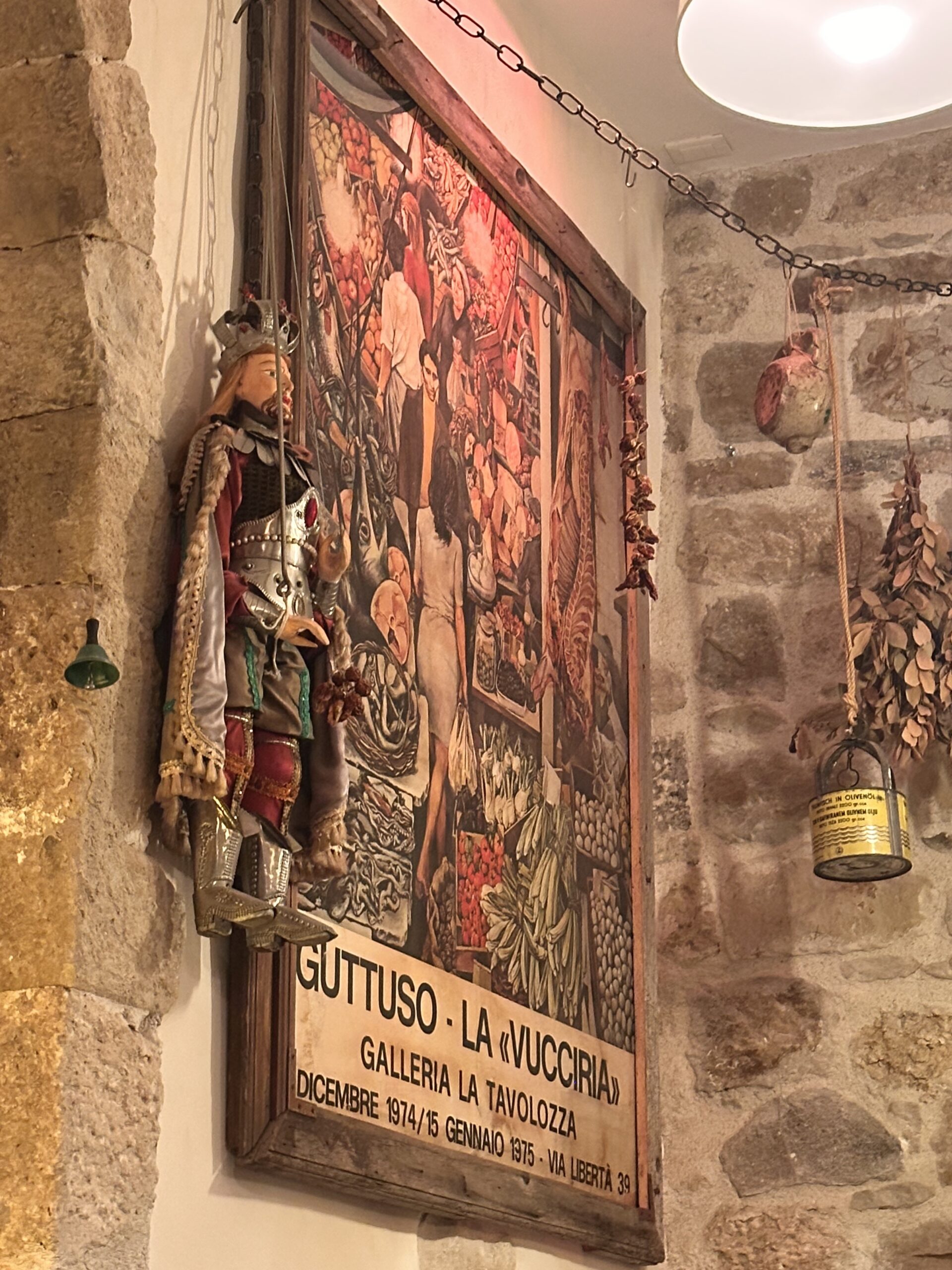
Sicilian Decor from the Restaurant in Petralia Sottana
Truly Sicilian Decor

Living Life with a New Perspective

We keep noticing this pattern in Sicily. We set out thinking we know what the day is going to be about; a festival, a village, a restaurant, a hike, a photograph. Then something extraordinary tends to happen.

Someone opens a door.  Someone pulls out a chair.  Someone deals a hand of cards. Someone hands Courtney a tambourine. Someone tells us about his great-grandfather.

Suddenly the thing we went there to see isn’t the thing we remember.  Maybe that’s one of the things Sicily has been trying to teach us these past few years. We spend a lot of our lives trying to fit more things into our days.

More places. More work. More appointments. More accomplishments. More stuff.


Maybe sometimes the better answer is less
.

Sit longer. Eat slower. Ask another question. Listen to the story.  Play another hand of cards.  Stay for another glass of wine.

Notice the people around you.

Authentic. Sicilian. Experiences.

For years, I thought travelling was mostly about seeing places.

I’m starting to think it’s really about having enough time in those places for something unplanned to happen.

The Sicilians already have a phrase for it.


“Piano, piano.” (
Slowly, slowly.)

Maybe they’re onto something. Life really is short. Perhaps that doesn’t mean we should rush to fit everything into it.


Maybe it means we should slow down long enough to notice the parts that matter.

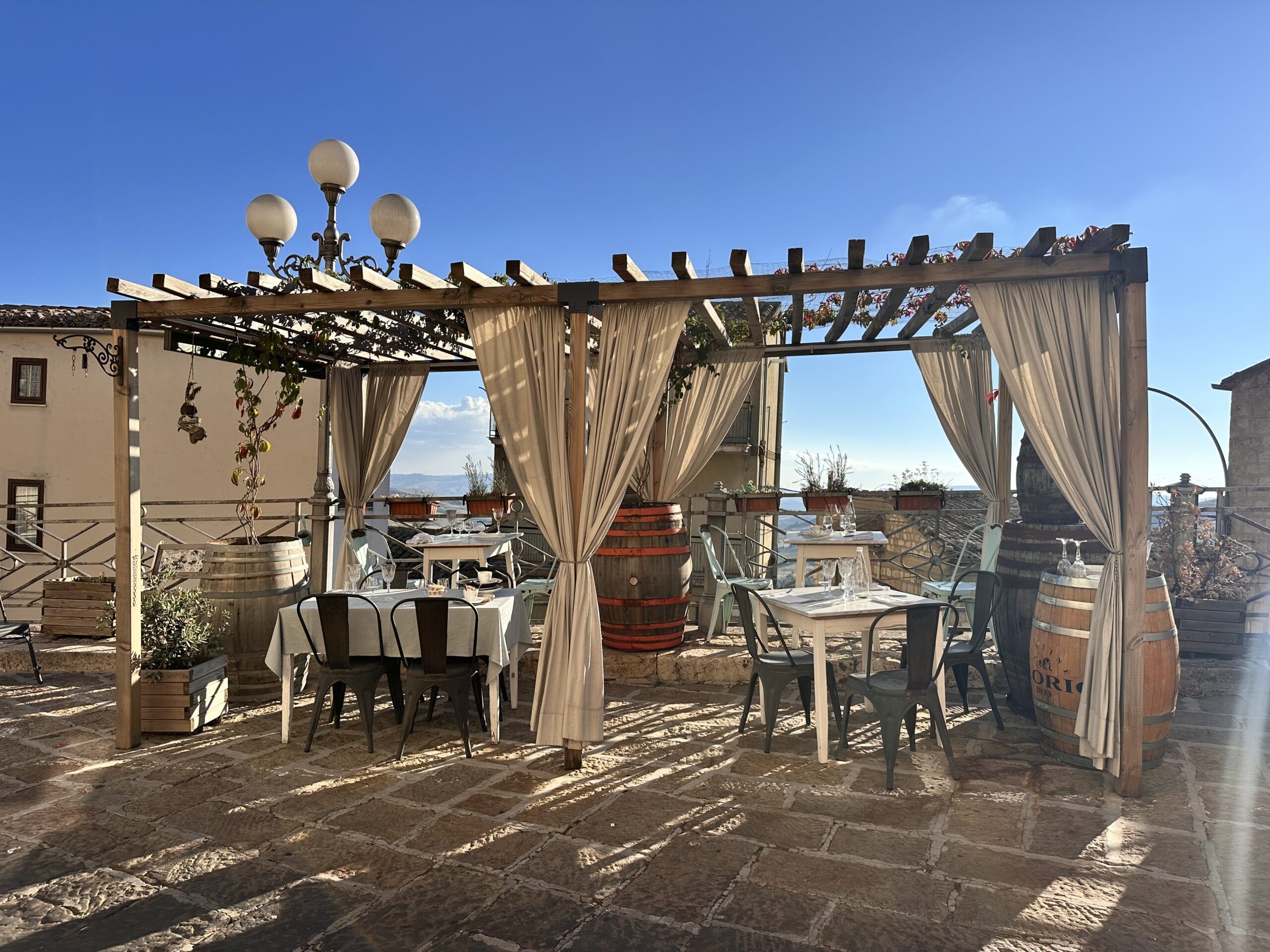
Ourdoor Seating with a View of Petralia Sottana
Outdoor Seating with a View of Petralia Sottana
Oven-Roasted Mondonita Piglet with Mustard, Honey, and Grapes
Oven-Roasted Mandonita 'Maialino' with Mustard, Honey, and Grape Sauce