Newsletter: April 2026 – All Roads Lead to Rome…and Towards Family
They say all roads lead to Rome—and that’s exactly where we found ourselves this month, on our way to Rome in order to fly back to Canada for Mother’s Day.
In Italy, and especially in Sicily, time with family isn’t scheduled—it’s protected. And through winding roads, slow days, and the occasional missed train, regardless of how it happens, it certainly does seem that all roads lead to Rome… and perhaps more specifically, to a meal with family or friends!
There’s no amount of phone calls or video chats that can replace the time we get “at the table”, face-to-face, with family and friends. Perhaps that’s why food is so important to Italians? It’s one of the daily routines that truly bind us together.
“A tavola non si invecchia.” (At the table, one does not grow old.)
It’s easy to think the secret to a happy life is found in some grand adventure, or a tour of new places around the world, or even with a perfectly cooked meal or recipe—and to be fair, that certainly helps—but the real magic isn’t where you are or what happens to be on the plate. It’s who’s sitting across from you. In the end, it’s not the place or the meal that I remember most, it’s the moments between bites.
Being face to face over a shared meal is where we can get that glimpse that says more than what words could ever articulate.
The laughter or shared recollections of past memories speaks volumes about our current state of affairs. At the dinner table is where past experiences move into the territory of becoming legendary status. Memories that start with “Remember that time…” are some of my favourite moments at a table.
And if the food happens to be Italian? Well, let’s just say happiness might arrive a little faster—but it still stays longer because of the company we find ourselves with that matters most, that’s for sure!
Cycling Among Ancient Roots in the Madonie Mountains
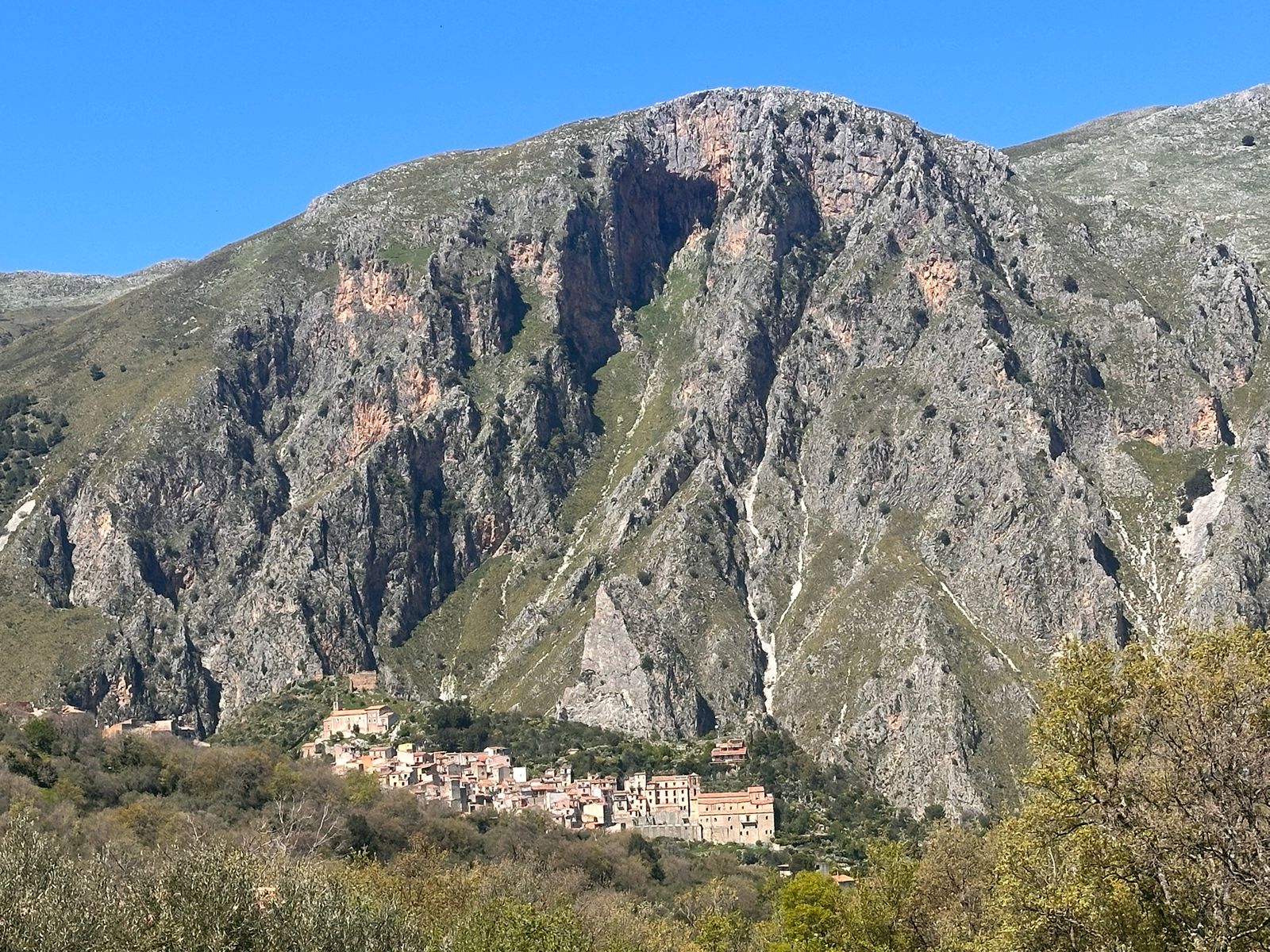
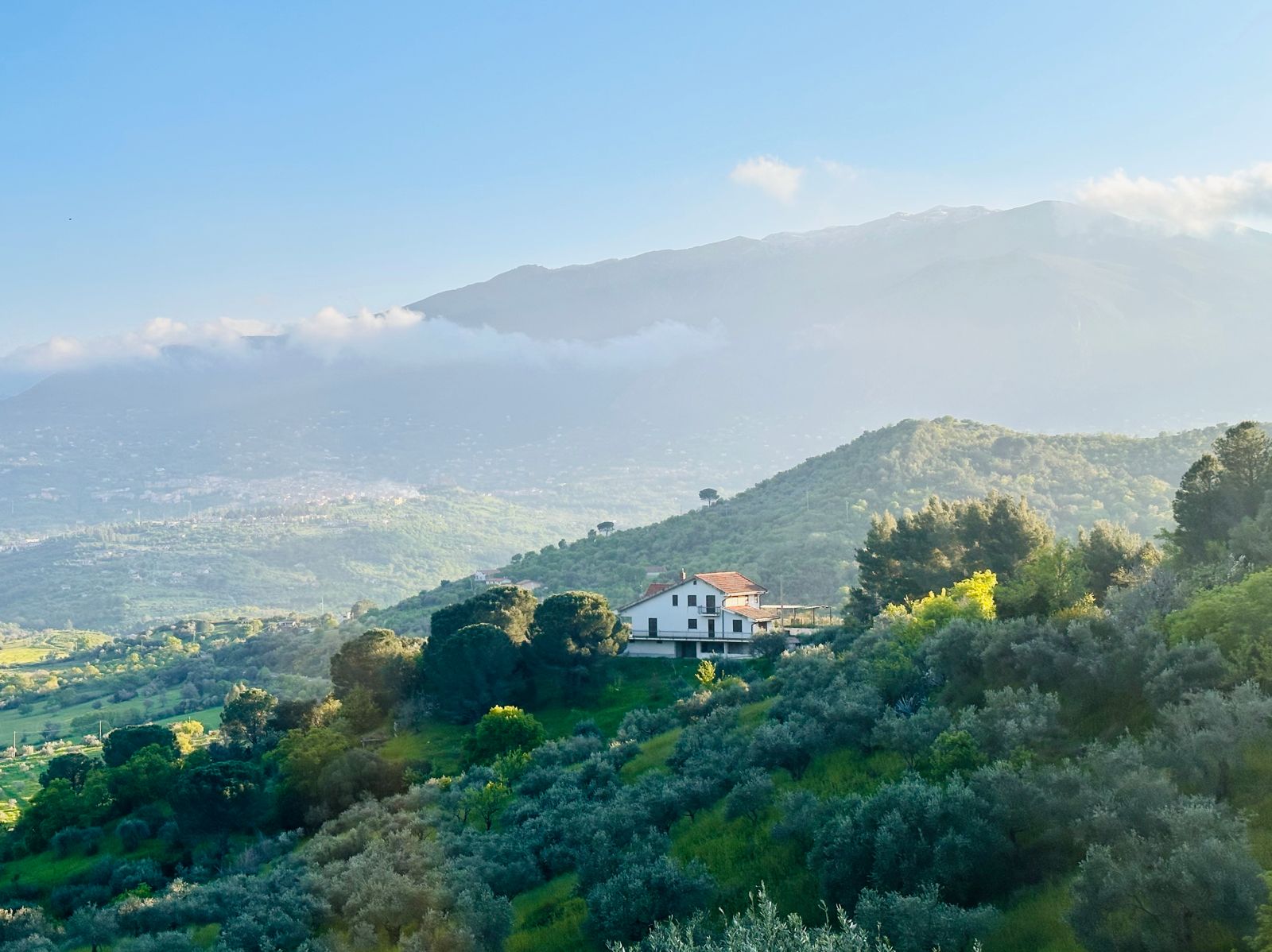
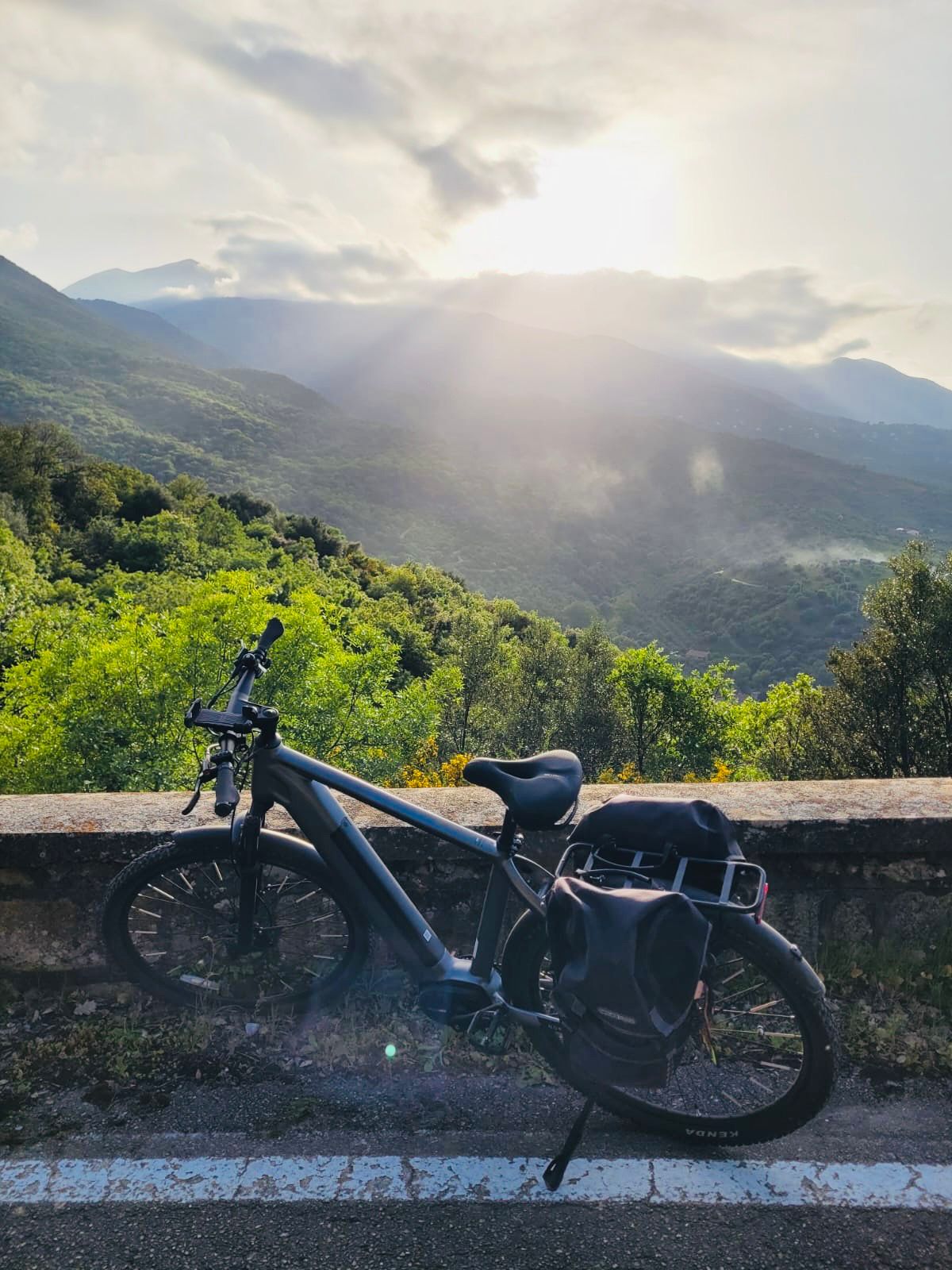
April reminded us just how special our time in Sicily is. Blue skies, warm sunshine, and long days invited us into the Madonie Mountains—best explored slowly on our e-bikes.
Cycling through the Madonie Mountains feels like riding through time. The roads twist and climb with quiet insistence, asking you to slow down. Each turn reveals something new—rolling hills, weathered stone homes, and olive groves that seem to stretch endlessly into history.
On one of our rides around the Madonie, we found a trail marker promising us a glimpse of ancient trees, including olive trees from up to 1000-2000 years ago. I’m realizing our rides through the mountains are not places you pass through quickly, but instead, it’s a place of discovery that invites us to witness history.
In Sicily, cycling becomes something more than movement—it’s participation. The rhythm of pedalling matches the land itself—steady, patient, and enduring. Birds drift between branches, and the air carries that unmistakable Mediterranean blend of earth, sun, and olive leaves. These trees have witnessed empires rise and fall—and yet they remain, still rooted, still producing. They reshape how you think about time, patience, and what it means to create something that lasts.
Life in Sicily—Chickens, Lambs, and Slow Days
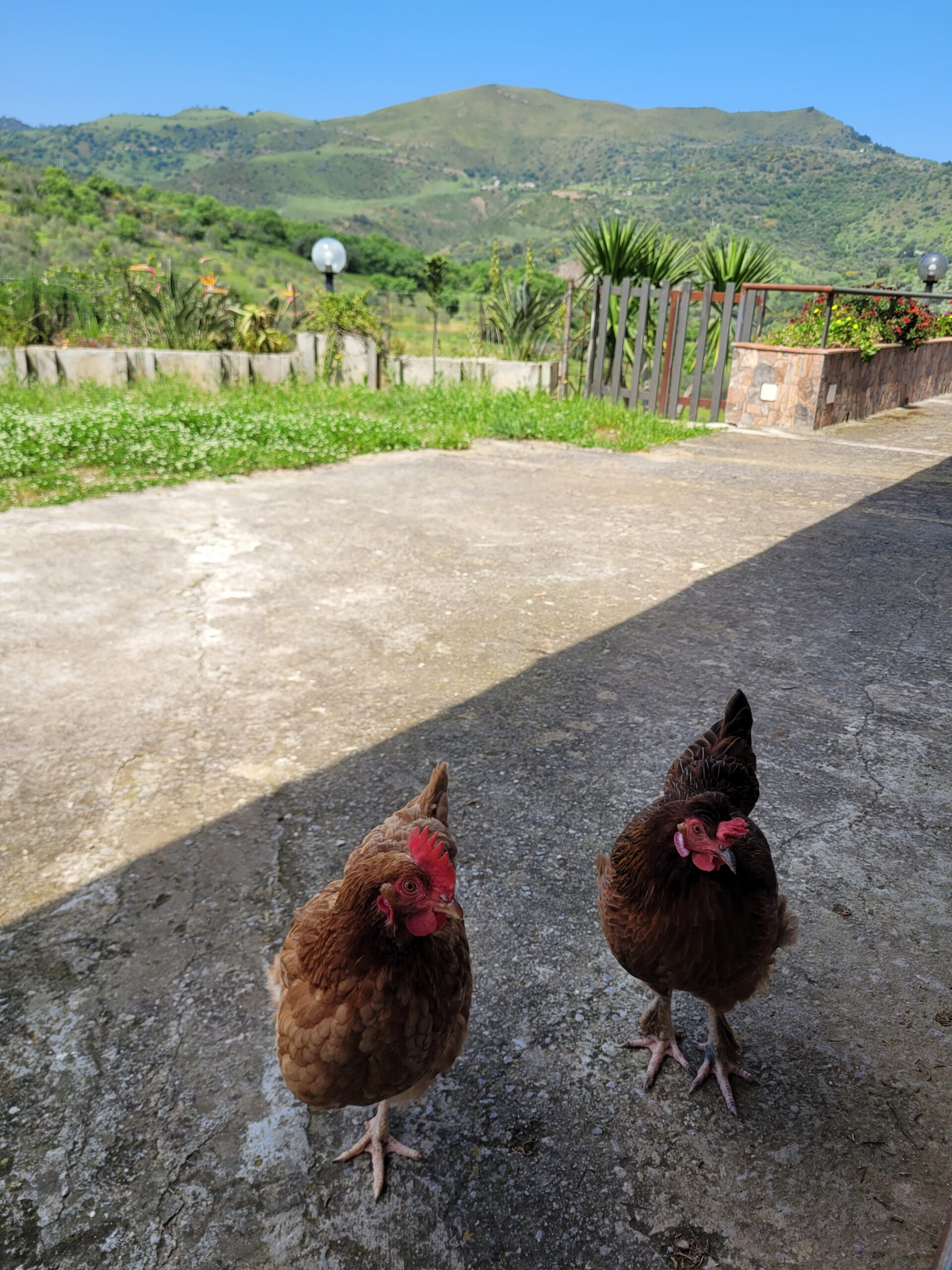
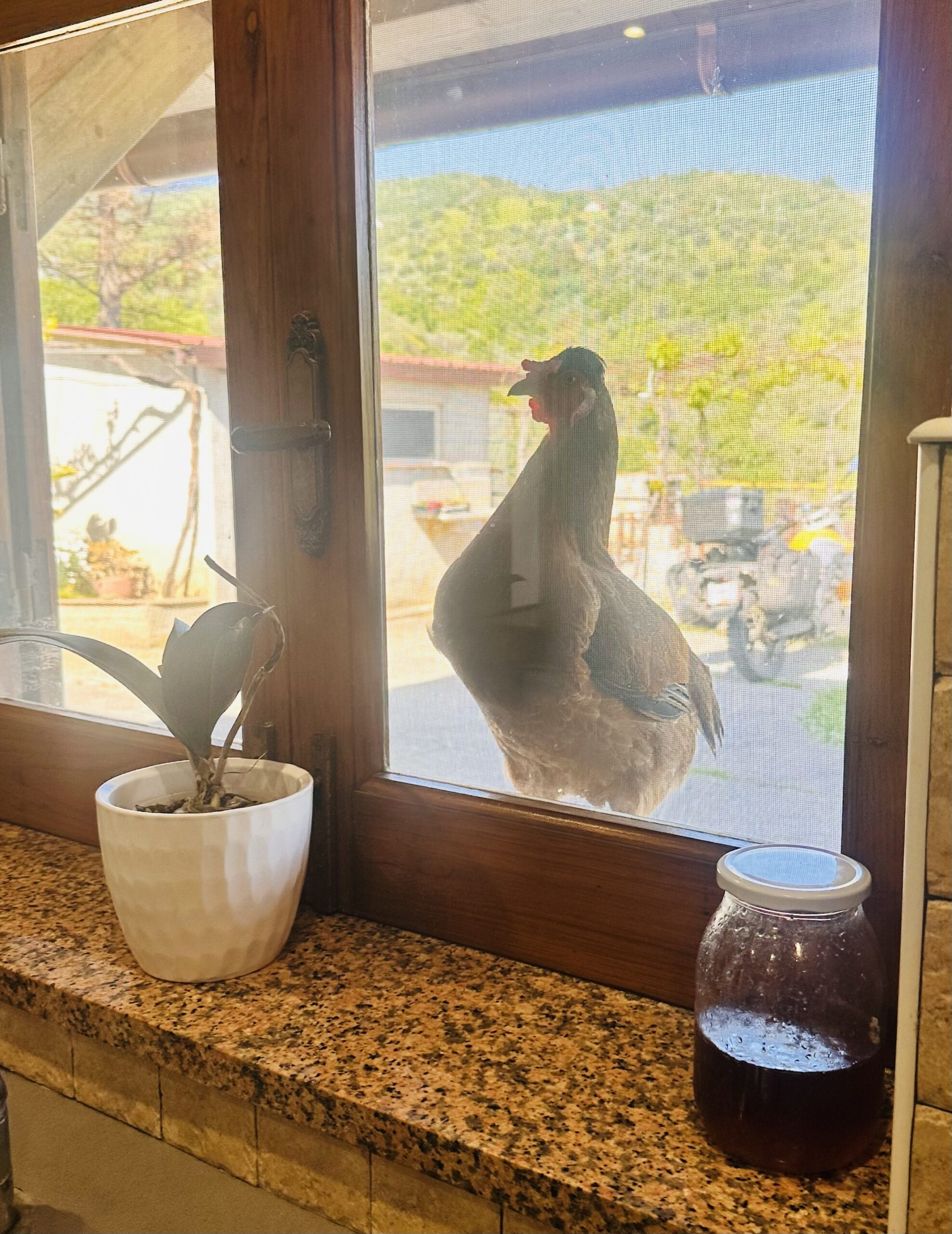
This spring, life has settled into a gentle rhythm. Courtney has fully embraced caring for our two chickens, Tizzy and Carina—each with a personality entirely their own.
Tizzy lives up to her name, as she’s randomly in a state of mild confusion or overreaction—fluttering at shadows and sudden sounds. Carina, true to her name, is calm and affectionate, the quiet counterbalance.
Our mornings begin simply: coffee in hand as we let the ladies roam freely. Watching them scratch, wander, and dust-bathe is oddly captivating. It’s simple—but it’s also deeply hands-on. Keeping them safe, guiding them back to the coup, giving them just enough freedom—it’s care in its most honest form.
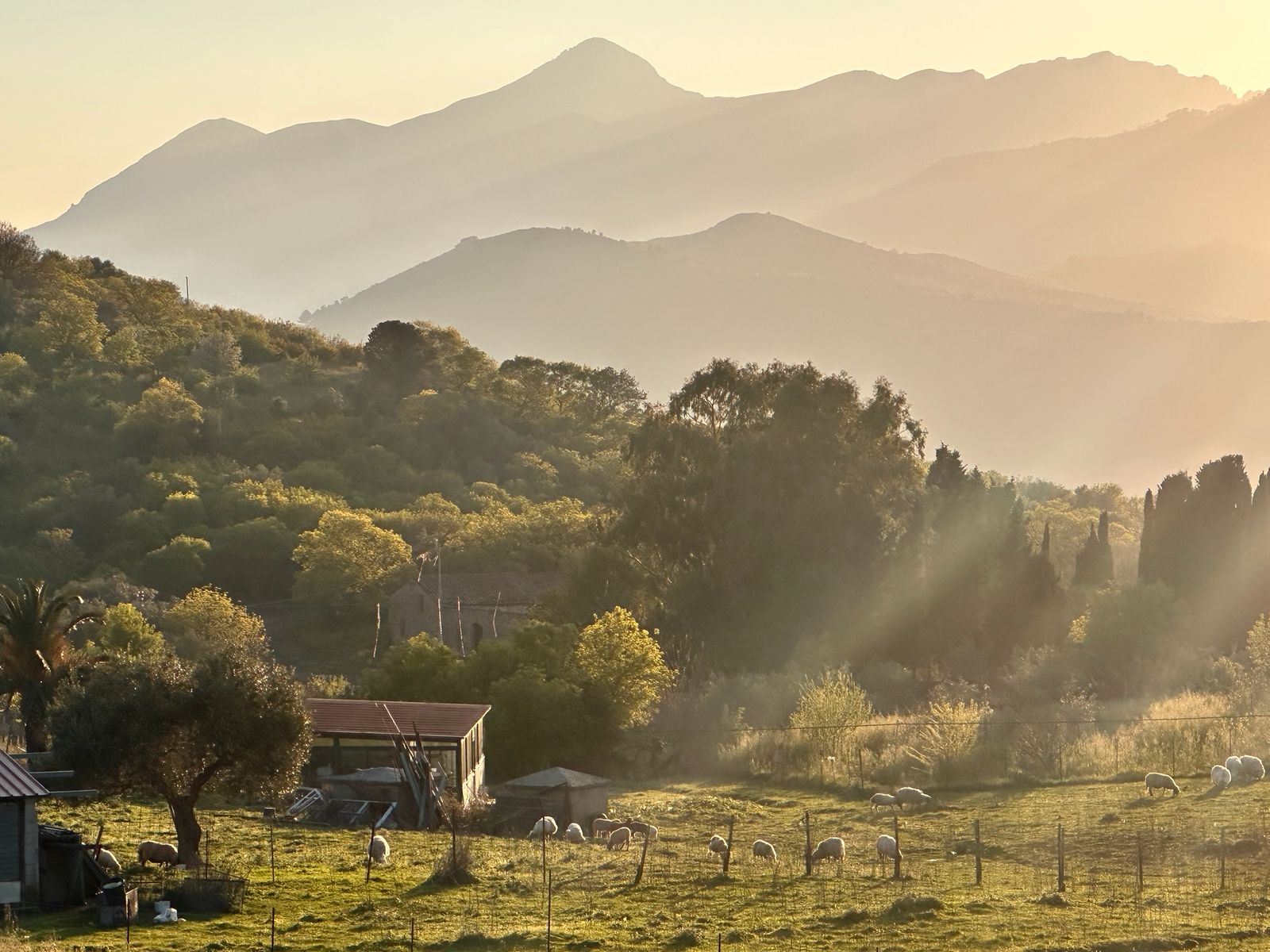
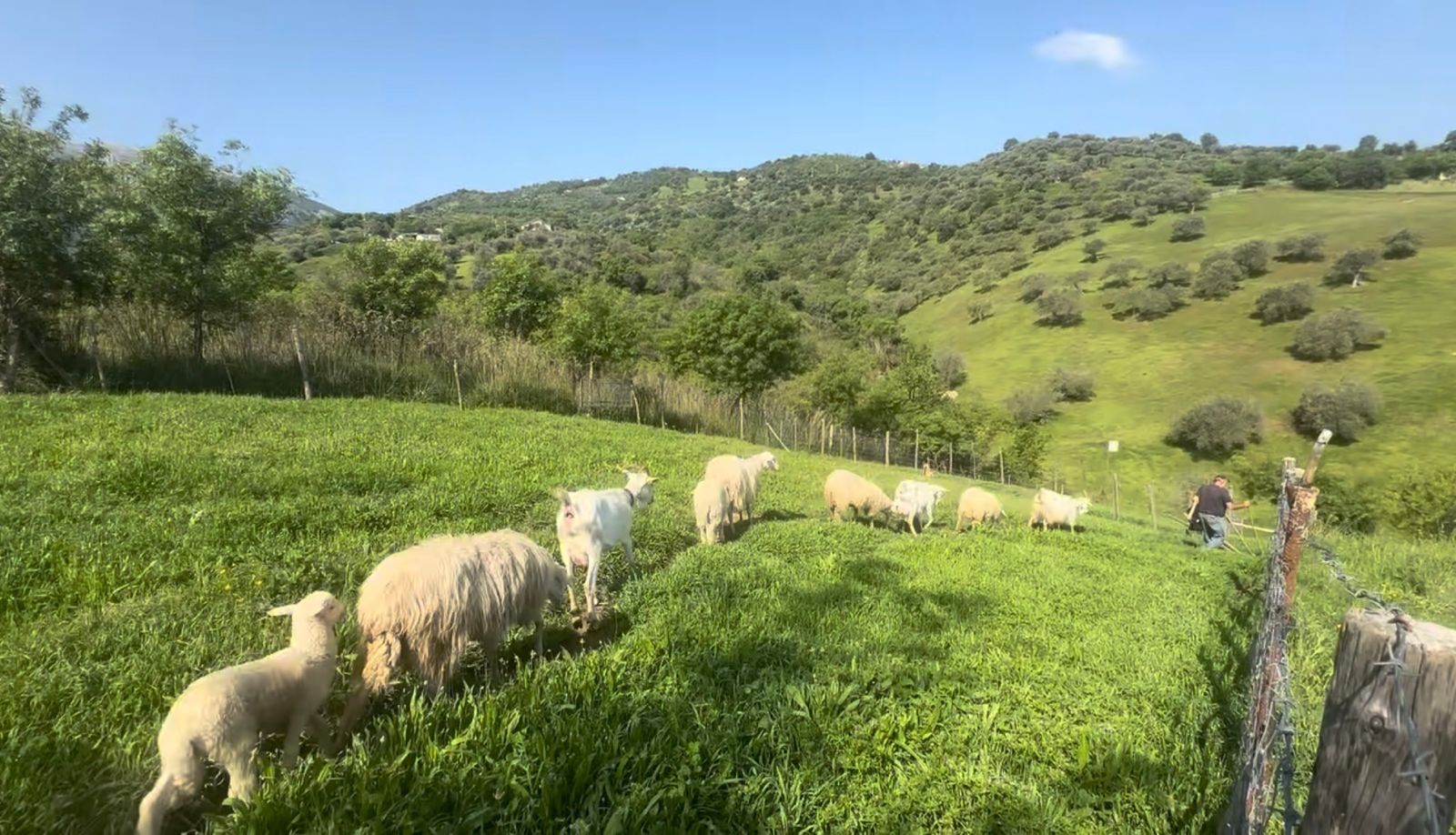
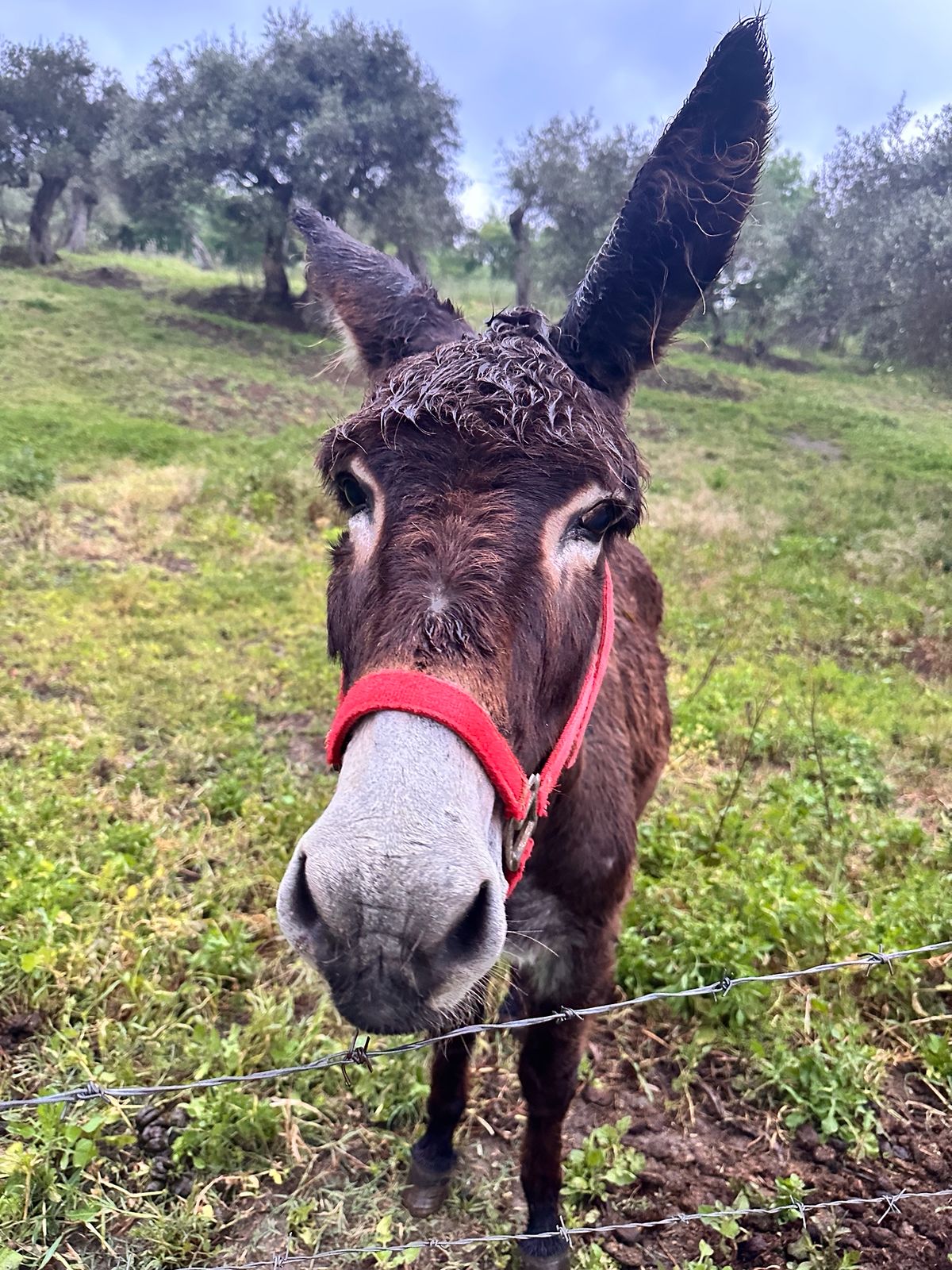
All around us, spring is unfolding. New lambs appear almost weekly, finding their footing in the fields. Neighbours welcome new horses, cows, goats—life multiplying in every direction.
And then there are the sheep.
On the narrow roads, it’s not uncommon to meet a herdsman guiding a flock from one pasture to another. When 75-100 sheep take over the narrow roads in Sicily, everything stops. There’s no rushing them. They pause, graze, and wander. You simply wait.
Their bells chime softly as they pass—a sound that feels unchanged for generations.
Meanwhile, April brings a seasonal shift. Winter gardens give way to summer planting. In Sicily, “winter” still means harvesting—leafy greens, fennel, citrus—while back in Canada, snow might still linger. It’s a contrast we haven’t quite stopped appreciating.
Life here unfolds in small, shared moments. Neighbours pass by with updates—new animals, visiting family, runaway goats. It’s like living inside a slow-moving Italian film, told in fragments, one day at a time.
And somewhere in all of it, life gently insists: slow down, and notice all that which surrounds you.
From Sicily to Napoli—A Journey Through Time
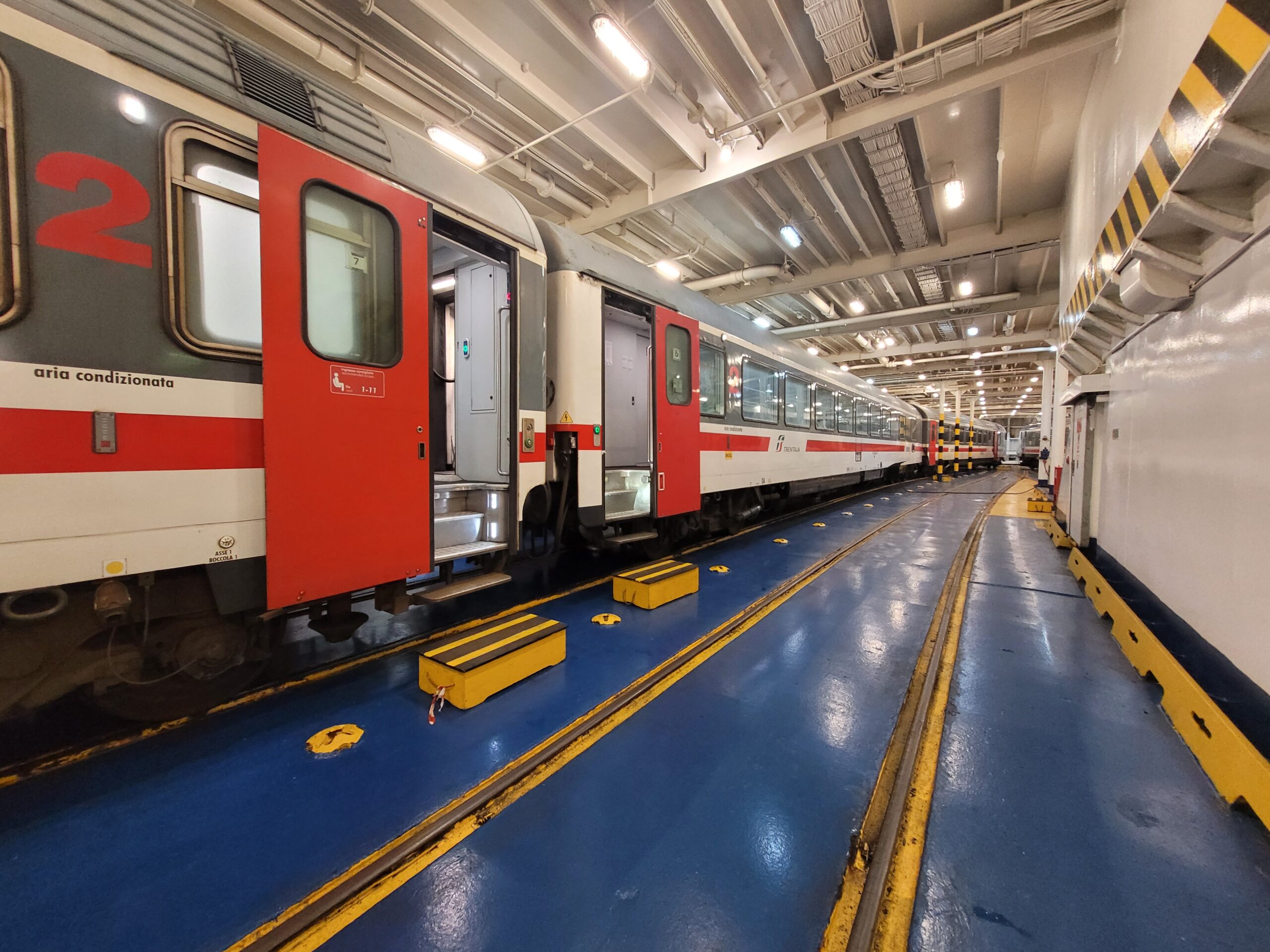
Our journey north to Rome began with an early morning bus and then a 9.5 hr train ride (including a special ferry that transports trains), carrying us from the stillness of Sicily into the energy of Naples.
Our trip to Naples wasn’t just about the destination, it was about connection. The real reason we went was to spend time with my cousin and his wife. And in a month shaped by the idea that all roads lead back to family, this felt like a repeating theme.
There’s something grounding about sitting around a table with family—especially when life has stretched across countries and time zones. The conversation doesn’t need direction. It flows between memories, laughter, and a shared understanding that needs no explanation.
In Italy, this isn’t a special occasion—it’s simply life. Meals stretch. Time softens. And you begin to realize that time with family isn’t something you fit in—it’s what everything else fits around.
“Chi trova un amico trova un tesoro.” ("He who finds a friend finds a treasure.")
Our days in Napoli were filled with wandering streets and discovering odd and eclectic corners of the city. What stayed with us most were the quiet moments, sitting with family and new friends, while we shared some travel stories like they are battle wounds. And laughing. Always laughing.
In a life that often feels in motion, these are the moments that steady you. In the end, I discover it’s not just that all roads lead to Rome. It’s that the best ones lead you back to the people who matter most.
The Ancient Town of Herculaneum
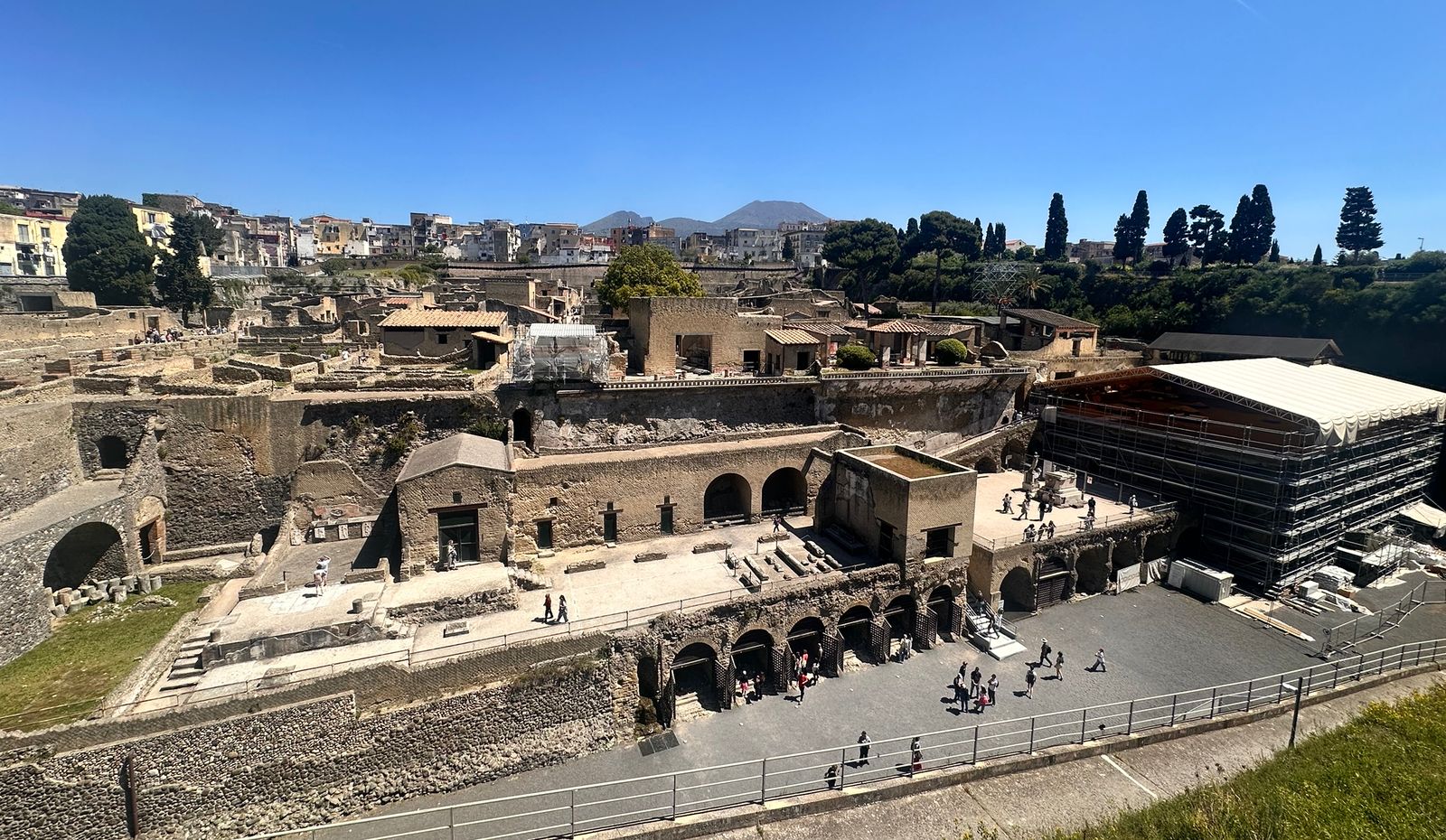
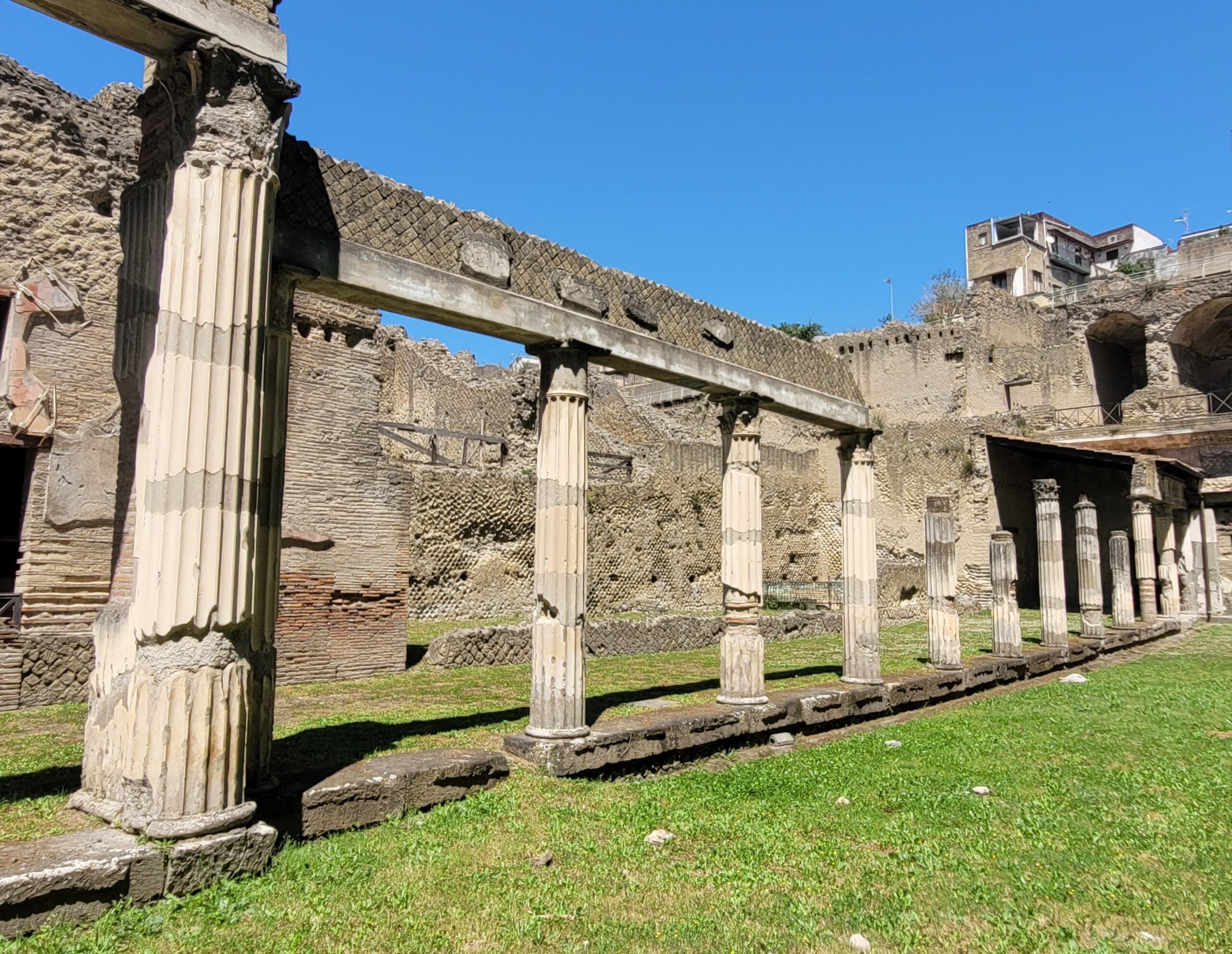
While we were in Napoli, we hired a private van (thanks Antonio!) and a tour guide (thanks Ingrid!), and visited the ancient town of Herculaneum. It offers a quieter, more intimate window into Roman life than its better-known neighbour, Pompeii. Both were buried during the catastrophic eruption of Mount Vesuvius in 79 AD, but Herculaneum’s fate was different—and, in many ways, more revealing.
Instead of being smothered primarily by ash, the town was engulfed by superheated pyroclastic flows that sealed it beneath layers of volcanic material. This rapid burial preserved organic materials rarely found elsewhere in the ancient world. Wooden doors, furniture, and even food items survived, offering an astonishing level of detail about daily Roman life.
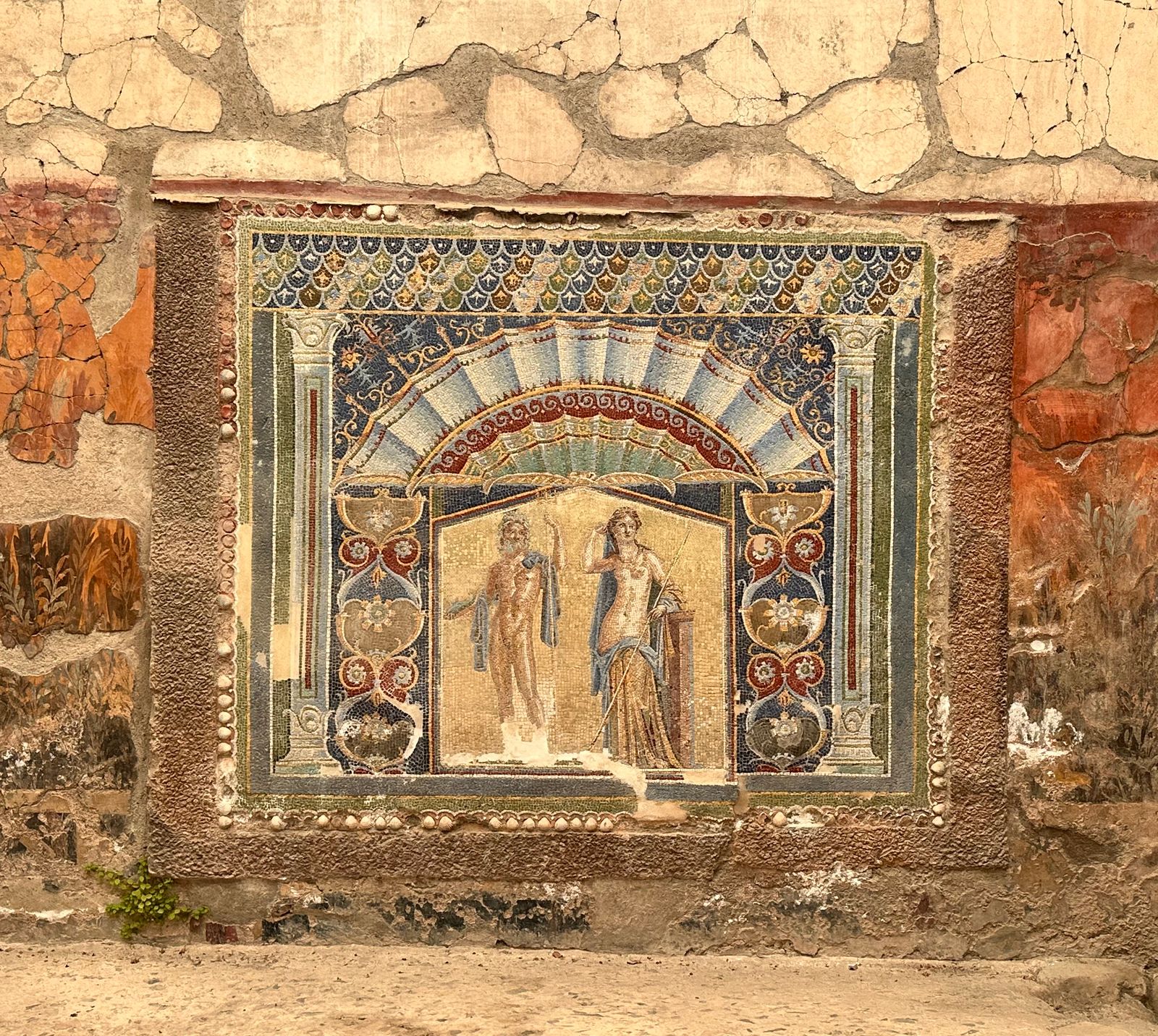
Walking through Herculaneum today feels less like exploring ruins and more like stepping into a paused moment in time. Multi-storey houses still stand, adorned with vibrant frescoes and intricate mosaics. Kitchens, bathhouses, and courtyards remain clearly defined, allowing visitors to imagine the rhythms of everyday life nearly two thousand years ago.
Unlike larger archaeological sites, Herculaneum invites a slower, more reflective experience. It’s not just about what was lost, but about what endured—and how, through tragedy, a remarkably vivid story of the past was preserved for the future.
It’s a place that reminds you how fragile, and enduring, life can be.
Napoli—Craft, Music, and Small Discoveries
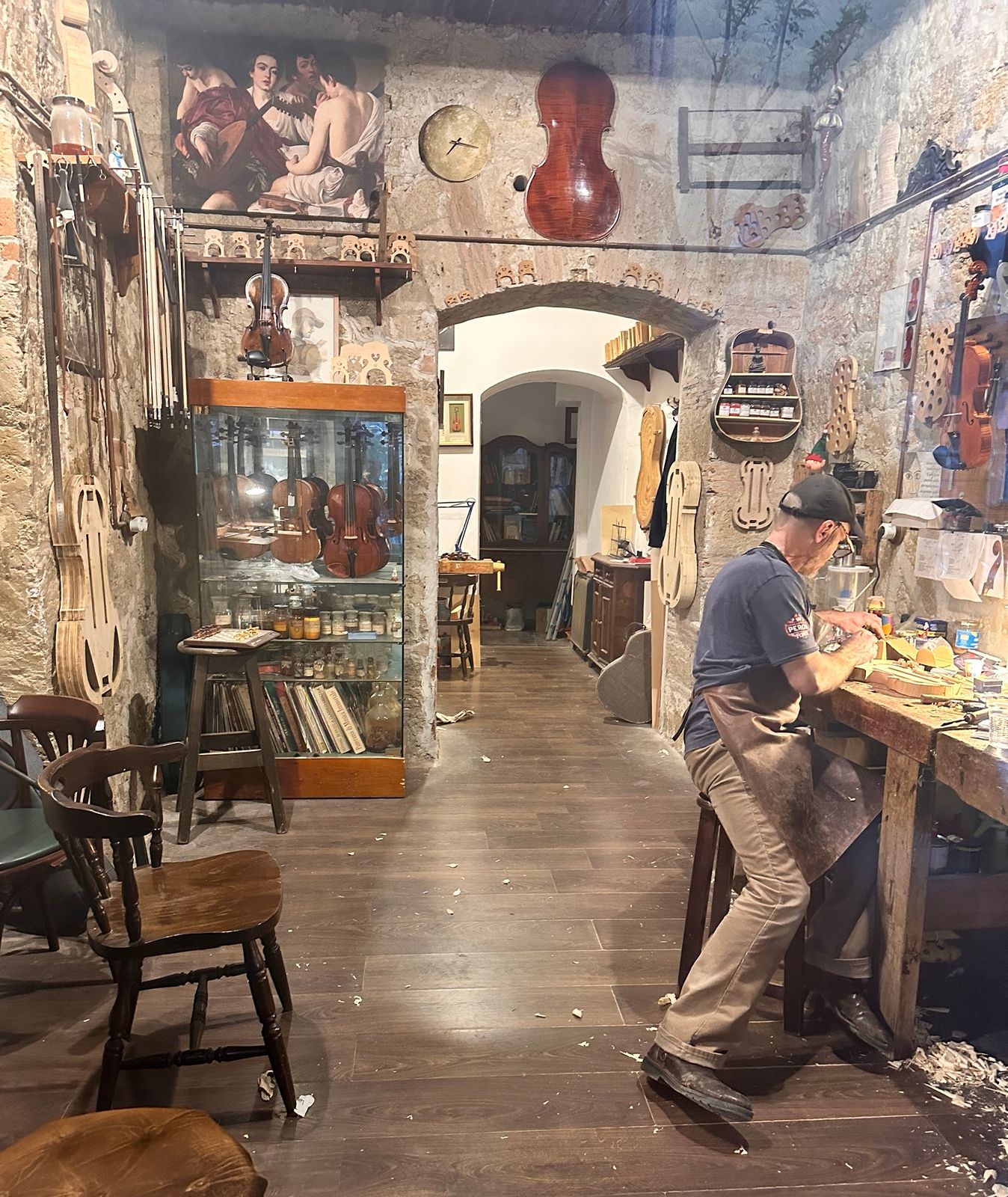
Napoli greeted us with its familiar blend of chaos and charm. We visited a small violin maker’s workshop, watching the slow, deliberate craft of building something of such high quality by hand—patient, precise, and timeless. As a violin maker, a Luthier, he was fascinating to watch as he used a small sharp blade and literally scraped off one speck of wood at a time per stroke. Again and again and again… just a speck of wood like a piece of dust falling away each time. Tedious? Absolutely! I guess quality comes at a cost and takes time. Eventually his violins, the average ones, will fetch $20,000 – $30,000 each and take 3 months to build. It’s a fascination to watch it all unfold.
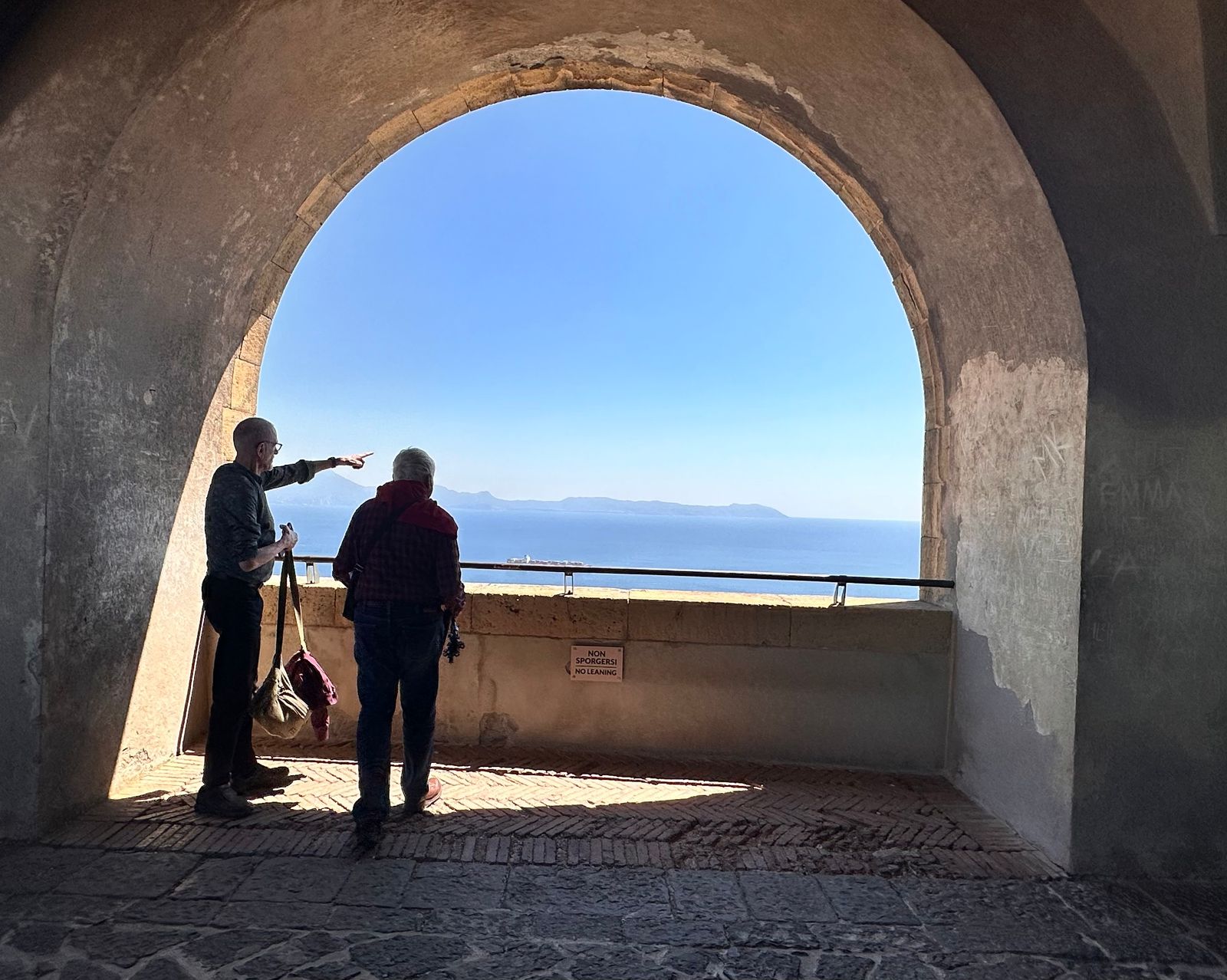
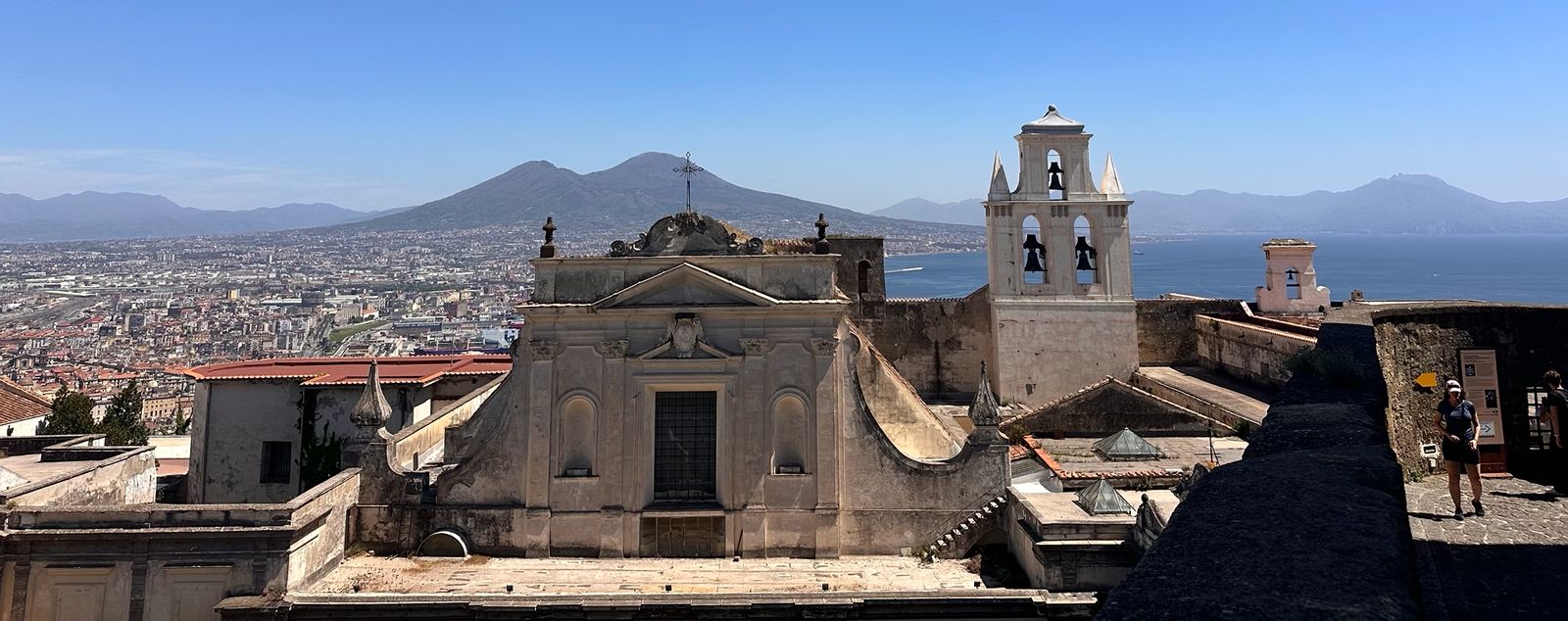
A ride up the Funicolare di Montesanto revealed sweeping panoramic views of the city—rooftops spilling toward the sea, with Vesuvius standing watch in the distance.
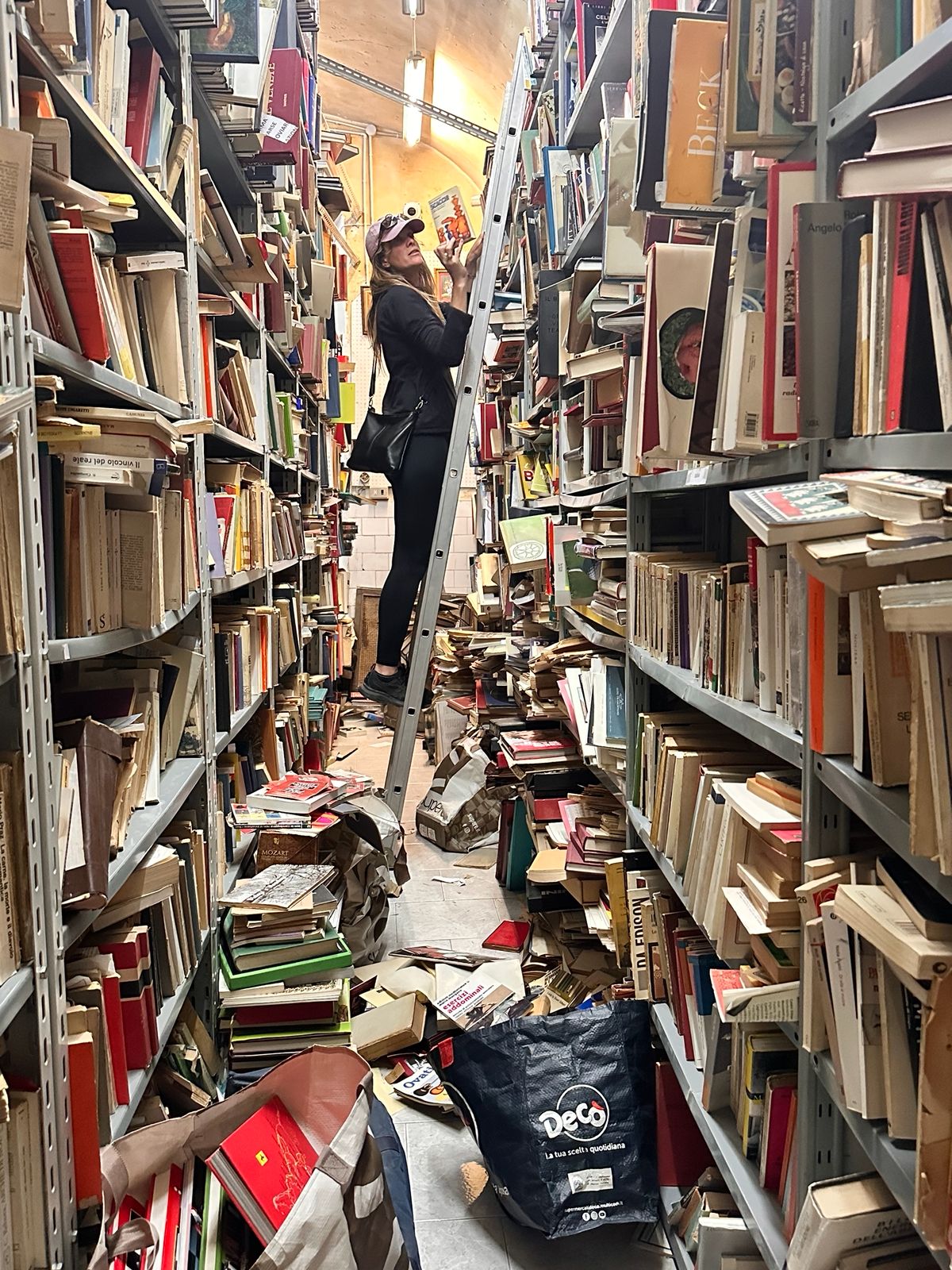
One afternoon, we wandered into Pironti a Port’Alba Libreria, a used bookshop overflowing with books. On the third floor, tucked away, Courtney climbed a tall ladder to discover a chess book I had been hoping to find (The Sicilian Defence!) and as we left, the bookshop owner showed us a first edition book that was 126-years-old and full of Italian proverbs that somehow felt meant for us. Those small discoveries feel less like purchases and more like moments of serendipity.
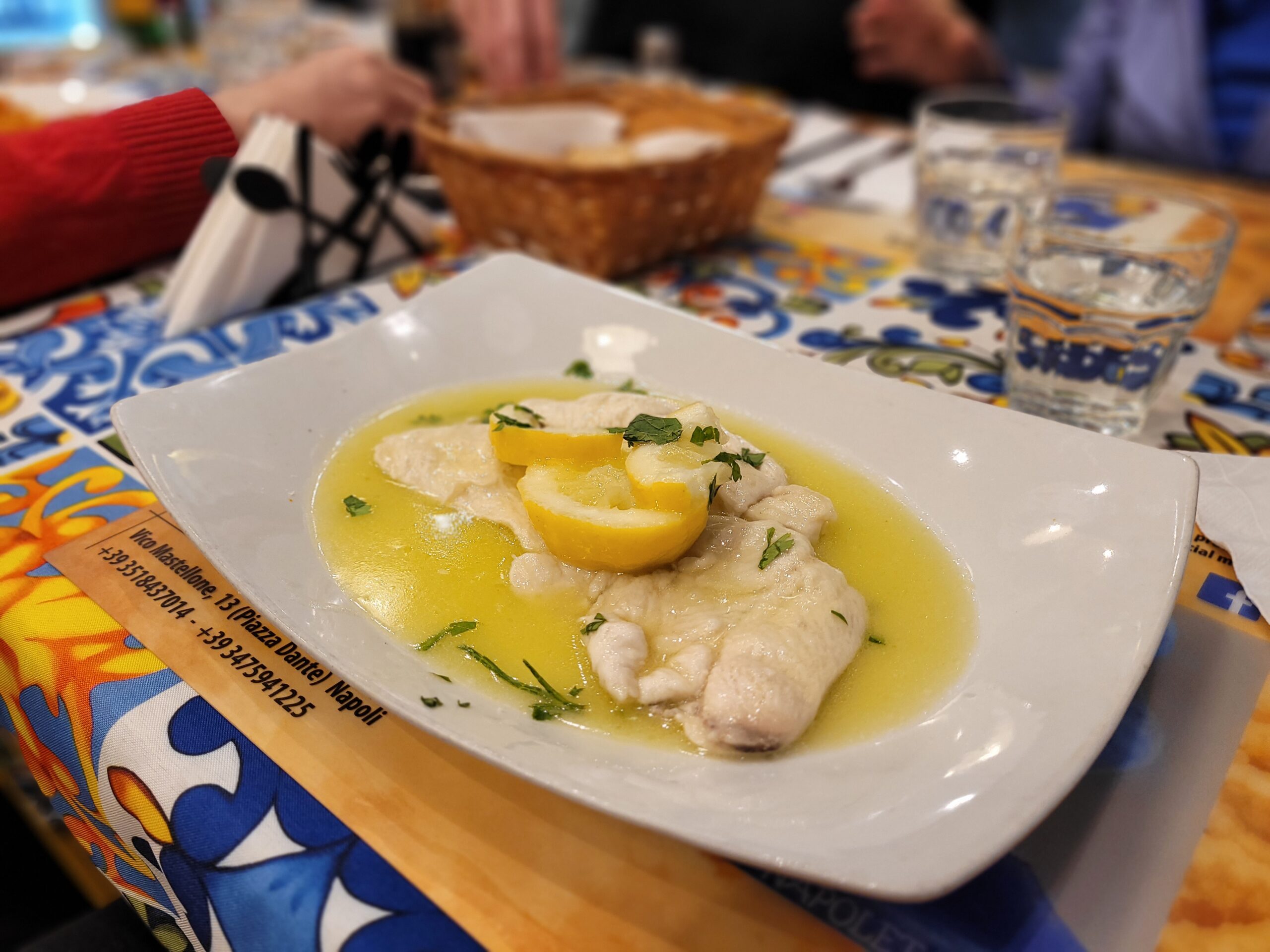
My cousin and his wife, their friend John from the UK, (who has now become our new friend John from the UK) and Courtney and I discovered an unexpected treasure of a restaurant called Trattoria Canta Napoli.
During dinner, the owner periodically stepped out from the kitchen and sang romantic Italian songs to the room—unplanned, heartfelt, and entirely unforgettable. As magical as that moment was, suddenly one of the patrons finished her bite of pasta, set her fork down, and began singing the chorus. It’s one of those magical moments that seemed right out of a movie, which we could enjoy while eating a delicious Italian meal.
For Us, All Roads Lead Back to Canada
After nearly three years of travelling, I’ve come to an unexpected conclusion: there are really only two things I genuinely miss from Canada—time with family and friends.
That realization didn’t arrive all at once. It showed up slowly, somewhere between new cities, unfamiliar languages, and the constant movement of life on the road. At some point, I began to notice what doesn’t get replaced. Beautiful places? There are plenty. Incredible meals? Everywhere. New experiences? Endless.
But the simple act of sitting across from someone who knows your story—who doesn’t need the backstory or the explanation—that’s not something you can replicate, it can only be developed over time. Just like that Luthier making his violin, each speck of dust carved away moment by moment, and it can’t be rushed.
Of course, if I’m being honest, I should also admit to missing things like Adam’s Peanut Butter and the strangely satisfying obsession Canadians have, and in particular that I have, with dill pickle-flavoured everything. Those are the comforts of home that sneak up on me. But they’re cravings I can laugh about and live without.
The real things that matter—the people—aren’t replaceable.
As I travel, what I’m realizing more and more is this: you can build a beautiful life almost anywhere in the world. You can find rhythm, purpose, even a sense of belonging. But the deepest connections—the ones built over years, over shared history, over countless meals and conversations—those are the anchor points in life.
As much as I’ve fallen in love with the life we’ve created abroad, it’s those anchor points in life that are the only things that ever really pull us back to Canada, and it’s those memories we create that matter most…especially if I’m thinking about them while eating some Adam’s peanut butter!

You May Also Like
Newsletter: March 2026 – Dolce Far Niente (The Sweetness of Doing Nothing) in Sicily!
April 7, 2026
Newsletter: January 2026 – Mountains, Elephants And Hiking!
February 7, 2026