Newsletter: January 2026 – Mountains, Elephants And Books
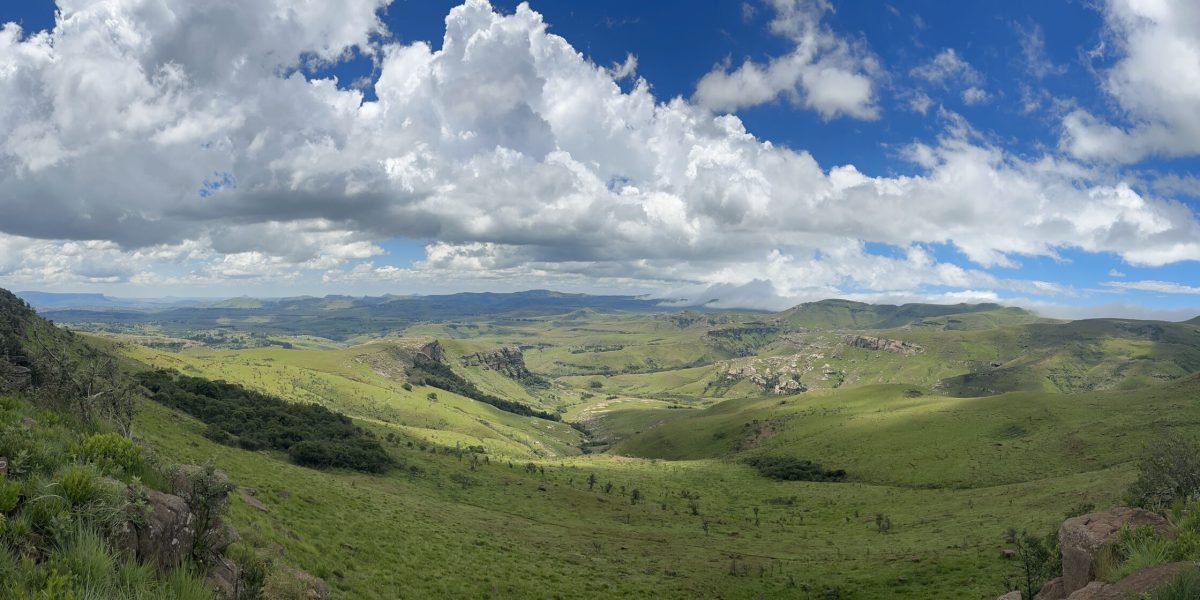
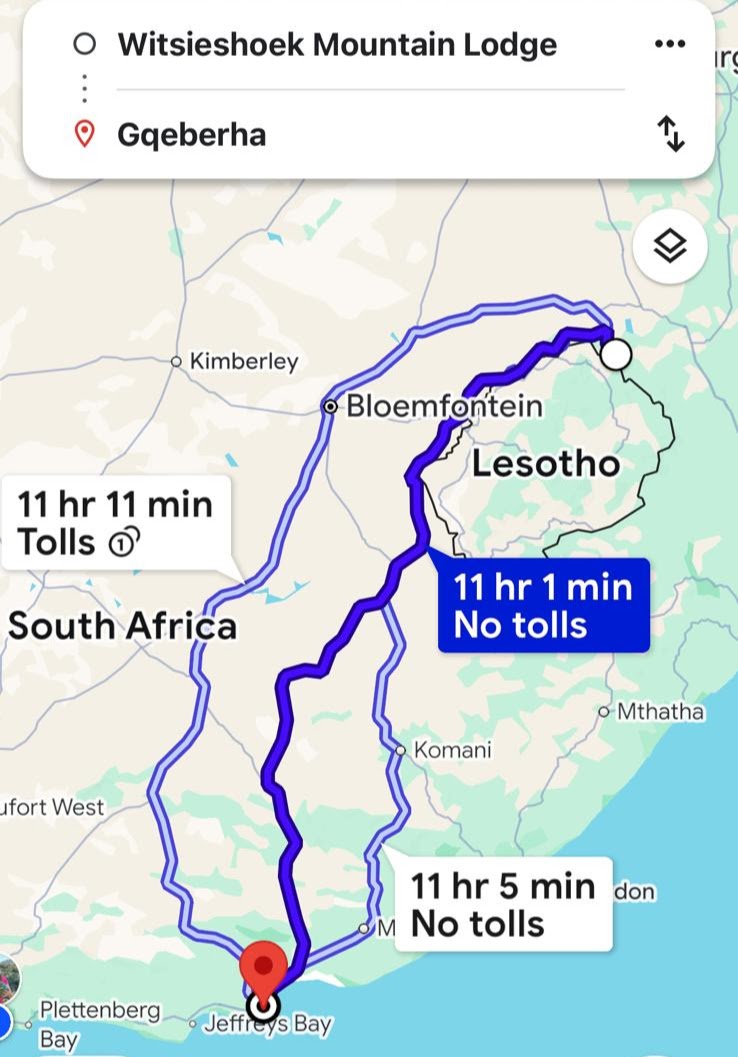
Our New Year started on the road with a 12-plus-hour drive from the Witsiehoek Mountain Lodge to Gqeberha, skirting the western border of the Kingdom of Lesotho. The mountainous terrain, sweeping big skies, and immense South African landscapes stretched out around us, turning the journey itself into something unforgettable.
Our Perspective of Gqeberha (Port Elizabeth)
Gqeberha—still affectionately called Port Elizabeth by many—sits where the Indian Ocean softens the Eastern Cape coastline, a city shaped as much by salt air as by history. The city itself carries deep resonance as part of the legacy of Nelson Mandela, whose name graces the wider metropolitan area and whose influence is felt in the region’s enduring spirit of resilience and quiet dignity.
Beyond the grand narratives, Gqeberha reveals its soul in smaller, more intimate places—eclectic corners like Sherwood Garden Centre, where books, plants, and conversation intermingle, reflecting a city that values curiosity, creativity, and the simple pleasure of lingering a little longer than planned.
Time Among Books, Quiet Corners, and Chess
Visiting the Sherwood Garden Centre—home to more than half a dozen shops, including Jimmy’s Bookshop, and the restaurant, ‘The Garden Cafe’—felt less like a place for garden supplies and more like stepping into a “pause” in the day. The atmosphere was hushed and unhurried, the kind of place where time loosens its grip.
Surrounded by greenery, books, and the soft murmur of conversation, it invited lingering rather than rushing—coffee sipped slowly, thoughts allowed to wander. It set the tone for the day: calm, reflective, and gently curious as though the world outside had agreed to wait while we stayed awhile.
From there, the joy unfolded in motion—hopping from bookshop to bookshop, shelves stacked with possibility, each stop offering the quiet thrill of discovery. This kind of wandering has its own rhythm: fingers brushing spines, titles whispering promises, the internal debate over which books deserve a place in an already well-loved future library collection.
It wasn’t about efficiency or checklists—-it was about the pleasure of searching, of letting chance guide the next find, and of feeling that familiar satisfaction when a book seems to choose you rather than the other way around.
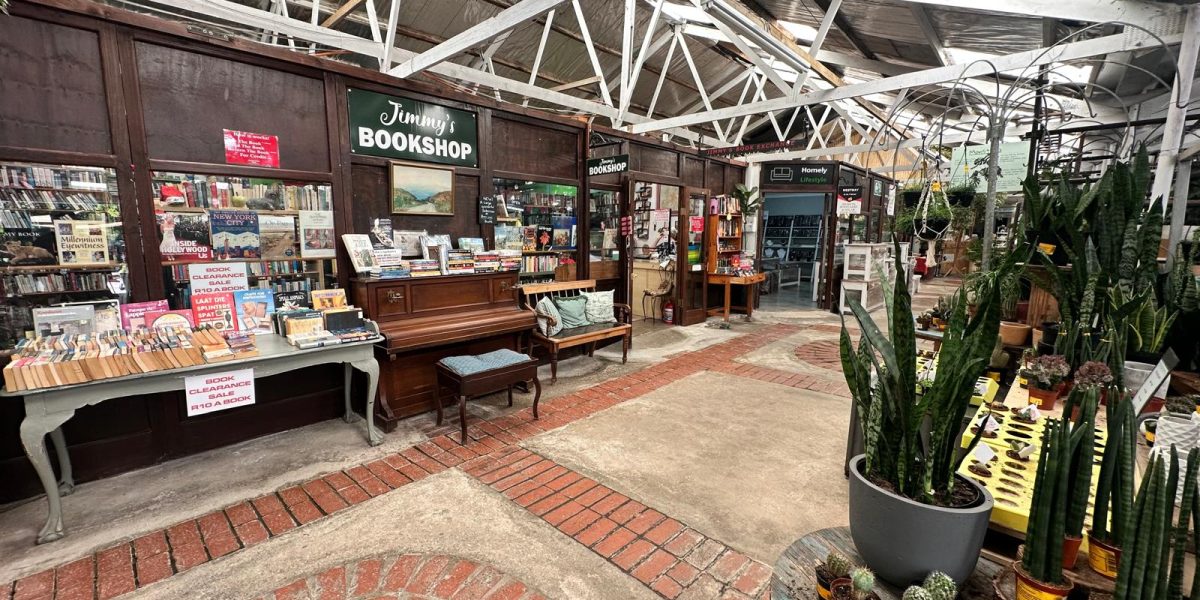
One encounter, though, rose above the rest. Tucked in the back of the “What’s Good in the Hood” Indoor Market at Baywest Mall, there’s a small bookshop. A conversation with the owner revealed a shared love of chess—-and not just a casual one.
He turned out to be a former International Chess Grand Master, and what followed felt like one of those rare travel moments that can’t be planned. We played a few games together, each move both humbling and exhilarating, infused with quiet respect and mutual understanding.
I left with a book he sold me—over a hundred years old and written entirely in German—a language I don’t speak at all. Yet that only added to the joy. Page by page, I’ll translate its lessons and ideas, slowly unlocking its wisdom, much like a long chess game unfolding over time.
More than the book itself, it was the shared love of the game, meeting a stranger who spoke the same unspoken language of the board, that made the moment linger long after we stepped back into the street.
Addo Elephant Park
Just inland lies Addo Elephant National Park, where herds of elephants move slowly through dense thickets, offering a reminder that wilderness is never far away.
History & Origins
As we drove toward Addo Elephant National Park, it felt grounding to know that this place exists because elephants almost vanished here. In the early 1900s, relentless hunting and conflict with farmers reduced the local elephant population to just eleven animals. In 1931, the park was officially established as a sanctuary—initially small, fenced, and focused almost entirely on protecting the last survivors.
What began as an act of last-minute conservation has since expanded dramatically, both in size and ambition, becoming one of South Africa’s most important success stories in wildlife preservation and a living reminder of how close extinction once felt in this landscape.
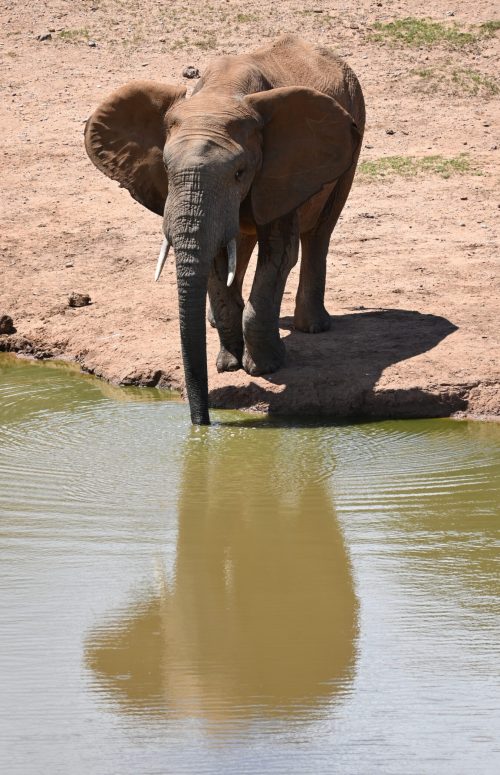
Our Safari Experience at Addo Elephant Park
The first moments on safari were quiet in a way that sharpened the senses. The road threaded through dense spekboom thicket and limited visibility—every bend was full of anticipation. Addo feels different from open savannah parks—it’s intimate, enclosed, and humbling, as if the bush is watching you back.
We found ourselves slowing down instinctively, scanning for movement, listening for branches snapping, or the low rumble of unseen animals. There was a sense that anything could appear at any moment, and that the experience would unfold slowly, on the park’s terms rather than ours.
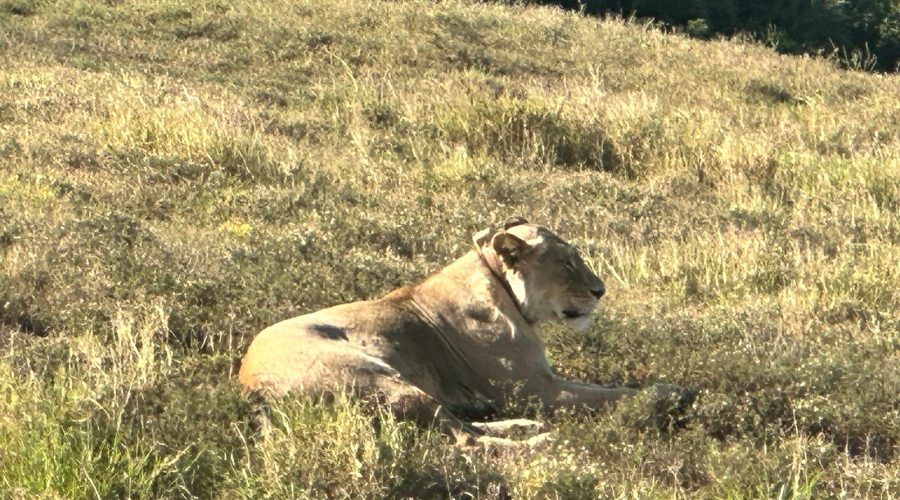
Encountering the Elephants… and Solo Time with a Female African Lion!
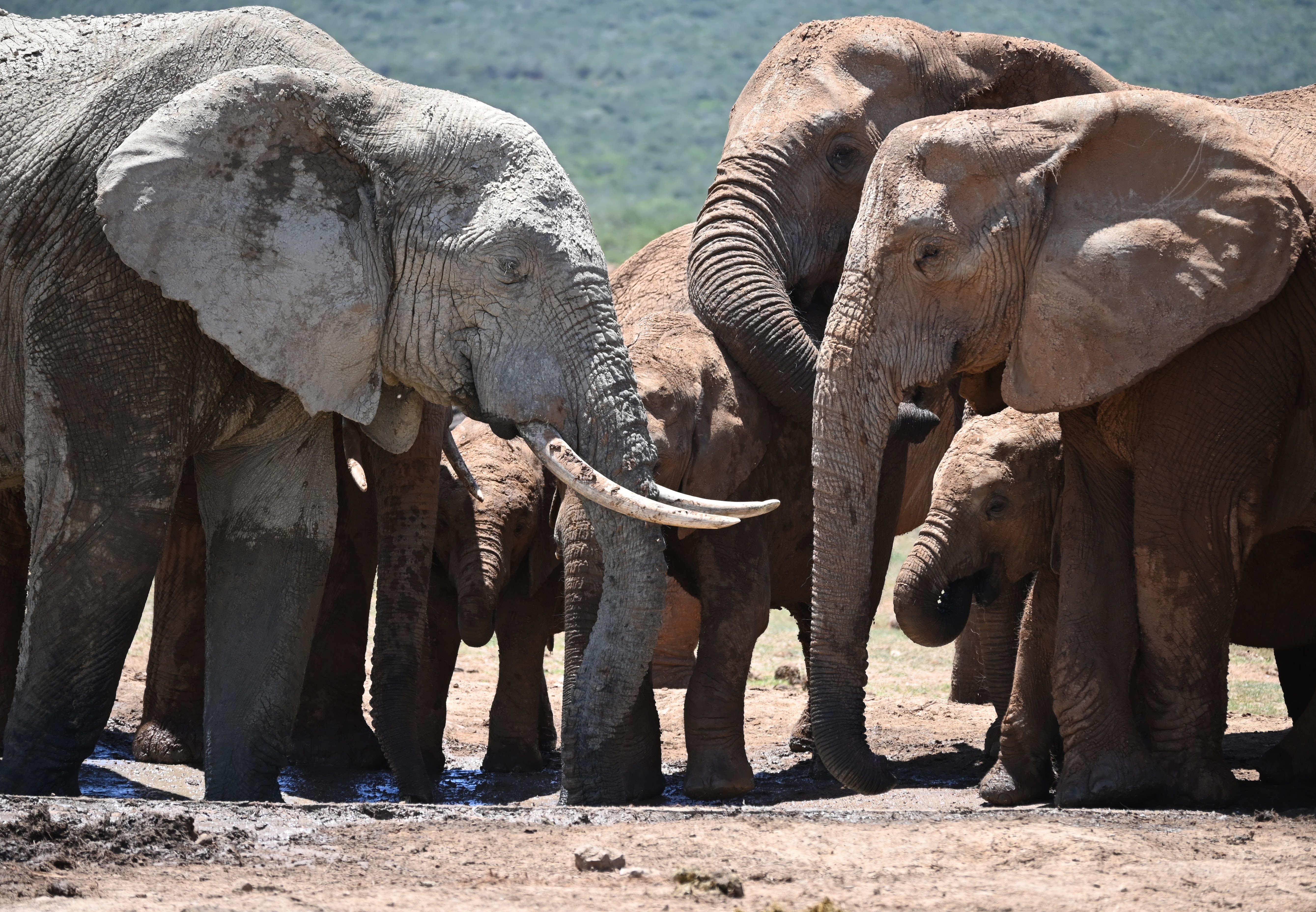
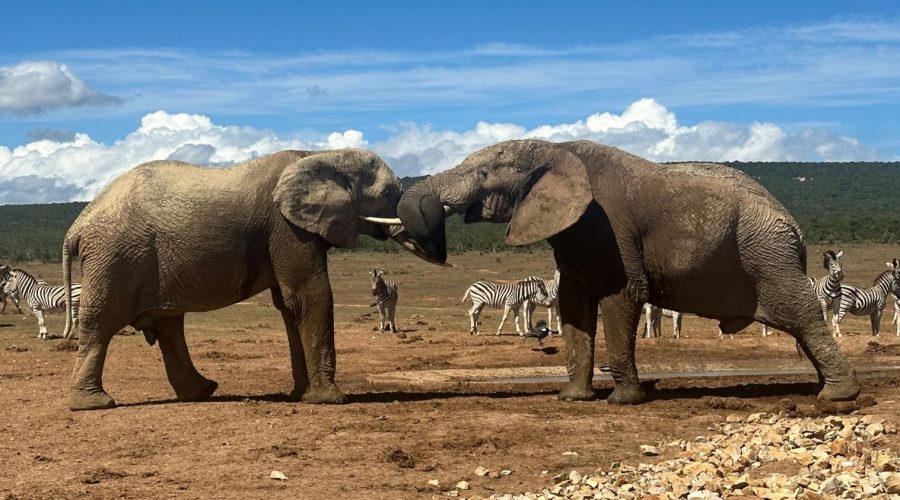
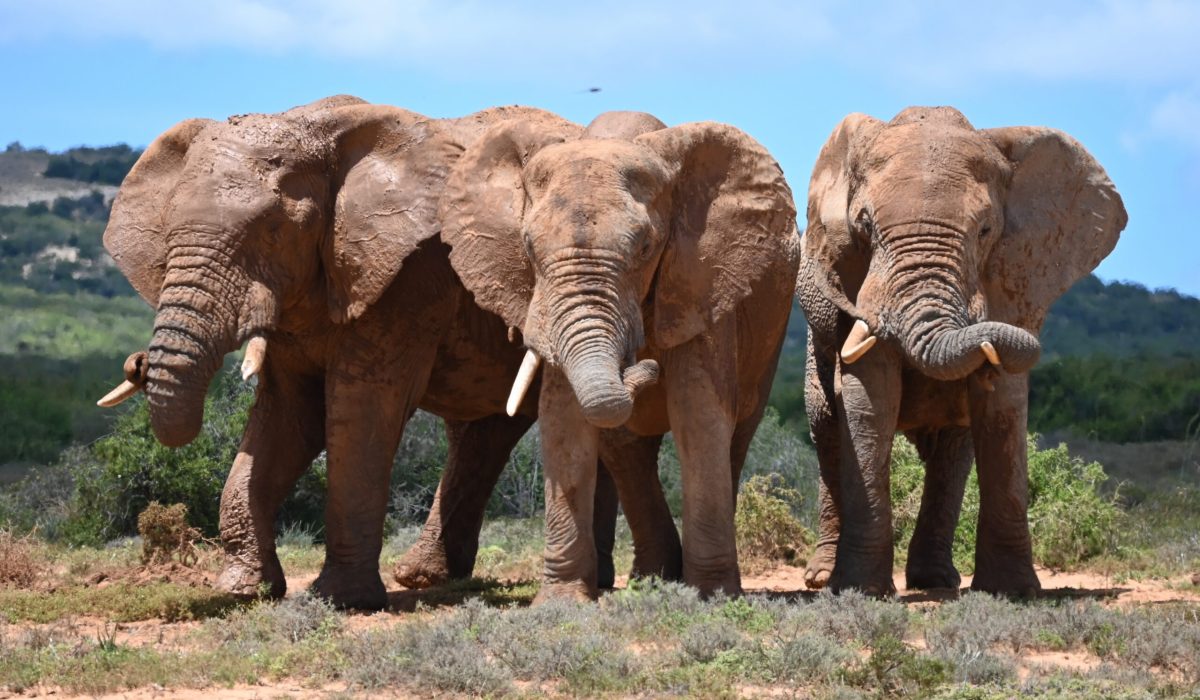
Then came the elephants—not in a rush, but as a steady, unhurried parade emerging from the bush. We watched them for a long time, engines off, completely absorbed. There was a rhythm to their movement: calves weaving between legs more than double their size, matriarchs pausing to test the air, and ears lifting and settling like sails.
Spending that much time observing them revealed small, intimate details—the way they communicated with subtle touches, how they protected the young, and how patience seemed woven into every action. It stopped feeling like a sighting and started feeling like a lesson in presence, as if the elephants themselves were quietly teaching us how to slow down and pay attention.
We also had a very rare opportunity, all to ourselves, of sitting near and observing a female lion. Sitting just 20m away with a clear view of this majestic African cat (and all to ourselves!) was something to behold.
Onwards to Knysna Area for a Month
After about a week in Gqeberha, we were on our way to our next stop in a town called Knysna. Last year, we only spent 1 day in Knysna, and we knew we wanted to return again to spend more time discovering its diversity.
Knysna sits between forested mountains and a sheltered lagoon along South Africa’s Garden Route, a town shaped by water, wood, and time. Historically, it grew as a timber hub in the 19th century, drawing settlers who harvested the surrounding indigenous forests and shipped goods through the dramatic Knysna Heads.
Over time, it evolved from a working port town into a place known for slower rhythms, creative communities, and a strong connection to nature. Today, Knysna offers us both a wilderness and a marine experience, as it is close to the surrounding hills and mountains, yet well established with a calm presence of the lagoon.
For those drawn to movement and elevation, Knysna delivers spectacular hikes—-Trails wind through ancient forests where massive yellowwood trees filter the light, while coastal paths reveal sweeping views over the lagoon and ocean.
Dalene Matthee Big Tree: Hiking in an Ancient Forest
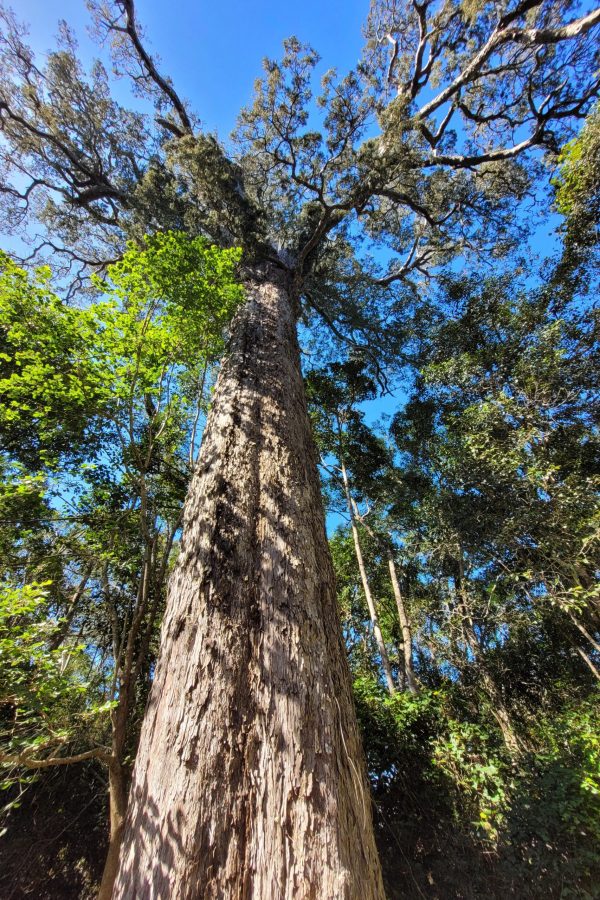
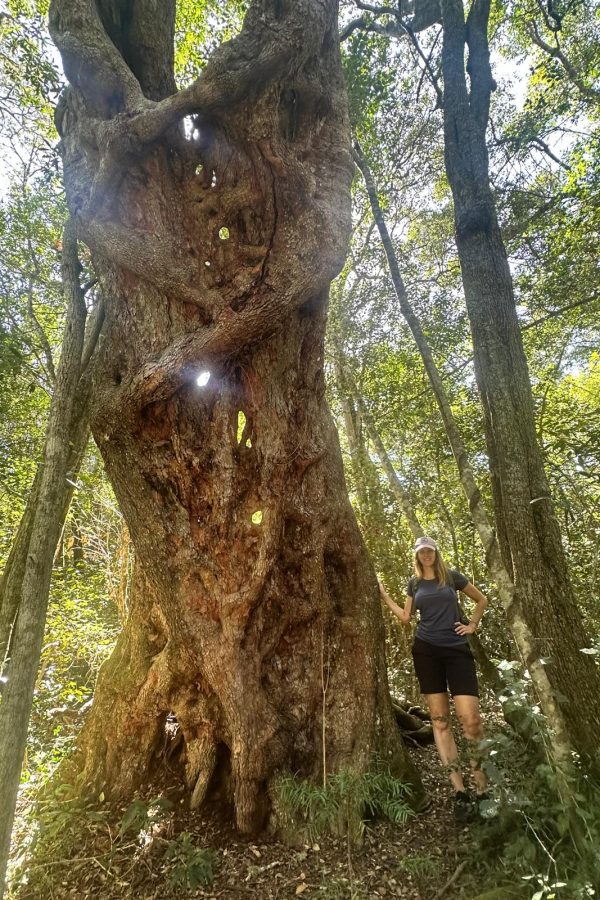
Near the Krisjan-se-Nek area of the Goudveld forest, we hiked “The Circles of the Forest Trail”—- a 9 km trail that began with the Dalene Matthee Big Tree towering above us—-an 880-year-old Outeniqua Yellowwood nearly 40 m tall. With its dense canopy and shaded paths, the hike felt reminiscent of forest walks on Vancouver Island.
Hiking at Knysna Heads
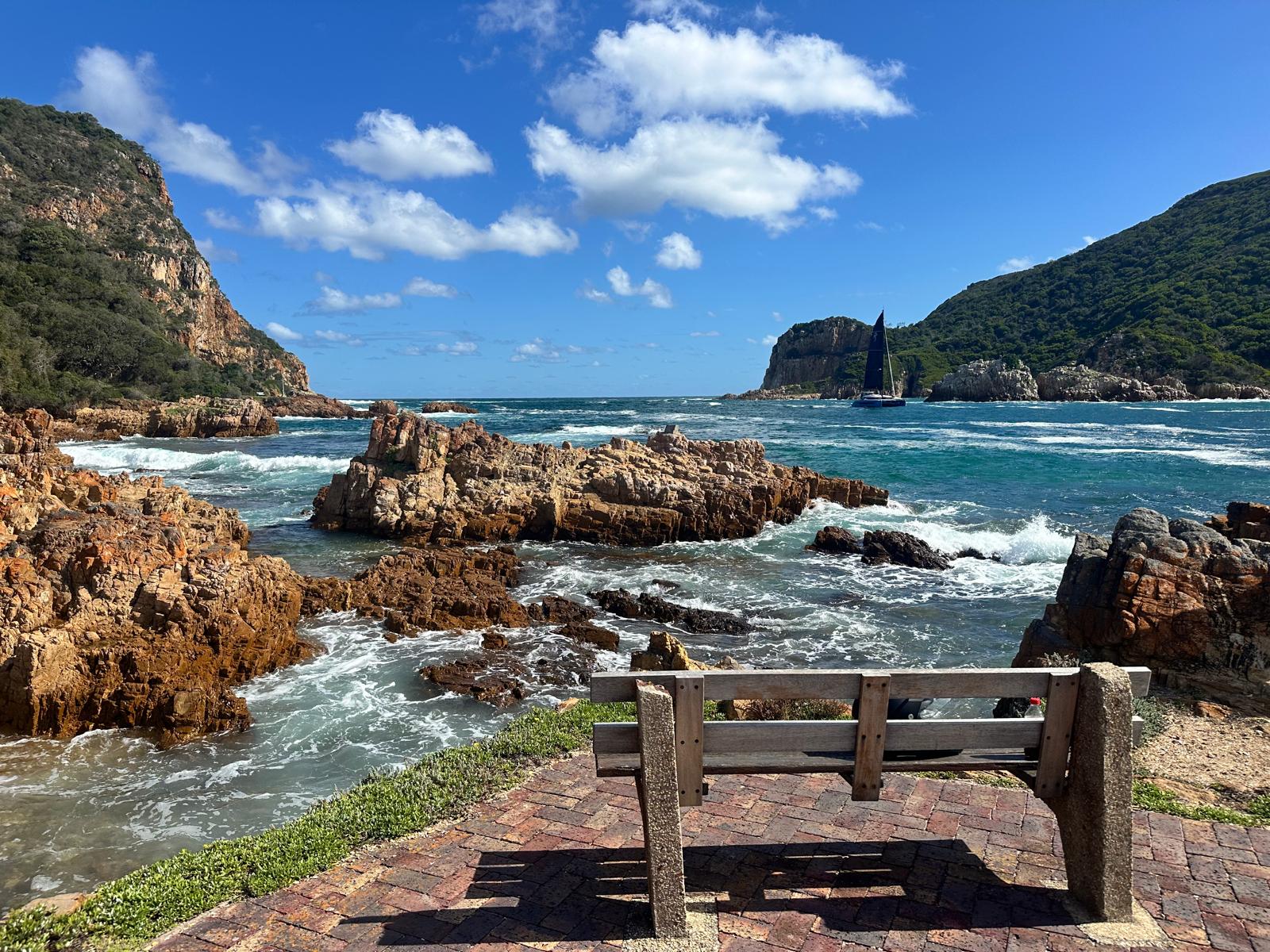
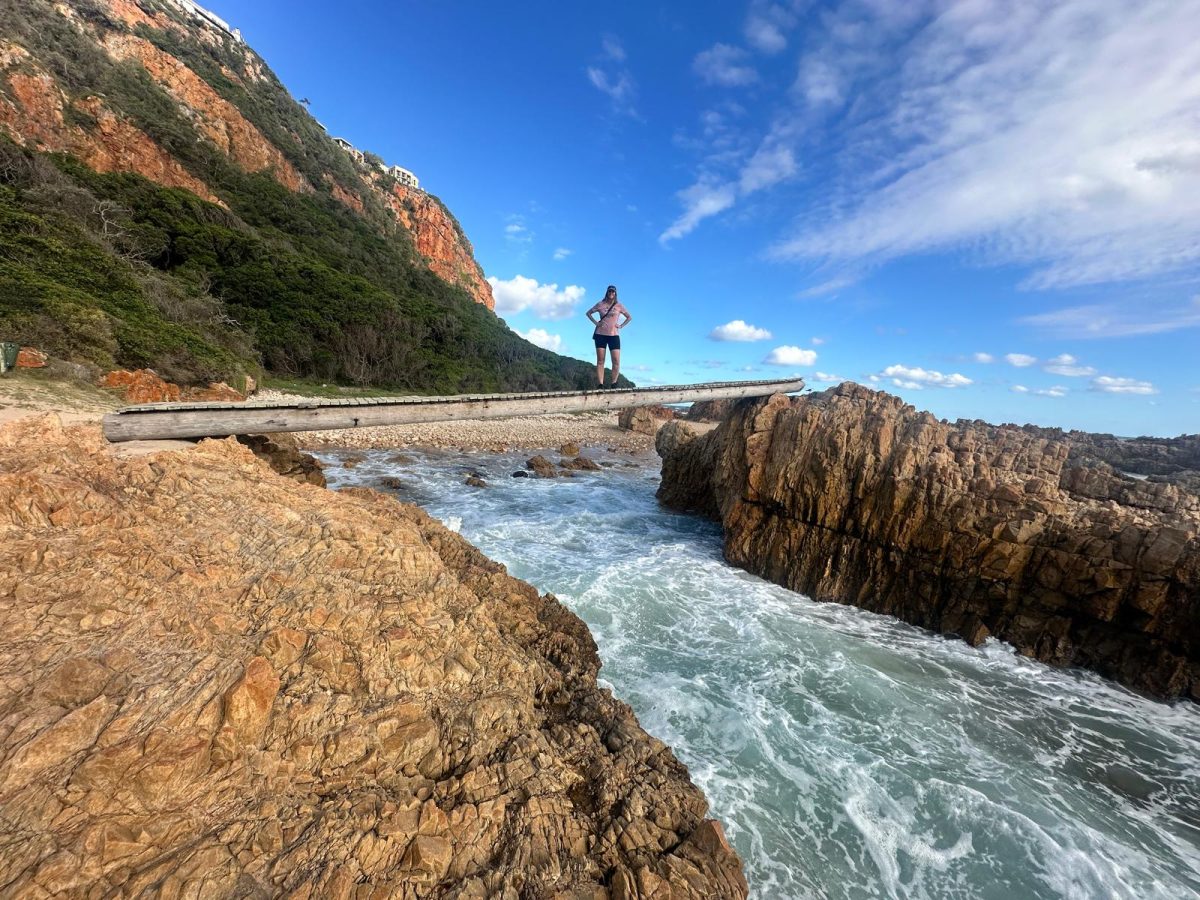
Knysna Heads provide a dramatic walk with sheer sandstone cliffs and constant motion below, while nearby forest hikes offer cool shade and deep stillness. A little further afield, Featherbed and the surrounding reserves blend history, ecology, and panoramic viewpoints, making Knysna a place where you’re never forced to choose between mountains, water, or forest—you simply move between them, often all in the same day.
Day Hike at the Robberg Nature Reserve
When Courtney and I were hiking up in the Drakensberg Mountains toward Tugela Falls, we crossed paths with two women moving at a pace that suggested either exceptional fitness or mild panic. It turned out to be the latter—they were racing the clock to make it back to the trailhead before their shuttle decided to leave without them.
Since Courtney and I had arrived in our mighty Toyota Fortuner 4×4, we casually mentioned that if the shuttle pulled a vanishing act, we could offer them a lift back to their lodging.
As fate (and the shuttle schedule) would have it, our offer became immediately relevant. On the drive back, conversation flowed easily, drifting from one memorable hike to another, as hikers tend to do when oxygen levels return to normal.
One recommendation stood out— these women both highly recommended that we check out the Robberg Nature Reserve near Plettenberg Bay, and it was mentioned with enough enthusiasm to sound like a travel command rather than a suggestion. We took the hint, followed their advice, and were very glad we did—proof that sometimes the best travel tips come from strangers who are just trying not to miss their ride.
Robberg Nature Reserve carries a deep and layered history shaped by both people and geology. Archaeological evidence shows that humans lived and sheltered on this peninsula tens of thousands of years ago, making use of its caves, abundant marine life, and natural protection from the elements.
Later, it served as a navigational landmark for early Portuguese explorers rounding the Cape. Today, Robberg preserves not just dramatic coastal scenery, but a rare continuity of human presence, ocean life, and ancient stone landscapes shaped by wind and waves.
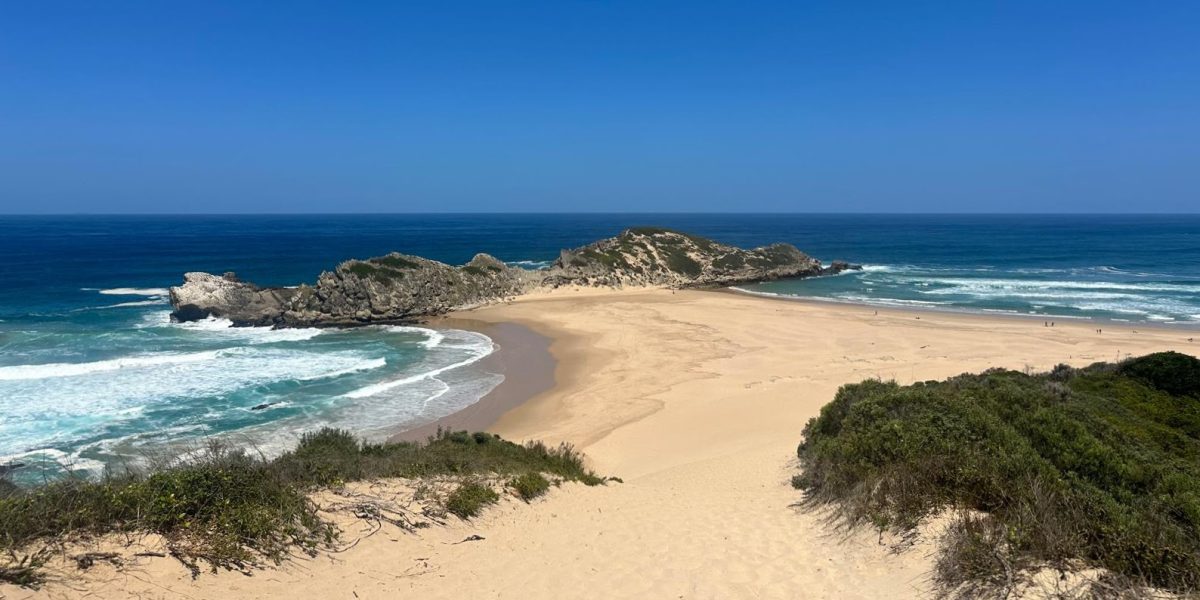
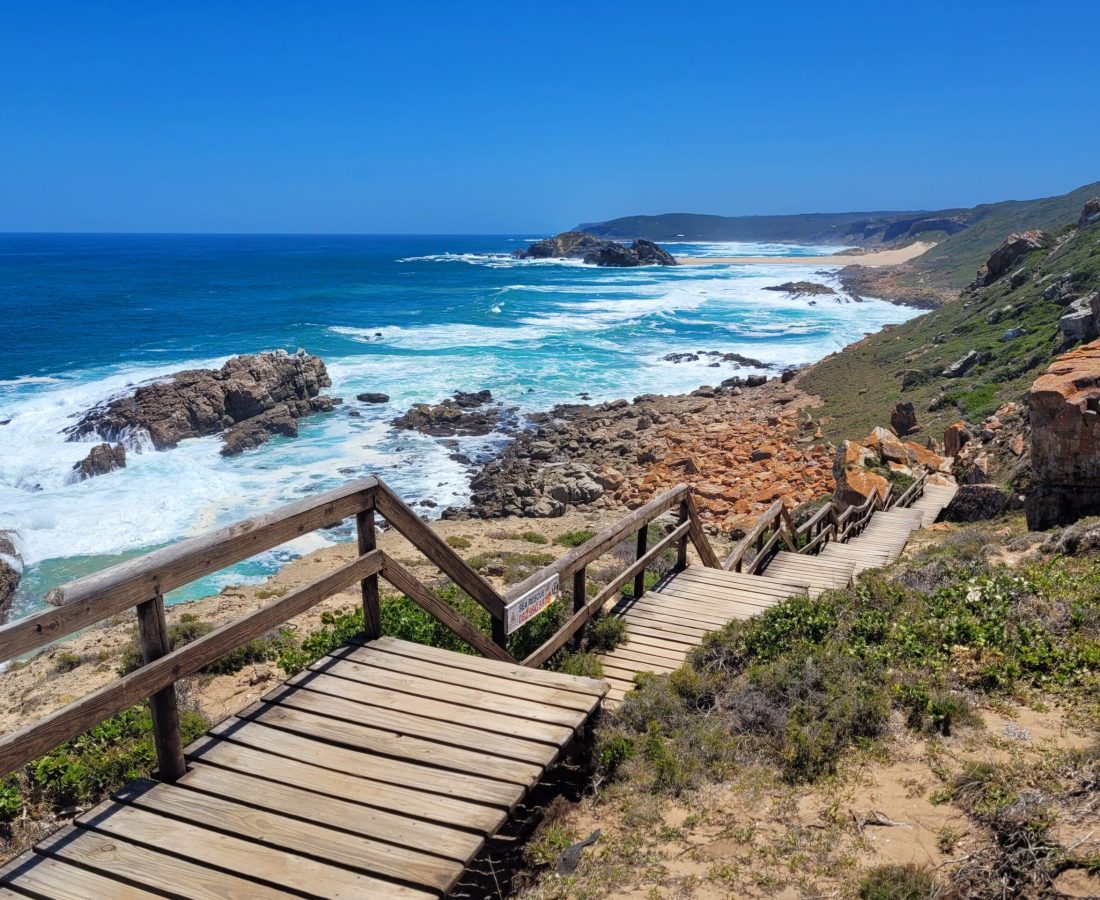
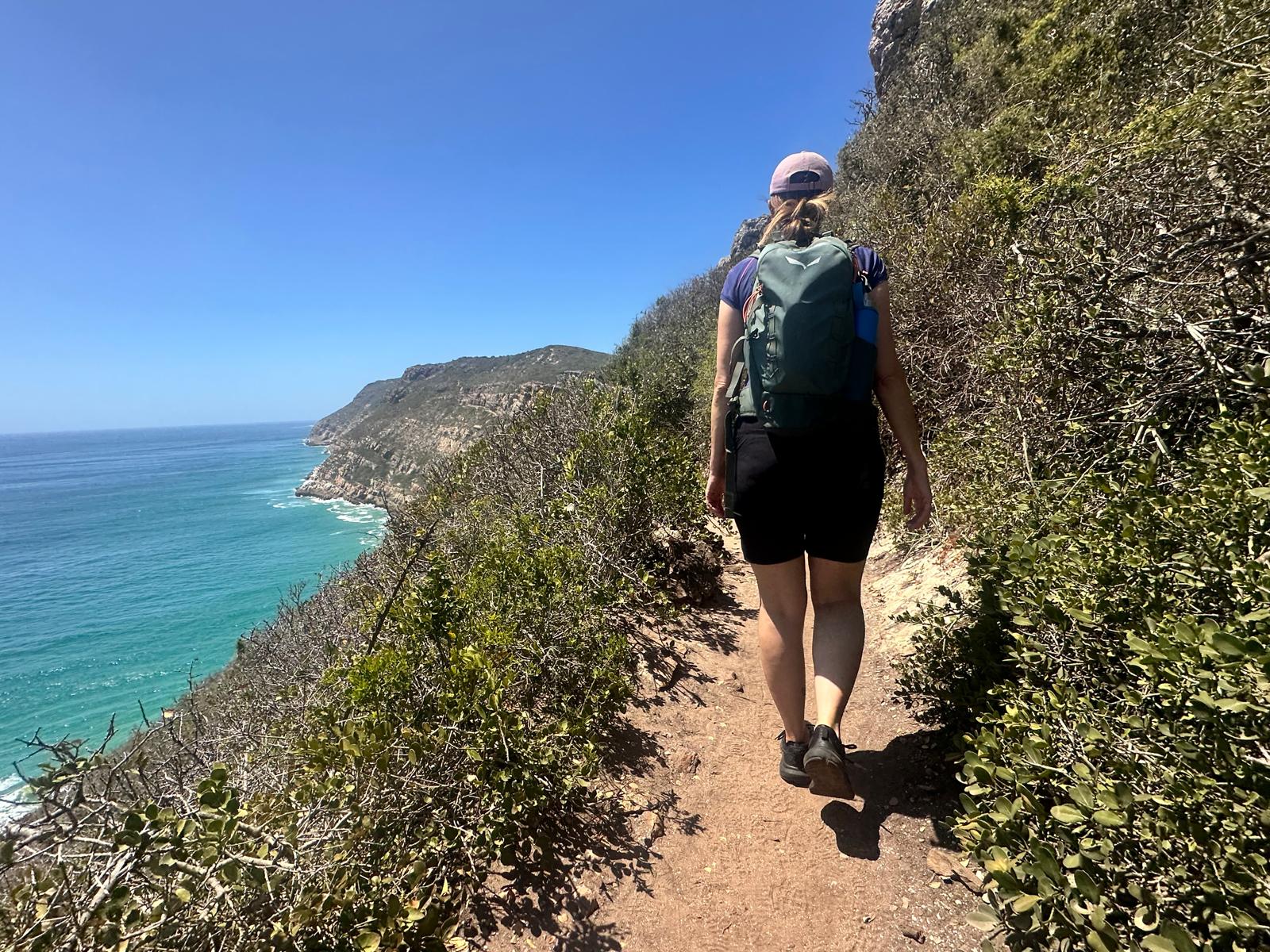
Hiking Robberg feels immersive and elemental from the first step. The trail rises and falls along sheer cliffs where the ocean crashes far below, seals bark from rocky outcrops, and the wind carries salt and spectacular views in every direction. As the path curves and descends, anticipation builds—until suddenly the landscape opens onto a wide, remote beach that feels astonishingly untouched.
The sand stretches out in quiet solitude, the water surprisingly warm, and the world feels briefly reduced to simple essentials—feet in the surf, sun caressing the skin, and the rare calm of being somewhere beautiful and largely uninhabited. It’s the kind of place that rewards effort with stillness, and leaves you lingering long after the hike is technically over.
Remote Office Work at the Knysna Biblioteek
Beyond exploring the surrounding landscapes, I also settled into working remotely at the Knysna Library—a true hidden gem. It’s quiet, air-conditioned, and spread across three levels, with an inviting mix of comfortable leather chairs and well-designed workstations that made long workdays surprisingly pleasant.
Custom leather goods at Tan-Ru Leather Works
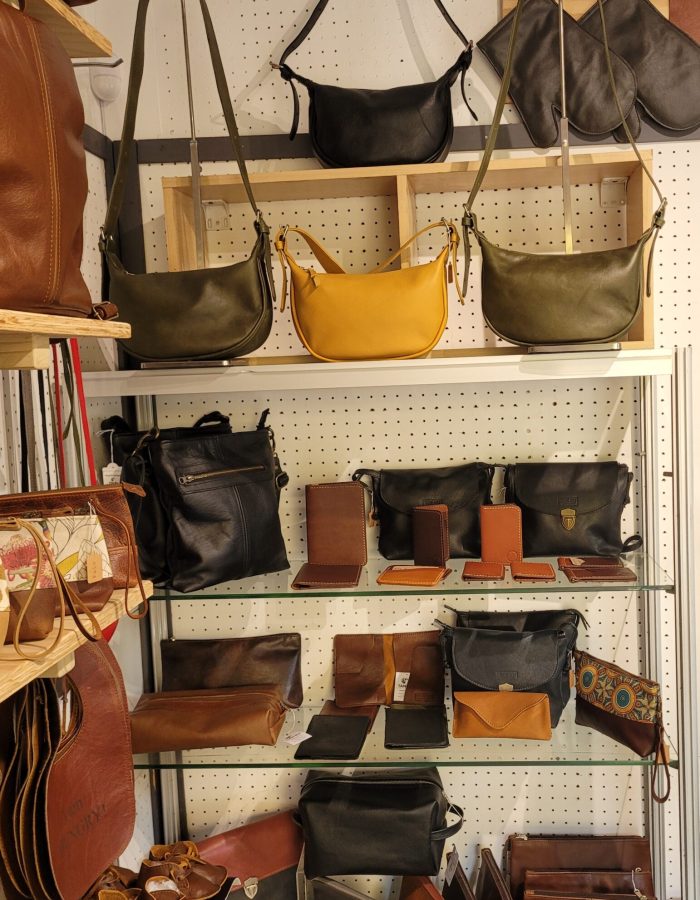
Near the Knysna Library we met Tawanda at Tan-Ru Leather Works, a local leather craftsman, whose openness to custom work made the visit especially memorable. I ordered a custom leather folder and I had my wallet expertly repaired, while Courtney chose a leather purse and commissioned a matching wallet made precisely to her specifications.
Meeting the tradesman and seeing his products, we were impressed with his dedication to quality craftsmanship and full-grain leather source materials.
Thesen Island on Foot
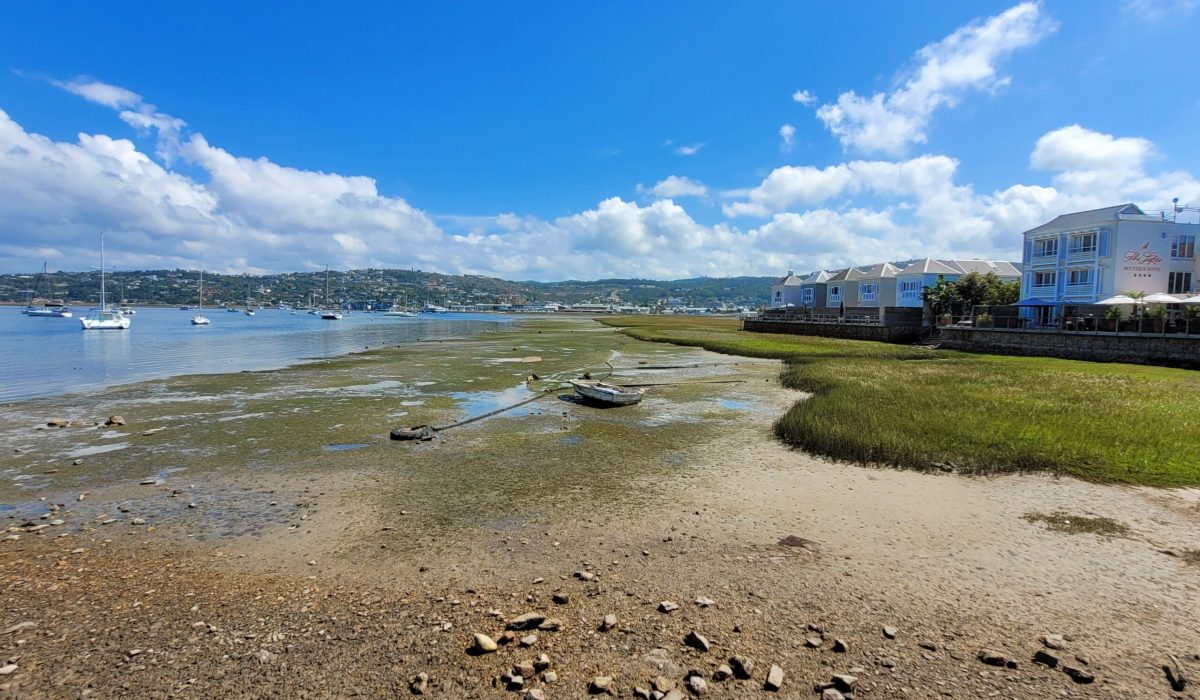
Thesen Island offers a particularly compelling layer of history. Originally developed in the early 1900s as an industrial island with sawmills and boatyards, it was later reimagined into a residential marina that still honours its maritime roots.
Being on Thesen Island reminds me a bit about being back on one of the smaller Gulf Islands off the west coast of Canada. It feels uniquely balanced—close to the water on all sides, with boats gently rocking at their moorings, fishermen relaxed as they cast for their dinner, yet framed by the Outeniqua Mountains rising in the distance.
The cafes, restaurants and boutique shops on Thesen Island offer unique and relaxing vibes, including Ile De Pain, a local (and personal) favourite bakery and restaurant worthy of repeat visits.
Île de Pain restaurant
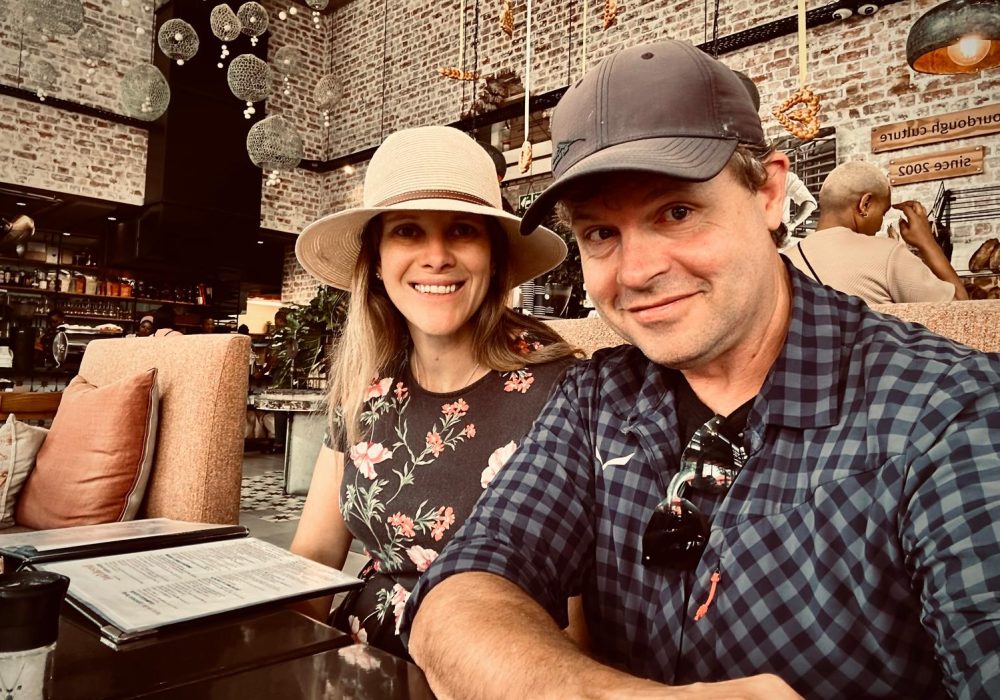
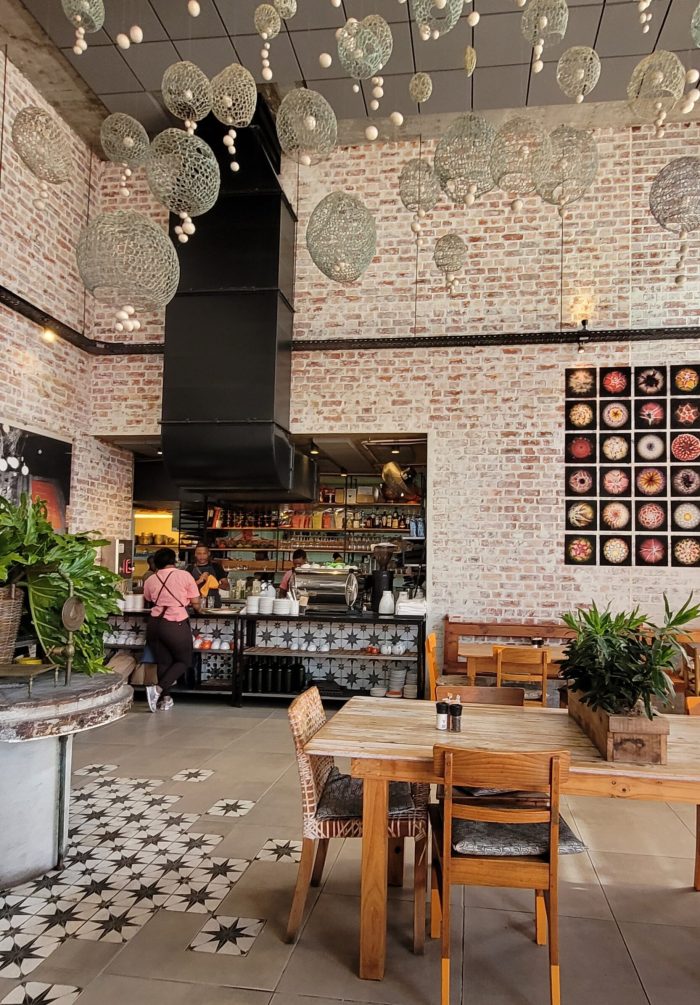
Île de Pain, a breakfast and lunch spot on Thesen Island, feels like a small daily ritual rather than just a place to eat—a warm, European-style bakery and café tucked right into the calm rhythm of Thesen Island. Mornings there unfold slowly over excellent coffee, flaky pastries, and crusty bread still warm from the wood-fire oven, while boats drift quietly past outside.
It’s the kind of spot where conversations linger, notebooks come out, and time stretches just enough to remind you that you’re somewhere special meant for lingering, not rushing.
The surrounding uniqueness of the architecture of this bakery matches the exquisite menu and uniqueness of flavors found in each meal! I would return to Thesen Island just to sample more of these incredible meals at Ile De Pain!
A Stroll Around Leisure Island: Caffeine + Chess
Just across the lagoon from Thesen Island lies Leisure Island—a name so perfectly suited it almost feels fictional. It lives up to its name completely. Leisure Island is flat, walkable, and tranquil, offering one of the most serene residential settings imaginable, where mornings begin with birdsong and evenings slow to the rhythm of tides.
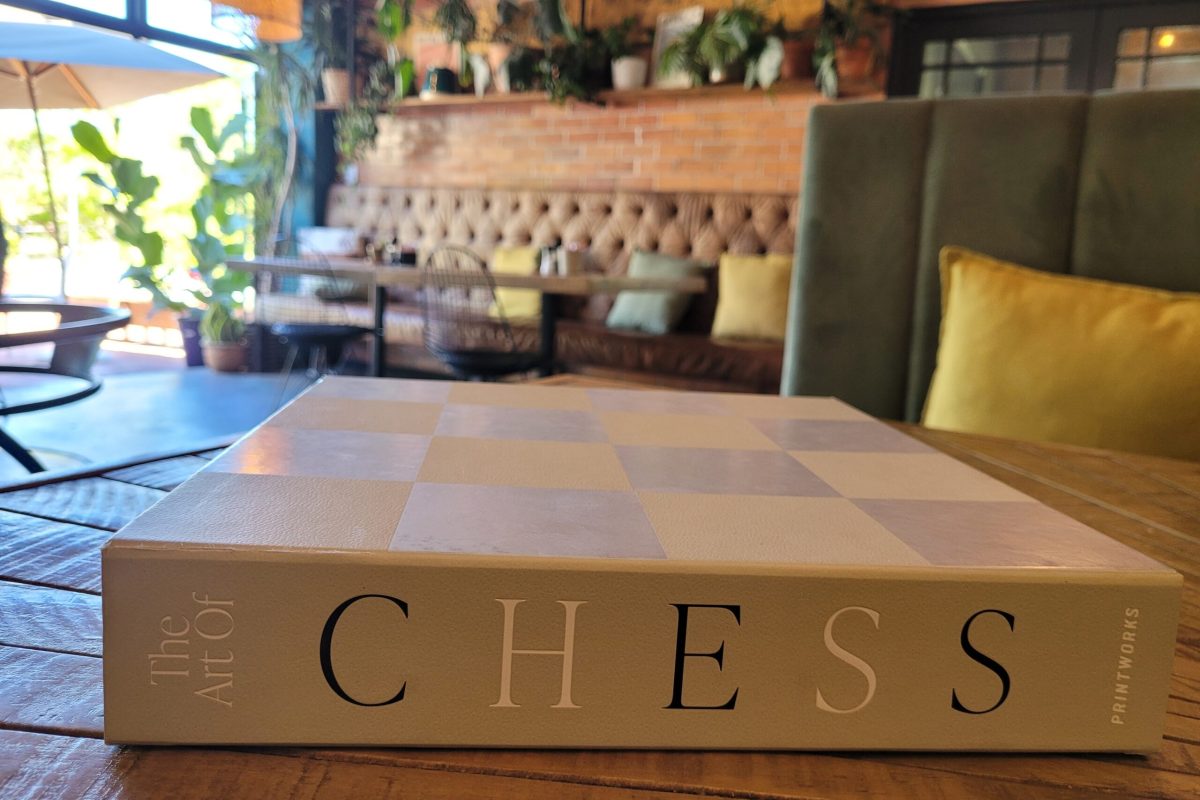
Leisure Island is also where you’ll find another one of my favourite cafes in the area called Coffee Craft. With a beautiful glass and mirror chess set available for public use, Coffee Craft is a serene spot to meet a friend for chess or find a fellow local who has the time for a game.
On one of our visits to this cafe, a tiny bird ended up being so close that it actually flew into the cafe and became trapped behind the large glass window. Courtney and I quickly hopped up from our table to help the bird find it’s way back outside away from the window. Once we managed to steer the bird in the right direction, we even received an applause from the other customers sipping on their coffees and undoubtedly watching the action unfold like a local game of cricket.
Something told me that this likely wasn’t the first time a tiny bird became trapped within this cafe, but the locals almost held back as if to tell us, “Today it’s your turn to rescue this little one.”
Day Trip to Plettenberg Bay and a Visit to the Old Nick Village
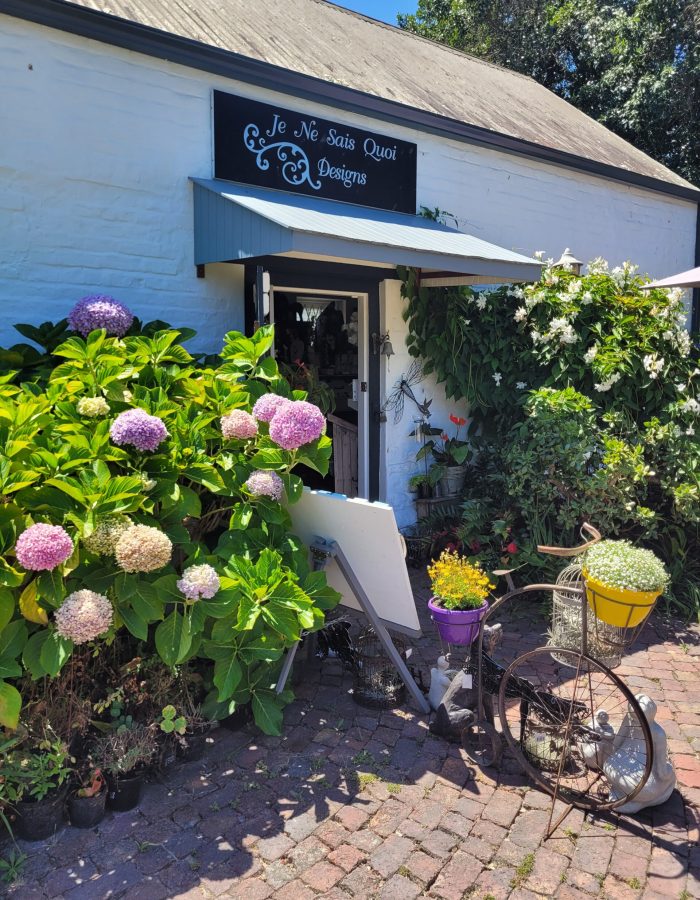
The Old Nick Village has grown from a small local gathering into one of Plettenberg Bay’s most charming weekly rituals. Rooted in the tradition of community markets—where neighbours once came as much to talk as to trade—it still carries that original spirit.
First impressions are warm and unpretentious: several stylish shops are tucked into a leafy setting, the hum of conversations linger, the smell of fresh bread and coffee waft through the air, and a sense that no one is in a particular rush to be anywhere else.
Wandering the market feels like a slow, rewarding browse rather than a shopping mission. Artisan food shops sit alongside handmade goods, local produce, baked treats, and small cafés that blur the line between “store” and “hangout.”
It’s the kind of place where you might arrive intending to grab one thing and leave an hour later with an armful of surprises—olive oils, pastries, ceramics, or a meal you hadn’t planned on eating but couldn’t reasonably refuse. The mix of shops and food vendors reflects the wider Plettenberg Bay lifestyle—relaxed, quality-driven, creative space.
Tour of The Mungo Mill: Where Threads Transform to Textiles
A standout experience is the Mungo textile factory tour, which adds depth and craft to the visit. The tour offers a rare look into working looms, where traditional weaving techniques meet modern design, all under one roof.
Seeing the textiles made from start to finish gives the finished products—throws, towels, blankets, and table linens—a deeper meaning. Mungo’s pieces feel purposeful rather than decorative, built to last and improve with use, making it hard to leave without taking something home that feels both beautiful and enduring.
If you’d like to get inside and see the production at The Mungo Mill, you can check out the following video and plan your trip to get a tour yourself!
After our tour of the Mungo Mill, Courtney and I couldn’t resist leaving with a small, carefully chosen collection—a set of six ‘Cloverleaf Napkins’ and two kitchen ‘Boma Cloths’ to bring a bit of that craft and texture home with us. (Boma Origin: Inspired by the traditional African boma—an enclosed, communal, outdoor, or fireside gathering place.)
Summing Up Our Month in the Knysna Area
Spending a month together in the Knysna area felt less like traveling and more like a gentle reset. For me, days lose their sharp edges when there’s no rush to see everything at once, when discovery happens organically—through morning rituals, repeated neighbourhood walks, familiar cafés, unplanned conversations, and impromptu chess games with strangers.
There’s a deep comfort in waking up knowing that nothing is “last chance”—the forests, the lagoon, the trails, and the small rituals will still be there tomorrow. Sharing this kind of time together creates a gentle rhythm—noticing details I might otherwise miss, laughing at small coincidences, and slowly stitching memories into something that feels lived-in rather than merely visited.
"Here, time stretches with the landscape—wide skies, patient forests, and moments that only reveal themselves when you stay.”
What stands out most this past month is how these hidden treasures—markets, bookshops, beaches, hikes, quiet corners—become shared reference points between Courtney and myself. Like the stranger who walked by and took my chicken meal off my plate, or the “proper” pronunciation of the word “Leisure” for how to refer to “Leisure Island” or the joint bird rescue from the local cafe. These turn into our inside jokes, private landmarks, moments we’ll carry long after we’ve moved on.
A month like this builds something subtle but enduring: a shared sense of place, of pace, and of presence. It reminds me that discovery doesn’t always come from distance or online research, but from chance encounters with real people, and staying long enough for a place—and each other—to unfold fully.
We plan to leave Knysna soon for our next destination at Betty’s Bay before continuing onwards to Cape Town. While we still have 5 more days here in Knysna, I know I’ll miss this town and I hope to return again in the future.
Our discoveries here—-both the places and the people—-have made such a strong impression on us. I know that even after departing, it feels as though a part of us will remain here in Knysna until we can return for another visit.


You May Also Like