Newsletter: February 2026 – Our Last Month in South Africa
After nearly three years of full-time travel, I’ve started to notice something: the moments that stay with us most deeply are rarely the ones we schedule. They’re the moments that slip in quietly. The ones we couldn’t have planned even if we tried. This month felt like a masterclass in that truth.
It sounds contradictory to say that I try to “plan for spontaneity,” but in a way, we do. Courtney and I map out regions. (Ok, admittedly, Courtney does most of the research.) We look at each season and decide where we want to be. We sketch a rhythm. But we also leave white space — time for detours, for conversations, for the unexpected knock at the door.
And South Africa delivered. Our three months in South Africa unfolded in three broad chapters, starting from the North and ending in the South.
First, a return to Kruger — long drives through the bush, safaris at dawn, and more hiking than we’d done on our previous visit. It felt grounding, expansive. If there is one truth about South Africa, the landscapes can be breathtaking!
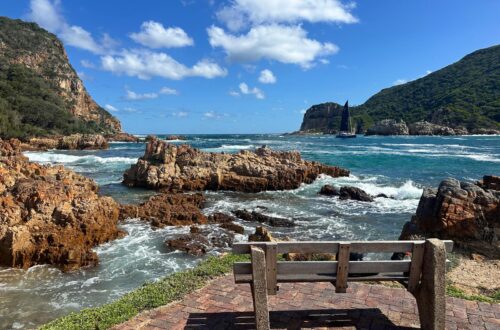
Then the south coast near Knysna — forests, coastal trails, quiet recalibration. The kind of place where a month doesn’t feel like travel so much as settling into a different version of life.
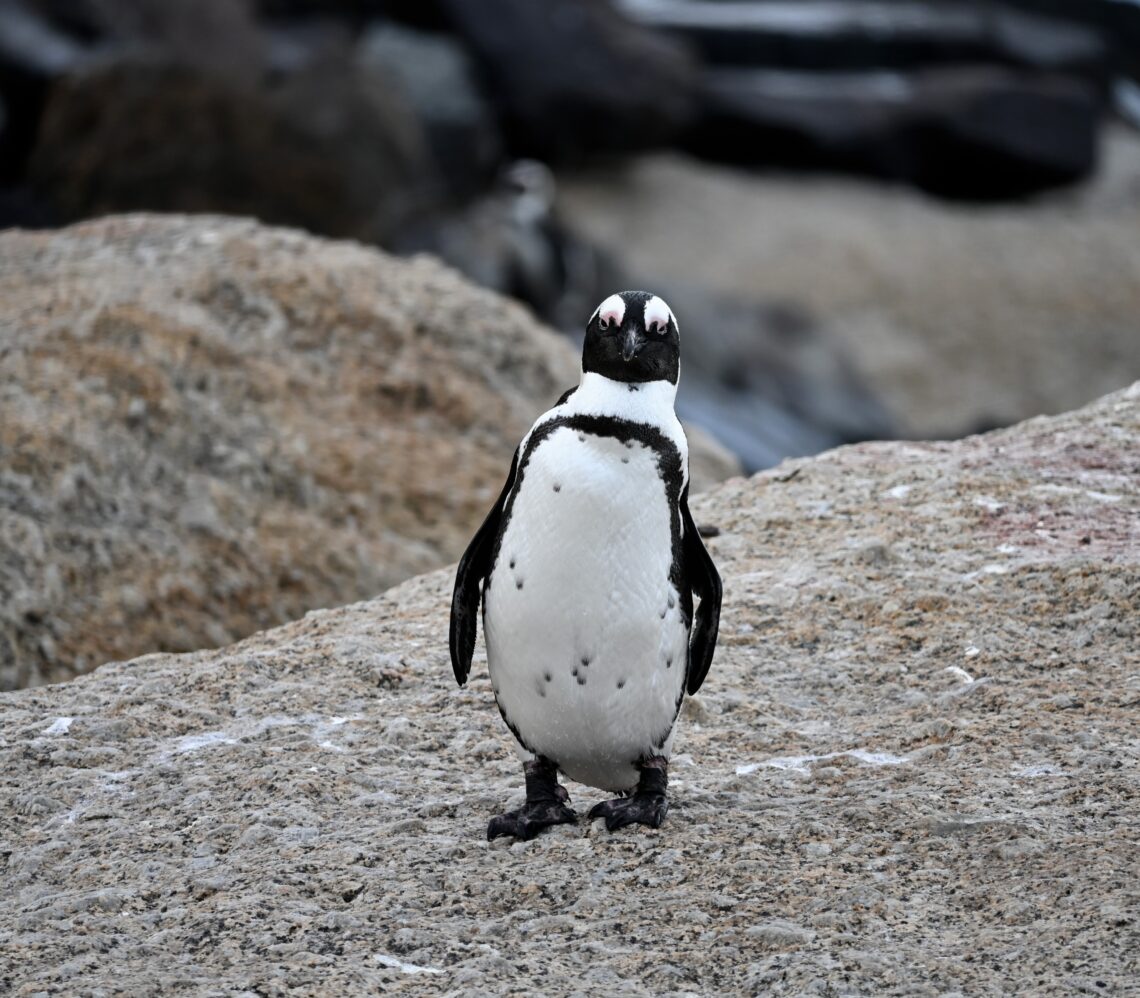
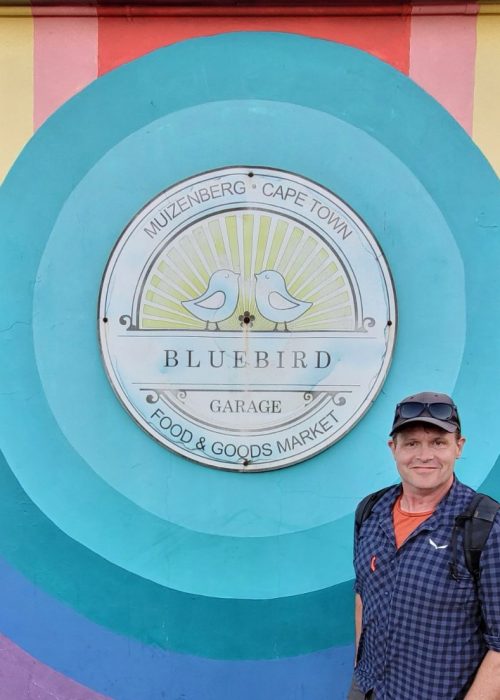
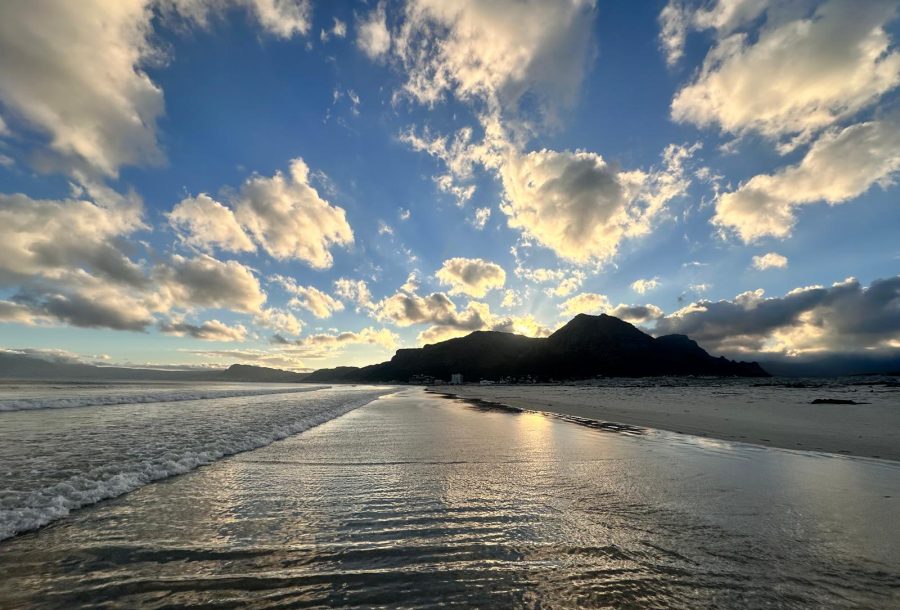
And finally, in February, Muizenberg, just south of Cape Town — close enough to the city’s pulse, and near enough to Simon’s Town for another visit with the penguins.
But it was the unscripted moments — the ones that slipped between destinations — that defined this month.
A Funeral for a Lifeguard… in the Ocean — Plettenberg Bay
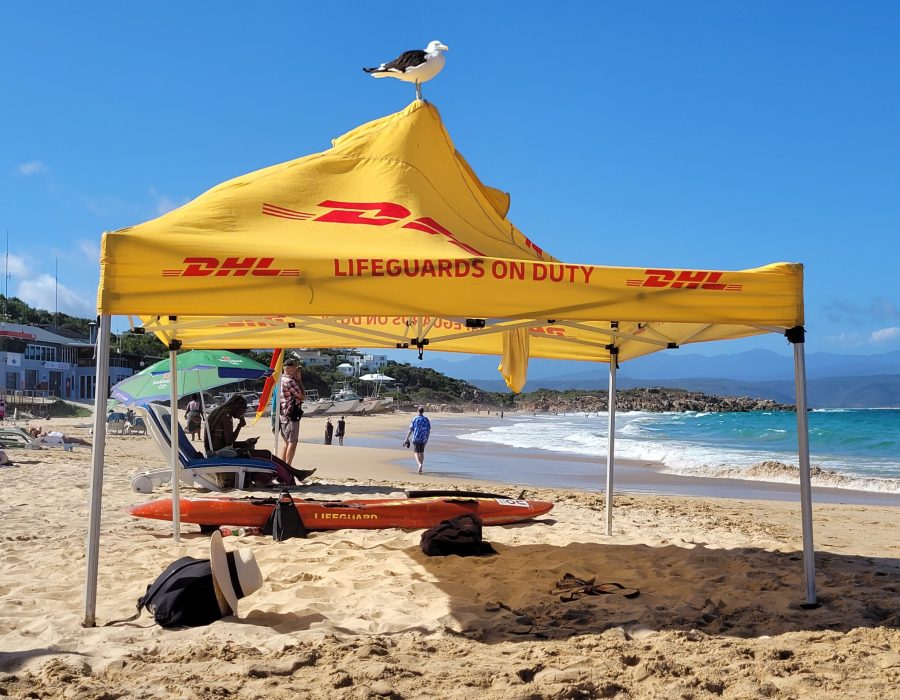
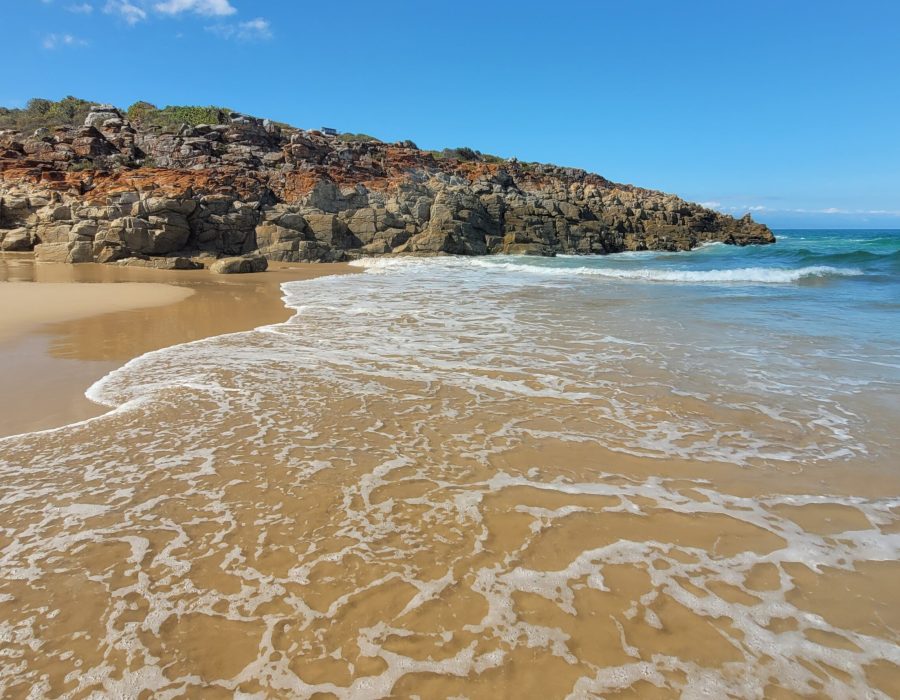
Before our departure from Knysna, we decided to spend a few hours at Plettenberg Bay. The Indian Ocean was warm. The sky was blue and inviting. It felt like a simple beach day. But as we arrived, something was happening off-shore.
Hundreds of people were gathered in a wide circle in the water — surfers, swimmers, small boats forming a near-perfect ring. At intervals, they began slapping the surface of the ocean with their hands, creating a rhythmic echo that carried across the beach.
We stood there, unsure what we were witnessing.
A lifeguard nearby explained: an elderly lifeguard had passed away — a man who had trained generations of lifeguards, someone deeply respected in this community. This was his farewell. His funeral, held in the ocean he had watched over for decades.
The sound of hands striking water became something beautiful. A collective applause. A wave of gratitude. Even as a visitor, you felt the weight of being so close to all the lifeguards in attendance whose lives’ were touched by this man. There was a quiet solitude in the air that day.
We stayed for hours.
During that time, the lifeguards rushed into the surf three separate times — once to help an elderly man, once to assist a younger girl, and once as a precaution when the swell grew heavy. The waves were strong that day, and the team was sharp, attentive, unwavering.
I’ve seen beaches where lifeguards appear distracted or bored.
Not here. Not on this day.
Every set of waves was studied. Every swimmer watched carefully. There was an intensity to their presence — perhaps sharpened by the ceremony that had just concluded. They were honouring their colleague not just in ritual, but in vigilance.
It was both sobering and reassuring to witness.
After my own father’s passing this summer, and attending his celebration of life, attending this stranger’s celebration of a life felt a bit more weighted for me. It was certainly a timely coincidence to arrive exactly at that time given the journey I’ve been on since summer. Perhaps that is what made this “beach day” a bit more contemplative for me.
Penguins, a Dirt Road, and an “Uncle” With Stories
After leaving Knysna, we drove the Garden Route toward Betty’s Bay, where Courtney found a place for us to stay near the Stony Point Reserve — a lesser-known penguin colony that promised something quieter than Boulders Beach in Simon’s Town.
The parking lot suggested otherwise. Cars filled every space, and a bright “Penguins Crossing” sign made us laugh — not something Canadians see every day. I pulled over so Courtney could take a photo.
As she stepped out, a woman pulled up alongside us. “You okay?” she asked in a thick South African accent. I explained we were just snapping a picture. “You like penguins?” she smiled. “Follow me. I’ll show you the local spot.” And just like that, she and her son turned down a dusty red trail, motioning for us to come along.
Three years into this lifestyle has taught us to sense when an invitation feels right — unforced, generous, genuine. So we followed.
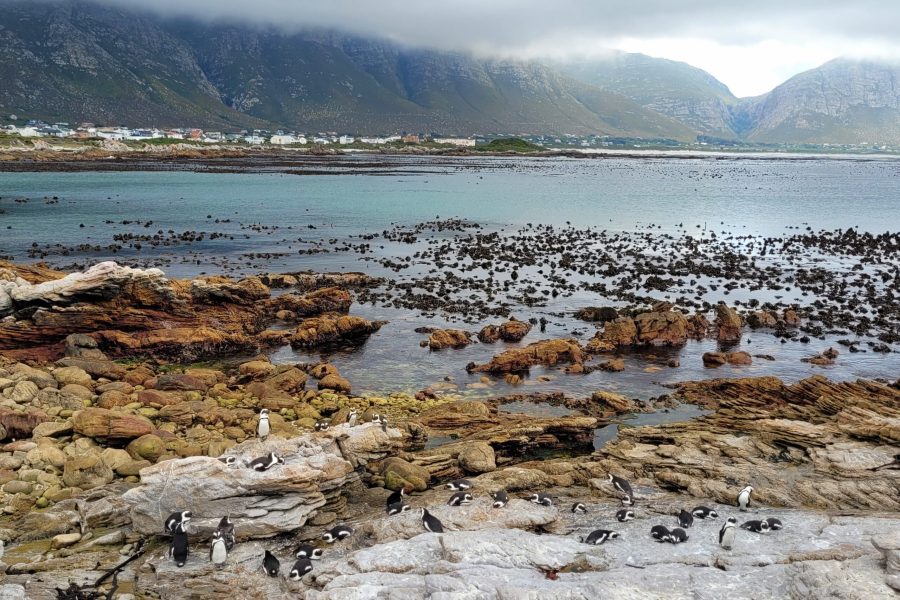
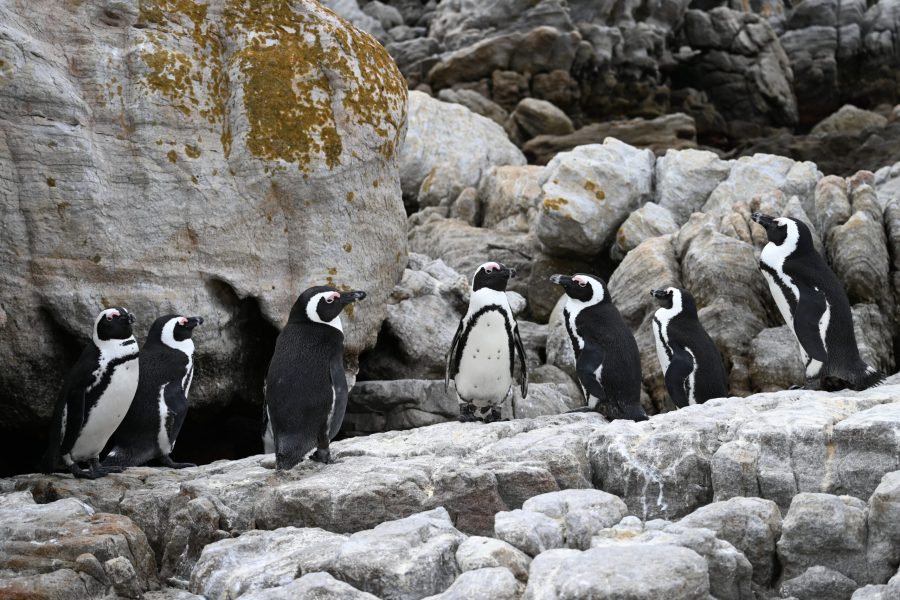
A few hundred meters from the reserve, we found ourselves alone on a rugged stretch of coastline. No boardwalk. No crowds. Just wind, rock, and penguins navigating the stones with their endearing awkwardness. It felt like we had stumbled into a private audience with the wild.
Before we left, our impromptu guide suggested we hike up a nearby path and knock on the door of a local “Uncle” who lived in a former lighthouse if we wanted to understand the area’s history. So we did.
The “Uncle” was seventy-five, a lifelong resident and diver who had spent decades exploring a nearby shipwreck. His home was part museum, part memory vault — filled with artifacts lifted from the sea, each carrying stories of war, storms, legends, and shifting tides.
We set out to see penguins, but we left having met a keeper of coastal memory — another unexpected encounter we never could have planned.
Touring South Africa’s Wine Country
A Visit to Groot Constantia
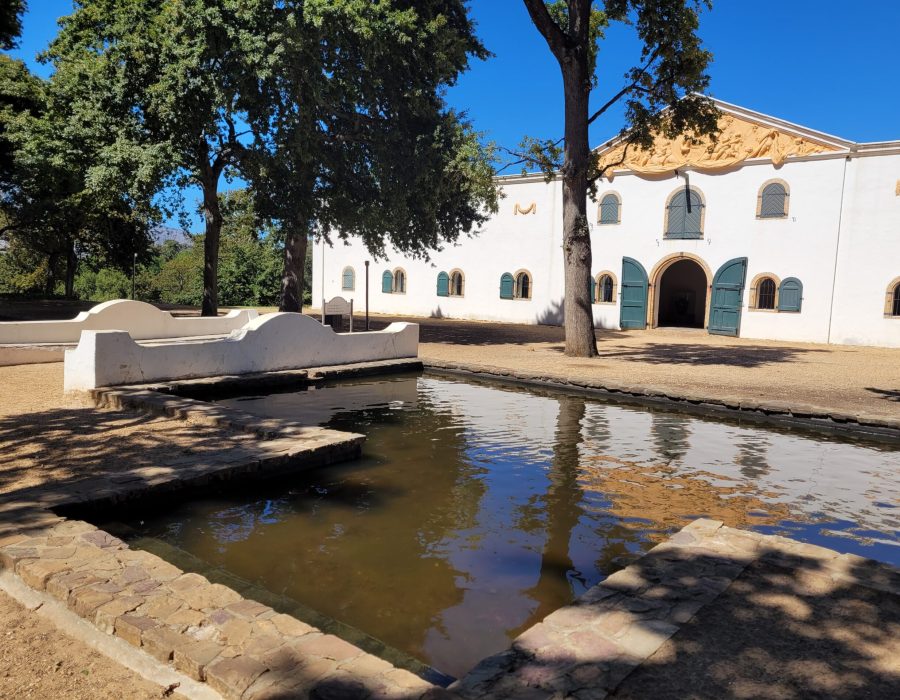
Our month in the Cape Town area was packed with interesting things to do. One of them, a wine tour at Groot Constantia, felt less like a casual tasting and more like stepping into a living chapter of history. Nestled on the slopes of Constantia Valley just outside Cape Town, the estate holds the distinction of being South Africa’s oldest wine farm, established in 1685 by Simon van der Stel, then Governor of the Cape.
From the moment we arrived, framed by the white Cape Dutch gables of the manor house and the rolling vineyards beyond, there was a sense that this place had witnessed centuries unfold. Our guide, Joshua—a passionate and deeply knowledgeable wine fanatic—brought that history to life. He didn’t simply recite dates; he told stories. Under his guidance, the estate transformed from beautiful scenery into a crossroads of empire, literature, and exile.
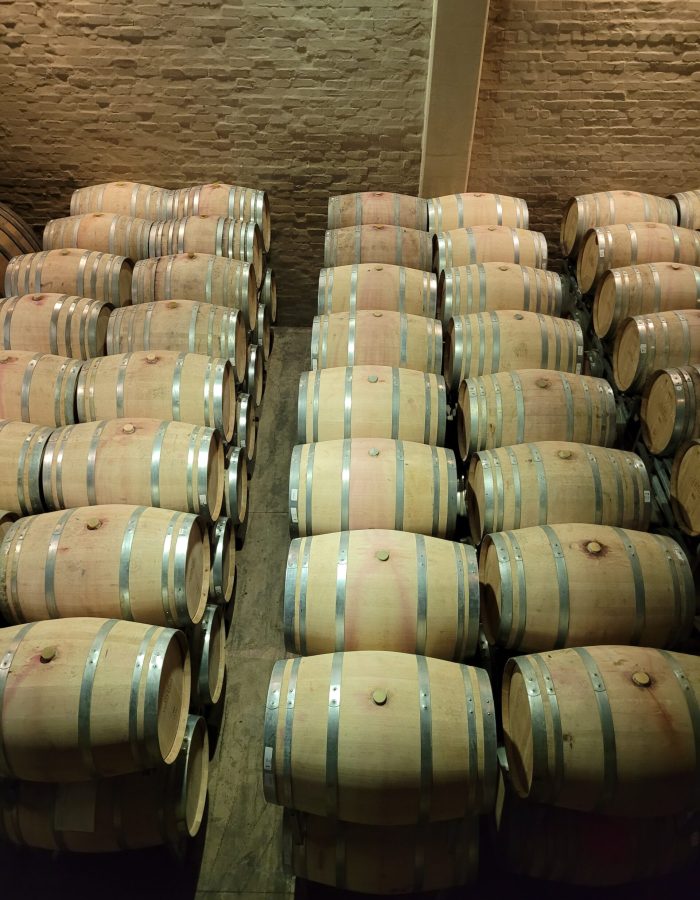
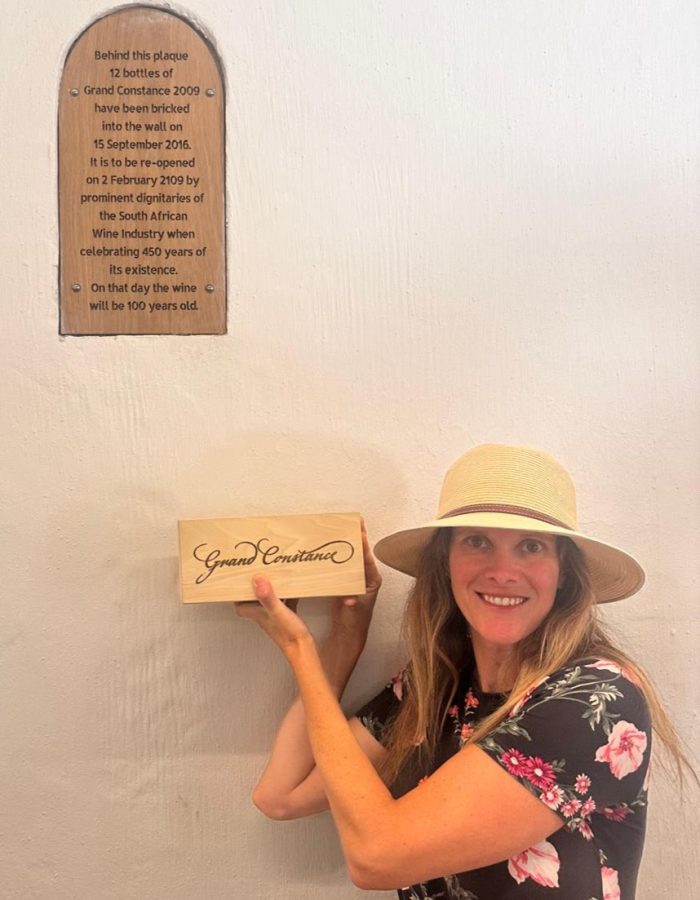
In the 18th and 19th centuries, Constantia wine—particularly its famed sweet dessert wine—became one of the most sought-after bottles in Europe. It was served in the courts of kings and praised by writers.
Joshua described how the wine appeared in literature, including the world evoked by Jane Austen in Sense and Sensibility, where “Constantia wine” symbolized refinement and restorative indulgence. Hearing that connection while standing among the vines made the novel’s quiet elegance feel tangible and real.
Perhaps most poignant was the story of Napoleon Bonaparte. During his exile on Saint Helena, in the final week of his life in 1821, Napoleon is said to have requested Constantia wine. Joshua shared this detail with reverence, as though the estate’s legacy carried both triumph and melancholy in equal measure.
The tasting itself was exceptional—layered reds, crisp whites, and a sweet wine that seemed to echo its storied past. Yet what made the tour unforgettable was Joshua’s depth of knowledge and enthusiasm. His storytelling bridged continents and centuries, transforming a simple wine tasting into an immersion in culture, literature, and history.
"At Groot Constantia, you don’t just drink wine. You taste time."
What stood out for me most during our visit to Groot Constantia was Joshua, our guide, and how he used his perspective of history to educate and entertain us, drawing us into the experience by relaying through stories how Groot Constantia came to be what it is today.
Tour of Vergelegen Wine Estate
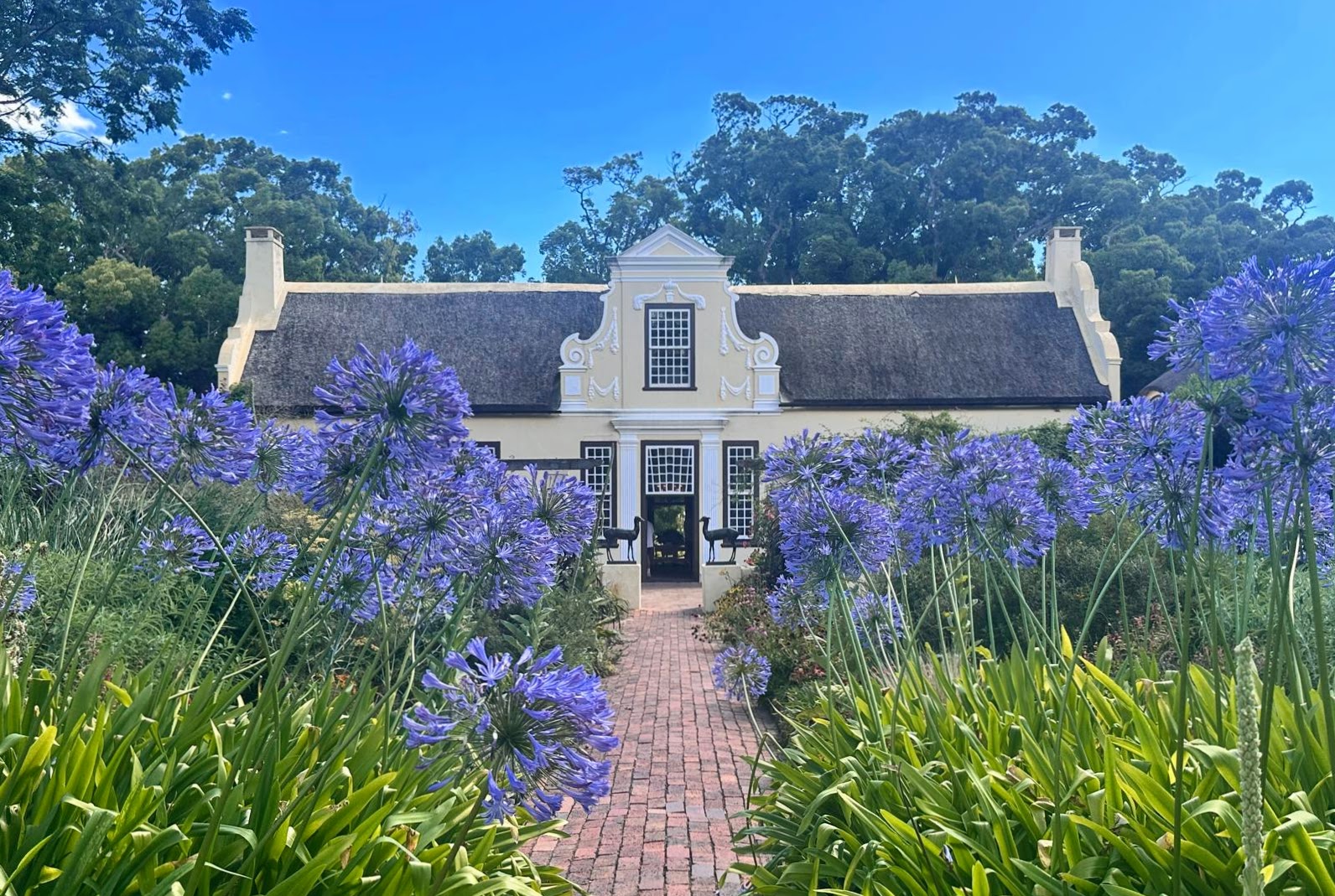
Our self-guided tour of Vergelegen Wine Estate felt wonderfully unhurried — the kind of day where history and landscape unfold at your own pace. Set in Somerset West, at the foot of the Helderberg Mountains, Vergelegen carries a quiet grandeur that is both stately and deeply rooted in South African history.
Founded in 1700 by Willem Adriaan van der Stel, son of Simon van der Stel (who established Groot Constantia), Vergelegen quickly became one of the Cape’s most ambitious agricultural estates. Though political controversy eventually led to van der Stel’s dismissal, the estate endured. Over three centuries, it evolved through multiple owners, periods of decline, and careful restoration, emerging today as one of the Cape’s most respected wine estates — not only for its vintages, but for its preservation of heritage.
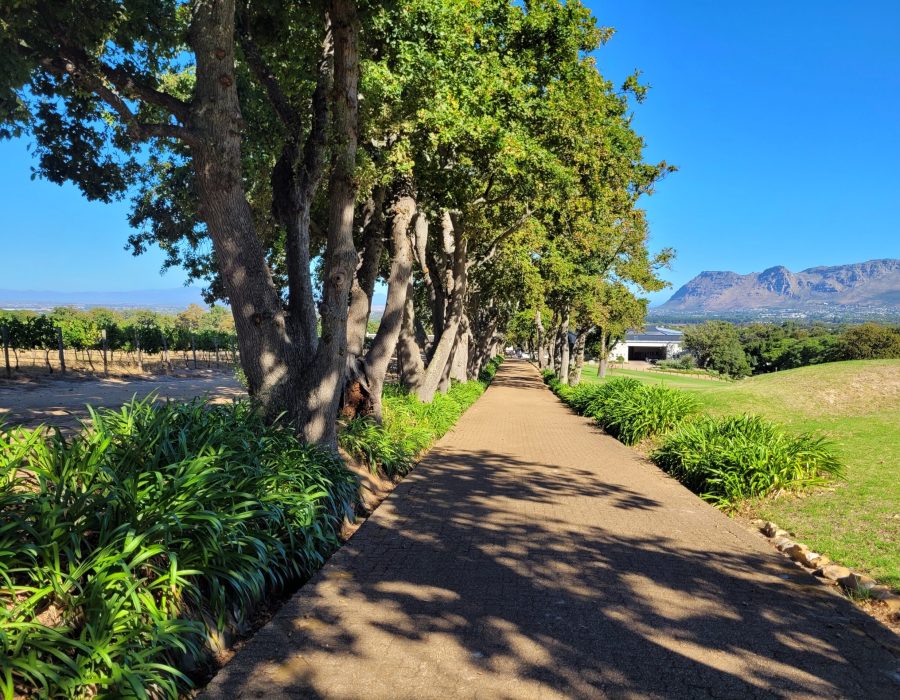
Walking the grounds without a formal guide allowed us to linger where we pleased. The gardens are extraordinary — manicured yet expansive, with towering camphor trees planted in the early 18th century casting long, protective shadows across the lawns. There’s a serenity in the symmetry of the pathways, the reflective ponds, and the distant lines of vines stretching toward the mountains. It feels less like a commercial winery and more like a private estate that happens to produce exceptional wine.
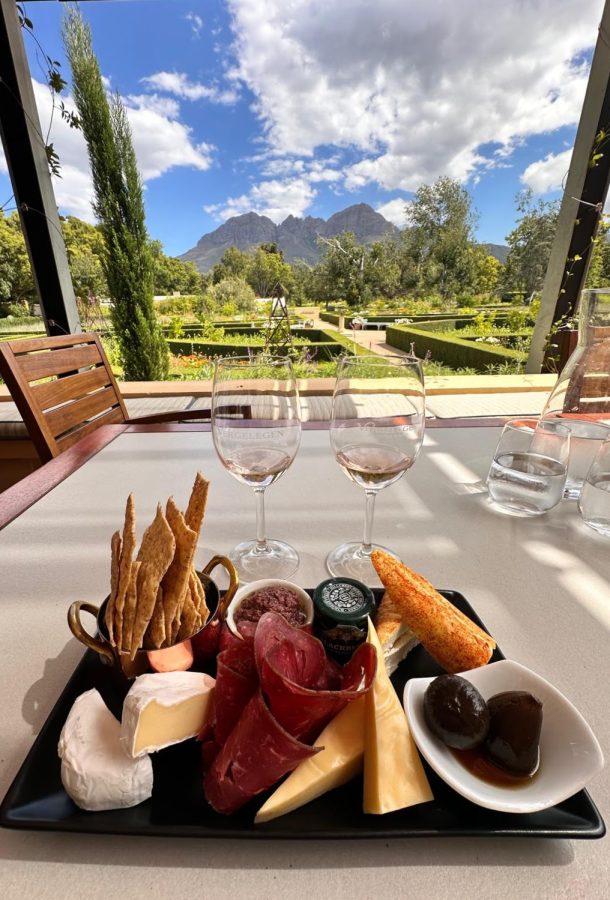
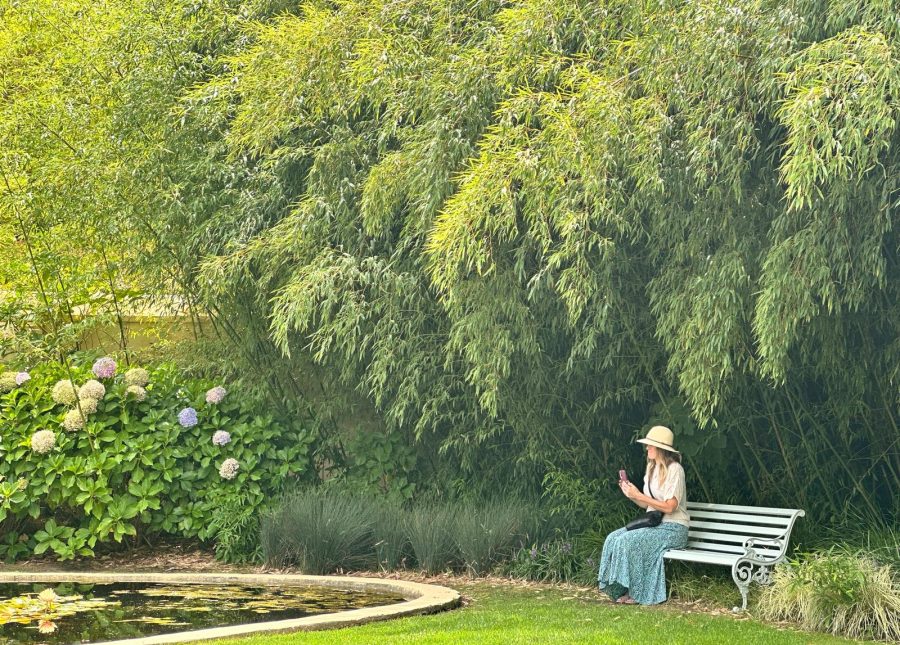
The open museum within the historic manor house offers a fascinating glimpse into Vergelegen’s layered past. Period furnishings, original architectural details, and carefully curated displays quietly narrate the story of colonial ambition, domestic life at the Cape, and the evolution of winemaking over centuries. Standing inside those whitewashed walls, one senses the weight of time — the political struggles, the agricultural experiments, the slow shaping of the estate into what it is today.
What struck me most was the balance Vergelegen maintains: refinement without pretension, grandeur without excess. A self-guided visit allows you to absorb it fully — to move between gardens, vines, and museum rooms at your own rhythm.
At Vergelegen, history is not behind glass. It is rooted in the soil, growing still.
Once again, it was the museum and the rich historical context that pulled me in — deepening my appreciation not only for the wine itself, but for the people behind it. Understanding the estate’s past gave greater meaning to the present-day pursuit of excellence: the careful stewardship of the land, the deliberate decisions in the vineyard, and the craftsmanship at every stage of production.
It became clear that each bottle represents far more than fermented grapes; it reflects a shared commitment to guiding the fruit toward its fullest expression, allowing the vineyard and its history to speak through the wine at its very best potential.
Self-Guided History Tour of Cape Town With a Twist
Cape Town has been one of our favourite cities to visit.
Our day began with an unexpected interruption. As we walked out of the parking lot, a couple of men approached us claiming that access to the city required a special ticket because the President of South Africa was visiting. They insisted the ticket was “free” — but, of course, they needed to see our credit card to issue it. The contradiction was immediate and obvious. A free ticket that required a credit card was no ticket at all.
Recognizing the scam, we politely declined and attempted to walk away. The situation escalated quickly. These men were apparently known to authorities for targeting tourists, and one of the many police officers stationed nearby moved in to apprehend them. In the chaos that followed, one of the suspects pulled out a knife. As they fled, the officer pursued them, and in the intensity of the moment even attempted to discharge his firearm in an effort to stop them.
We later learned that we had been their intended targets. Thankfully, we were able to assure the officer that nothing had been taken from us and that we were unharmed — just slightly shaken after the sudden commotion.
Experiences like this are a reminder that in any major city in the world, there will always be individuals looking to exploit visitors. We responded the way we always try to: staying together, remaining aware of our surroundings, and spending time in well-populated areas.
Although the morning began with more drama than expected, we quickly regained our composure and continued with our plans to visit the Castle of Good Hope — a name that felt especially fitting after navigating our own brief test of vigilance and awareness.
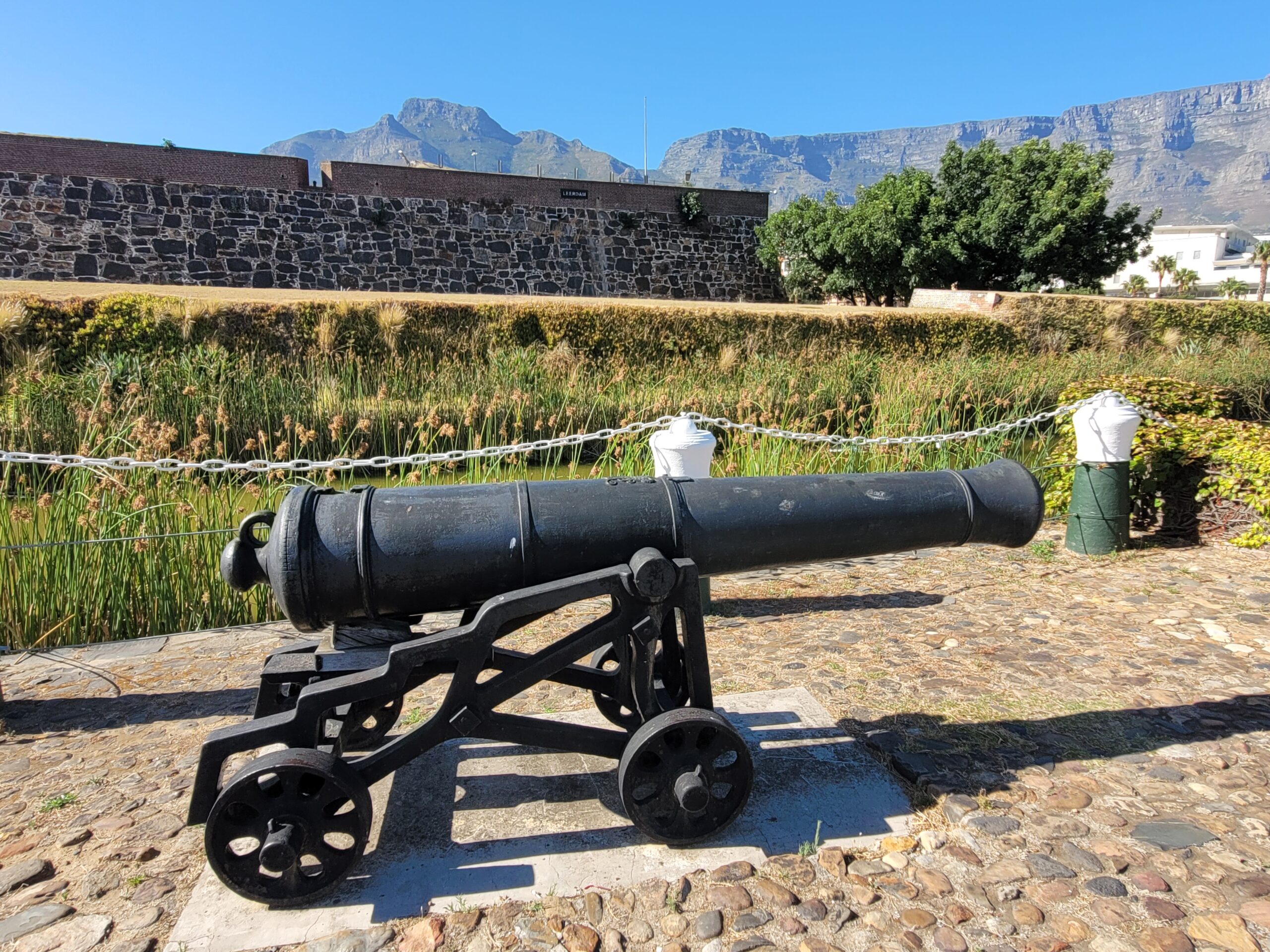
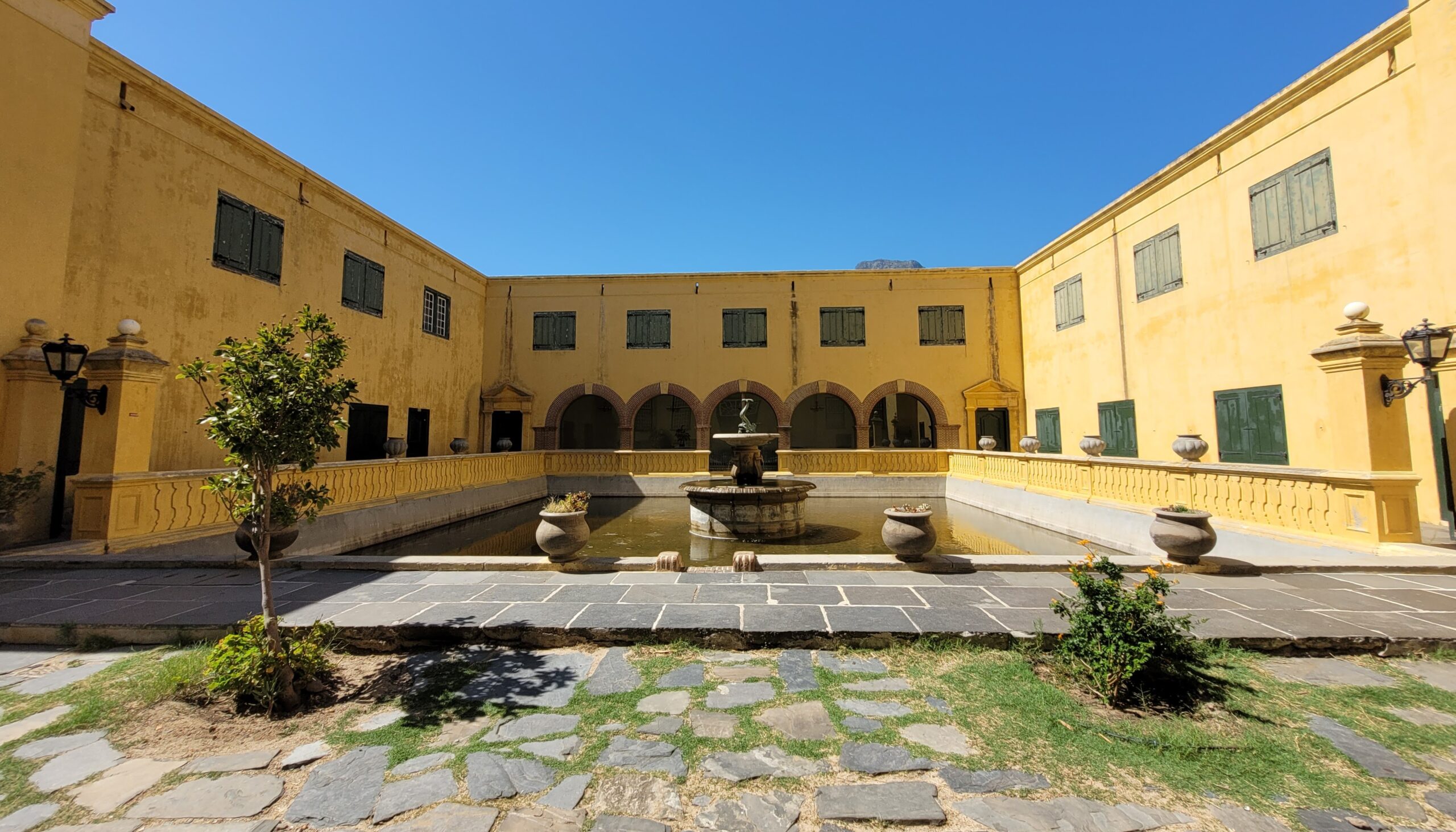
Castle of Good Hope
A visit to the Castle of Good Hope offers a tangible step back into the 17th century, when it was built by the Dutch East India Company as a fortress to protect the Cape settlement. Its thick stone walls, inner courtyards, and preserved military quarters stand as a reminder of the layered colonial history that shaped Cape Town into the crossroads it is today.
National Library of South Africa: A Look Into Their Rare Book Collection
Discovering the Rare Book Collection at the Cape Town Central Library felt like stepping into a quieter, more contemplative Cape Town — one far removed from the wind off Table Bay or the bustle of Long Street or the waterfront, all areas we loved to explore.
The Reference Library carries an old-world dignity: polished wood, softened light, and the hushed reverence that seems to follow rare volumes wherever they are kept.
The Rare Book Collection, in particular, holds a sense of discovery. There is something intimate about handling (or even simply observing) books that have survived centuries — pages browned at the edges, bindings carefully restored, typefaces that belong to another era of printing. The collection spans subjects that reflect the intellectual currents of the Cape’s past: exploration, theology, cartography, colonial administration, literature.
But it was the chess books that captivated me.
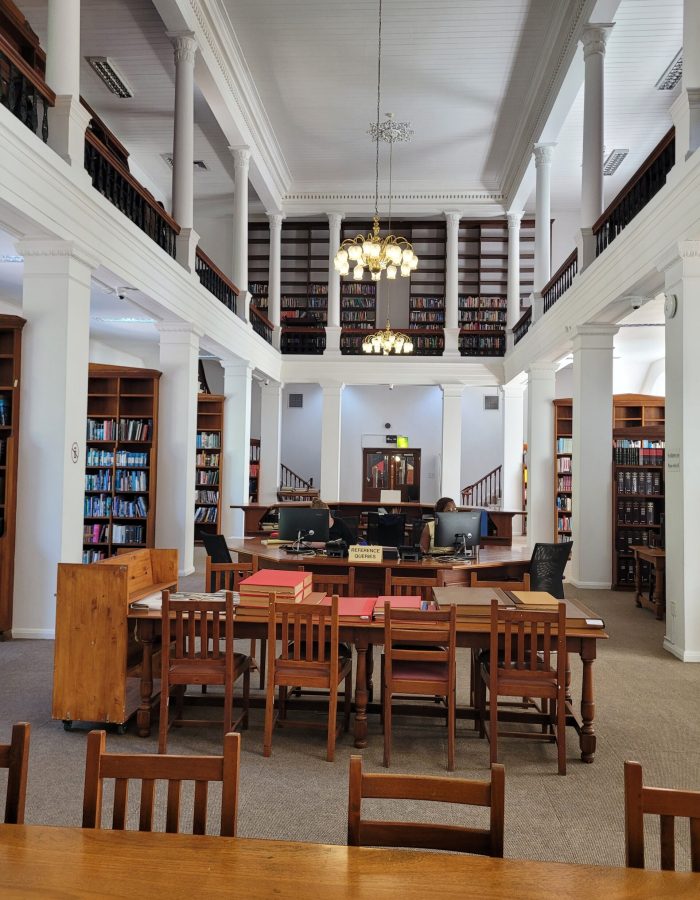
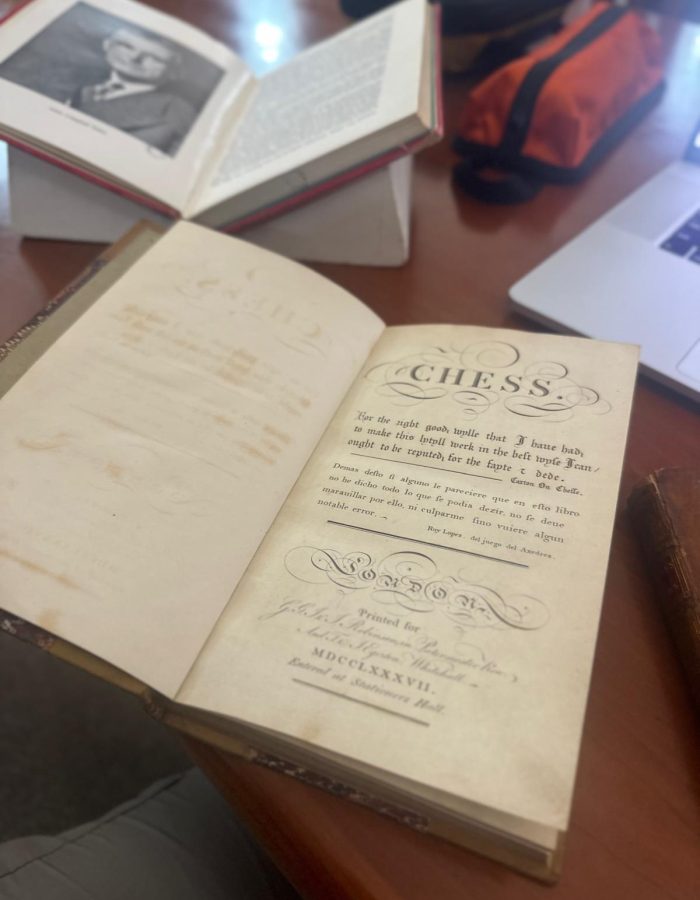
Chess, after all, has always travelled alongside empire, trade, and migration. In those shelves you can trace the game’s evolution — instructional manuals from the 18th and 19th centuries, dense with descriptive notation; problem collections composed like mathematical puzzles; treatises written in the formal, almost philosophical tone that once accompanied serious study of the game. The language is precise, occasionally ornate, and wonderfully deliberate.
Older chess texts carry a different rhythm than modern opening databases and engine-driven analysis. They emphasize principles, character, and style. You sense the personalities behind the moves — the romantic attackers, the positional masters, the careful annotators who believed the game could teach discipline and imagination in equal measure. In that reading room, the board feels less like sixty-four squares and more like a bridge across centuries.
There is something fitting about finding chess volumes in a Cape Town archive. The city itself has long been a meeting point between continents, ideas, and cultures. Chess mirrors that exchange — a universal language that requires no translation, only attention.
Sitting there among the rare books, I was reminded that while the chess pieces remain the same, each generation rediscovers the game anew. And in those preserved pages, the voices of past players still quietly explain why it matters.
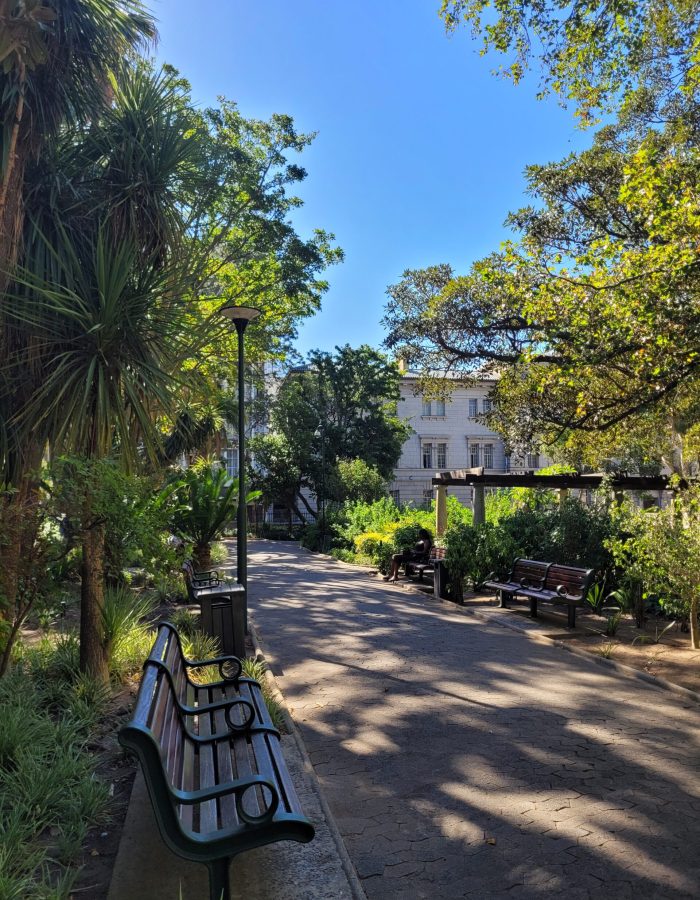
After visiting the library, Courtney and I meandered through the streets of Cape Town, including The Company’s Garden, some of the oldest churches in South Africa, Perseverance Pub, and even the country’s oldest independent cinema, The Labia Theatre.
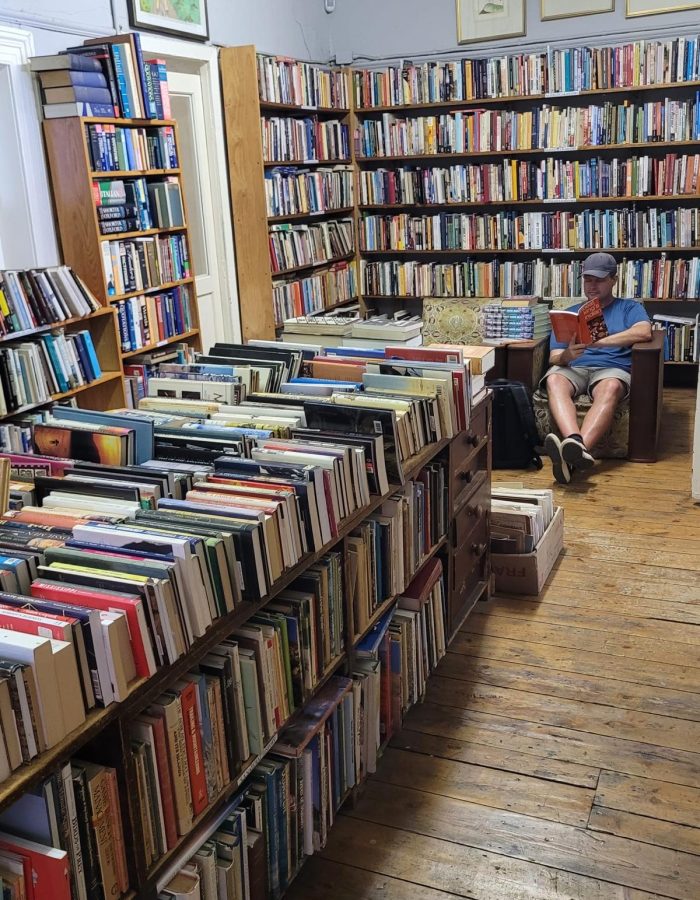
The Labia Theatre – Cape Town’s Oldest Independent Cinema
An evening at The Labia Theatre feels like stepping into a living piece of Cape Town’s cultural history. Established in 1949, it is the city’s oldest independent cinema, housed in a charming, slightly timeworn building that proudly resists the polish of modern multiplexes. The atmosphere is intimate and unpretentious — creaking floors, classic posters, and an audience that genuinely loves film.
The Labia has long been known for screening independent, foreign, and art-house films, creating a space where cinema feels thoughtful and communal rather than commercial. Sitting there, waiting for the lights to dim, you sense that this theatre has hosted generations of conversations — about politics, art, and storytelling — long after the credits have rolled.
The film we watched, One Battle After Another, starring Leonardo DiCaprio, felt like an appropriate closing note to our day in Cape Town. Travel, like the story unfolding on screen, can sometimes feel like a succession of challenges. Yet it’s not the battles themselves that define the experience — it’s the resilience, perspective, and steady resolve with which we move through them that truly shapes the journey.
Simon’s Town: Swimming with Penguins at Boulders Beach
Our visits to the penguins in Simon’s Town has become one of those simple rituals that quietly anchor our season.
Each time we made our way to Boulders Beach or Seaforth Beach to visit the penguins, I felt the same mix of curiosity and calm. There is something disarming about watching African penguins in their natural habitat. And they walk or swim all around you. We enter their world for this visit. They move with that endearing awkwardness on land — wobbling, pausing, calling out to one another — and yet in the water they become swift, precise, almost aerodynamic. It’s a reminder that grace often depends on the environment.
Arriving early at Boulders Beach gifted us something rare — fifteen or twenty quiet minutes with the penguins before the “tourists” began to arrive. In that small window of stillness, Courtney slipped on her snorkel and eased into the water, swimming alongside the little black-and-white figures as they darted effortlessly beneath the surface.
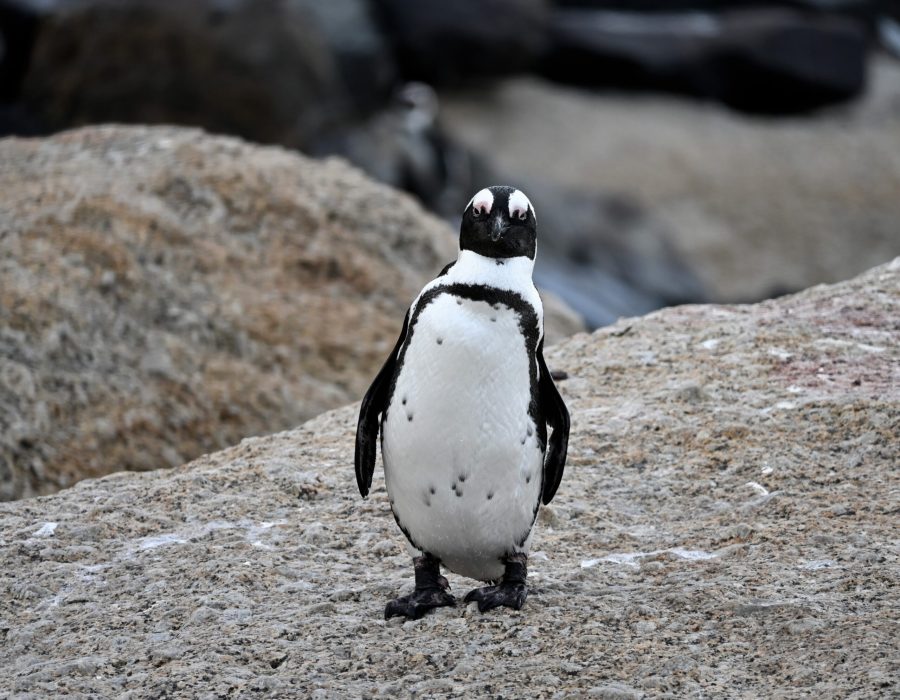
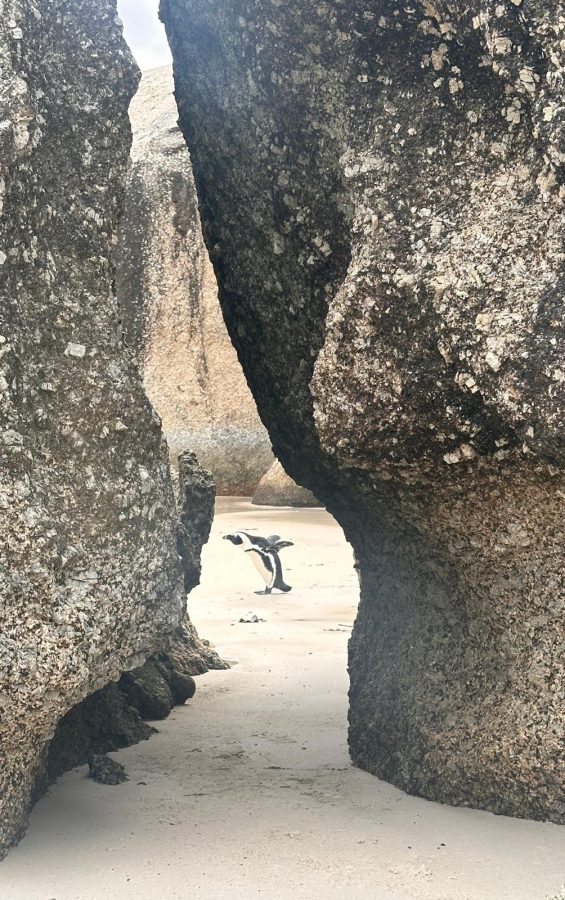
Those unhurried moments, when it feels like the world hasn’t quite woken up yet, have become something we actively seek. There’s a different kind of connection when you find yourself alone with wildlife — no crowds, no commentary, just the rhythm of waves and the soft shuffle of feet on sand.
So many “tourist attractions” can lose their sense of intimacy under the weight of popularity. Yet that morning felt untouched, almost private. We felt incredibly fortunate to have experienced the penguins not as a spectacle, but as fellow early risers sharing the shoreline. It’s those fleeting, quiet encounters that stay with us long after the busier hours take over.
Returning more than once gave the experience texture. The first visit was novelty — “We’re standing near penguins in Africa.” The later visits felt more reflective. Familiar. Like checking in on neighbours.
In a month filled with unexpected encounters and shifting plans, Simon’s Town offered something steady. The penguins were simply there — doing what penguins have always done. And somehow, the consistency felt grounding.
A Surprise On Our Flight Back to Sicily
As this past month seemed to unfold through a series of serendipitous and spontaneous moments, it feels fitting — in hindsight — that even our journey back to Sicily would become part of that narrative.
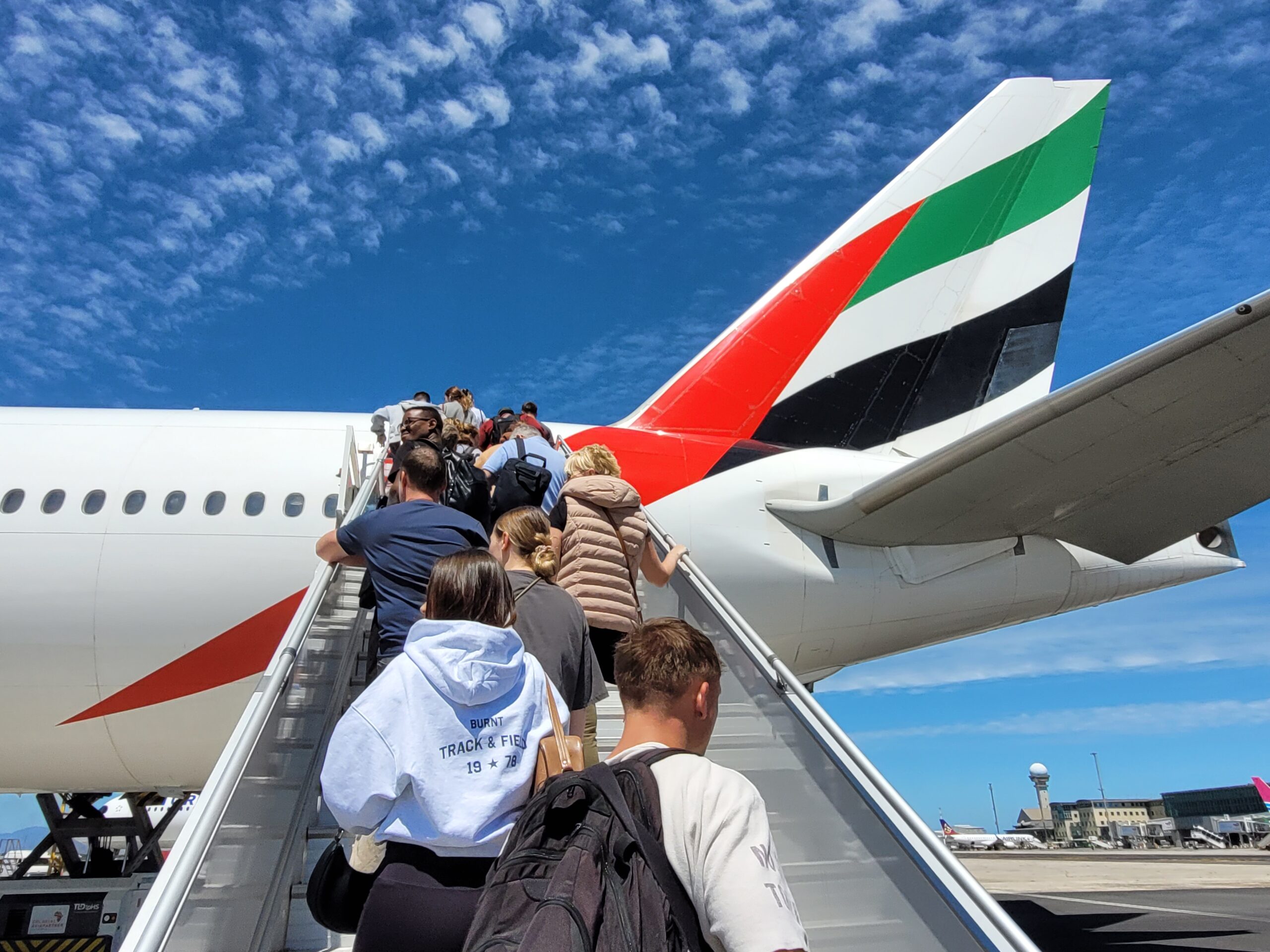
We left South Africa on February 27th, boarding an overnight flight to Dubai in the United Arab Emirates, expecting nothing more dramatic than the usual long-haul fatigue and airport transit. But history, it seems, had other plans.
On the morning of February 28th, we departed Dubai at 8:55 a.m., bound for Rome. At 9:27 a.m., news broke that missile strikes had been launched against Iran, resulting in the immediate closure of Iranian airspace.
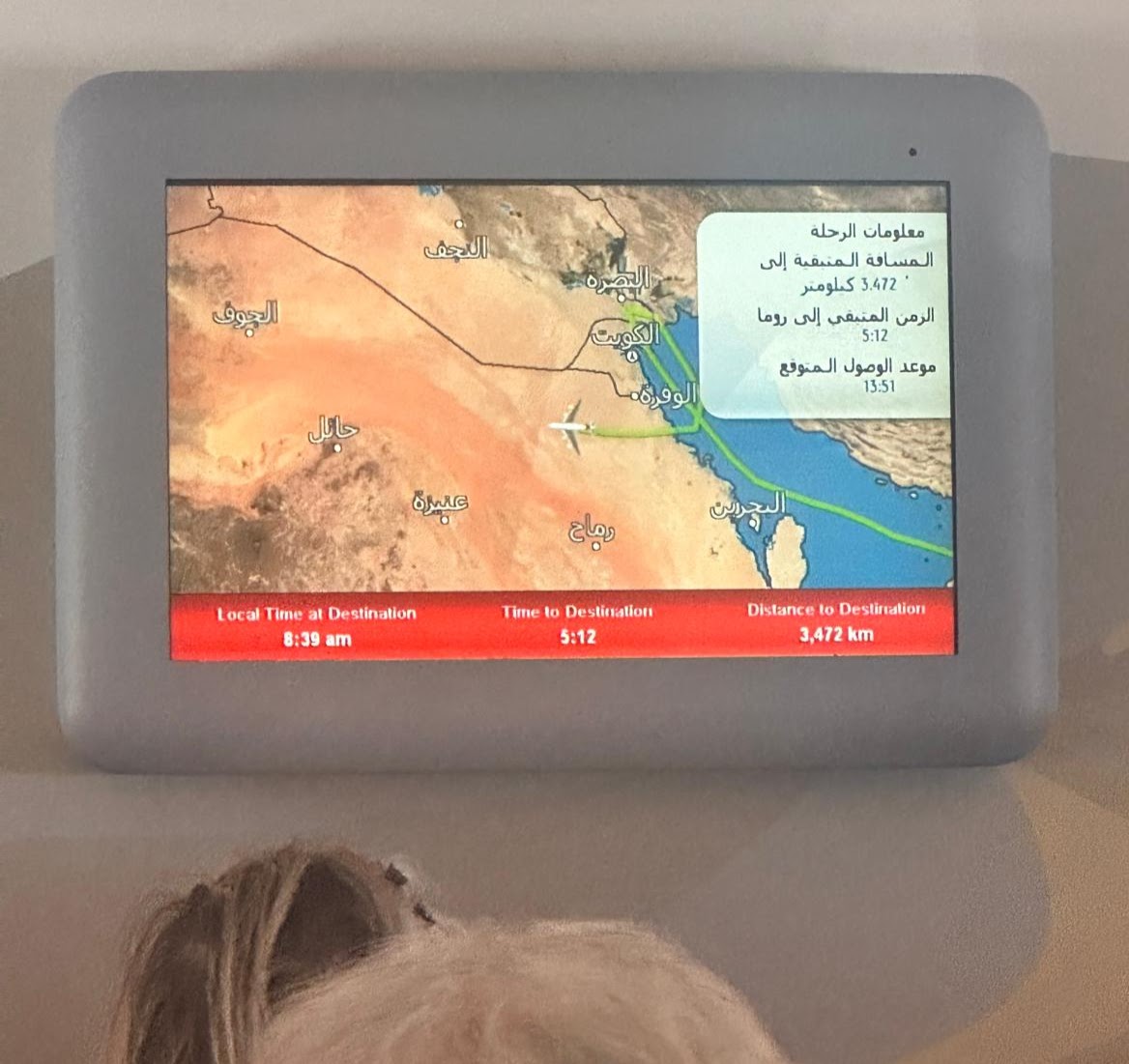
About an hour into our flight, at 10:00 a.m., our pilot calmly came over the intercom to explain that we would need to divert due to the unfolding missile attacks on Iran territory. Instead of continuing our planned route, we turned south, flying over parts of Kuwait and Saudi Arabia before eventually making our way north toward the Mediterranean.
There was something surreal about watching the flight path shift on the screen in front of us — a thin digital line bending around geopolitics in real time. What had begun as an ordinary travel day had quietly intersected with global events.
We landed safely in Rome, grateful and slightly stunned. When family and friends ask us how our flight was, we never anticipated telling them it was pleasant, even despite the missile attacks.
Yet the story did not end there.
Roughly fifteen hours after we departed Dubai, retaliatory missile strikes reportedly targeted the Dubai airport itself — a missile attack at the very place we had just departed. Reports later indicated injuries among airport staff.
Final Thoughts
It’s difficult not to reflect on the timing of it all.
Like several moments this month, there seemed to be an unseen choreography guiding us — a subtle redirection at precisely the right moment. We followed the altered path laid out before us, one unexpected turn at a time, and arrived safely back in Sicily for our next season of slow travel.
Sometimes spontaneity brings beauty. Sometimes it brings perspective. And occasionally, it quietly escorts you home.
Serendipity isn’t something we can schedule.
When I look back at February, I don’t see a tidy itinerary neatly executed. I see a framework — and all the life that spilled into the spaces between the lines.
We had a plan. Three regions in South Africa. Kruger for the vastness and wildlife. Knysna for a slower rhythm. Muizenberg for proximity to Cape Town and the familiar comfort of the sea. The structure was there. But what lingers with me now are not the booked accommodations or mapped routes — it’s what we never could have scheduled.
It’s the people and events we encounter along the way. Christine and her vast political knowledge we met at her bookshop. Robert, our gate security guard and his warm and jovial greetings. It’s Sheldon, the Investigator, and his kindness and calm demeanour. It’s Kiaan, a fellow entrepreneur, and our instant connection. The Market Baker and her exquisite pizza dough. We arrived in the Cape Town feeling disconnected, but it felt grateful for the connections along the way.
Even the harder moments — the attempted scam in Cape Town, the diverted flight as missiles closed Iranian airspace — carried their own quiet lessons. I can’t control global events. I can’t control who approaches me in a parking lot. But I can control how I respond: steady, alert, present for what life has to offer.
What I’m realizing is that planning gives shape to our lives — but presence gives our days some meaning.
For me, it’s part of the reason I love to travel. It reminds me that it’s the white space between destinations which is where the growth happens.
If I carry anything forward from this month, it’s this: leave room. Leave room for ceremony. For interruption. For redirection. For stories I didn’t know I needed to hear. February reminded me that resilience isn’t dramatic — it’s calm. It’s continuing on. It’s adjusting course and trusting that sometimes the detour is part of the design.

You May Also Like