Newsletter – November 2025
As the Winds of November Change, Something Within Us Changes
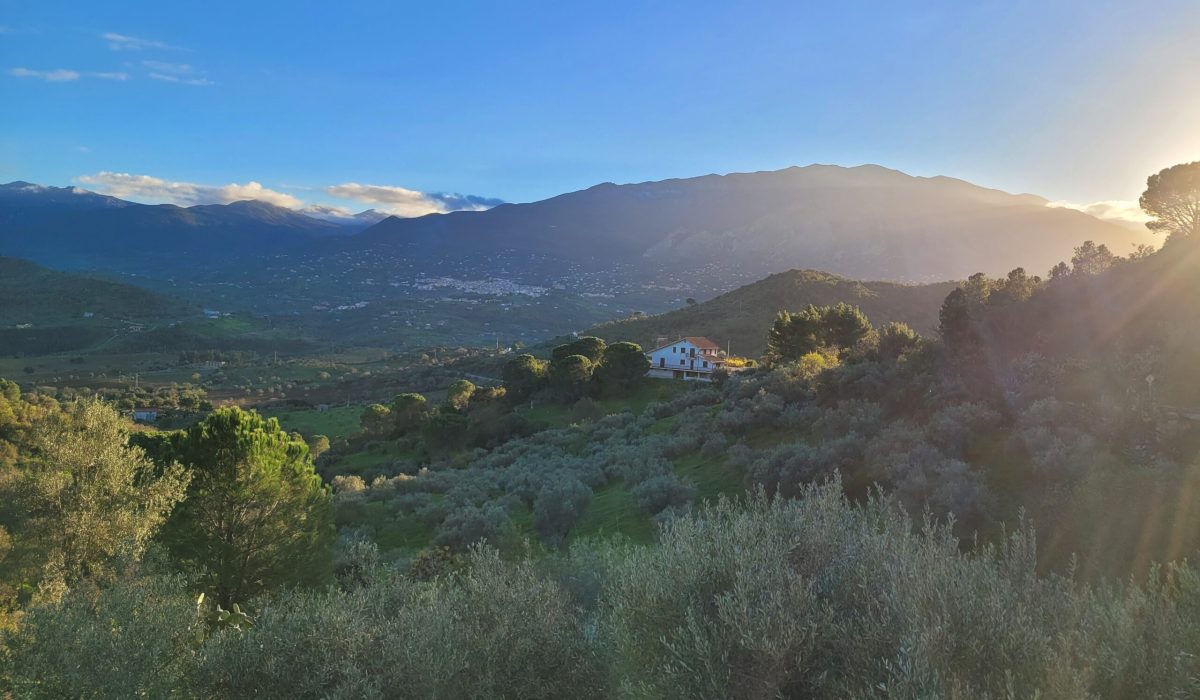
Autumn in the Madonie mountains arrives quietly. The morning air takes on a sharper and crisper feeling, the sunlight softens, and the hillsides settle into a gentler shade of gold.
Coming from Vancouver Island, Courtney and I are familiar with Novembers that drench us in rain. In the Sicilian Madonie Mountains, the showers come differently, brief and isolated. We noticed something else occurring frequently: rainbows.
There is a Sicilian proverb that says, “In autunno, la terra restituisce quello che ha ricevuto” (translated: In autumn, the earth gives back what it has received.”)
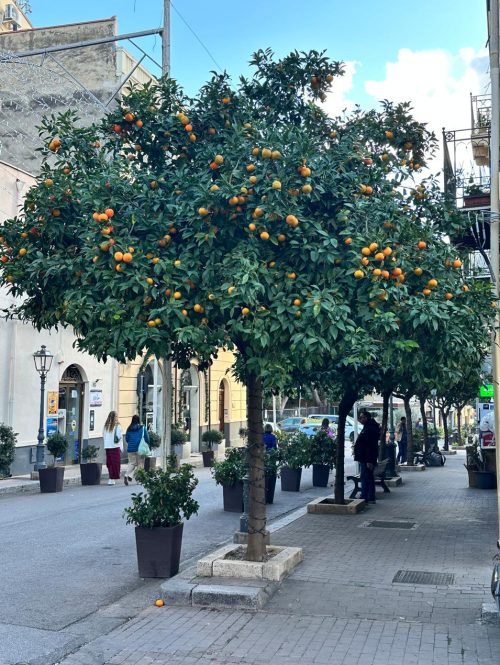
That certainly holds true in this area of Sicily. We see families transitioning to their ‘winter gardens’, which is a concept that is foreign to us Canadians. A winter vegetable garden? How is that possible?
The winter gardens here in Sicily provide citrus (oranges, lemons, limes), broccoli, cauliflower, a variety of squashes, eggplants, zucchini, etc.
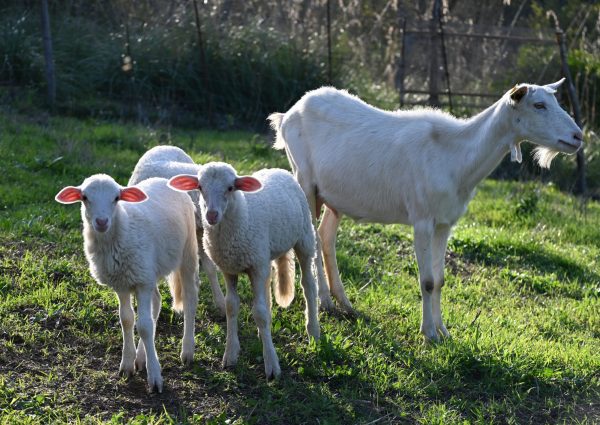
In early November, we watched new lambs stumble into the cool morning air, taking their first uncertain steps. It’s as though nature scheduled them perfectly. The grass has become more lush all around, providing an abundance of food for the mamas who need to produce milk for their lambs.
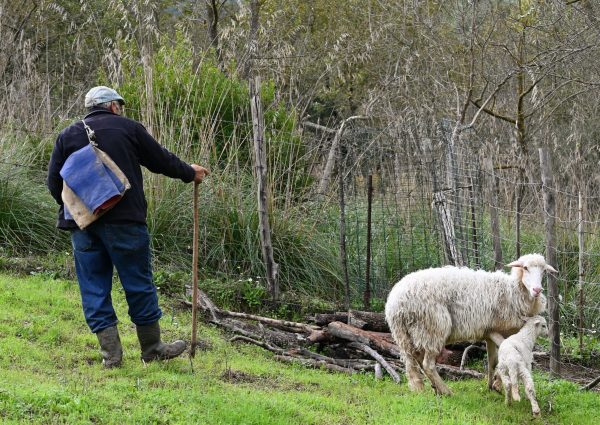
Our neighbour, whom we fondly call Shepherd Vincenzo (aka Pastore Vincenzo) and his watchful eyes are never too far away from his flock. Pastore Vincenzo always seems to see me first when I step outside onto the farm. Perhaps it’s his attentive eyesight watching over his flock (that he considers us a part of) that has trained his attention. He calls out to me the same way each time, “Paolo, come stai?” (translated: Paul, how are you?)
Pastore Vincenzo is like a walking historical record of the time he has lived. His observations are always meaningful, as if wisdom itself is downloaded to him fresh each morning.
As the first breeze of the season moves through the valleys, he confesses to me:
“Ogni primo vento d’autunno porta un ricordo.” Every first autumn wind brings back a memory.
With all the years he’s accumulated, all 77 of them, we know he must have many memories he carries around as he watches over his flock. We’re beginning to feel more and more like we are a part of his ‘flock.’
Snorkelling in November in Sicily Seems Unbelievable
In Canada, autumn transforms the trees to vibrant colours: red, orange, and yellow. Here, down by the coast, it is the sea that transforms in colour — the vibrant Mediterranean blue gently fades, announcing winter’s slow arrival.
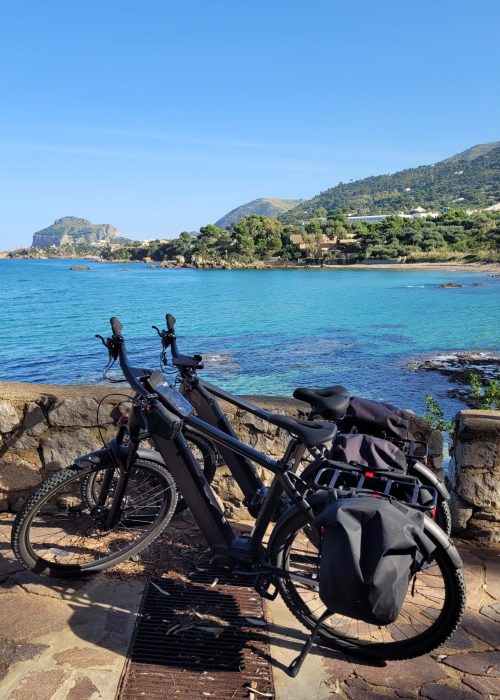
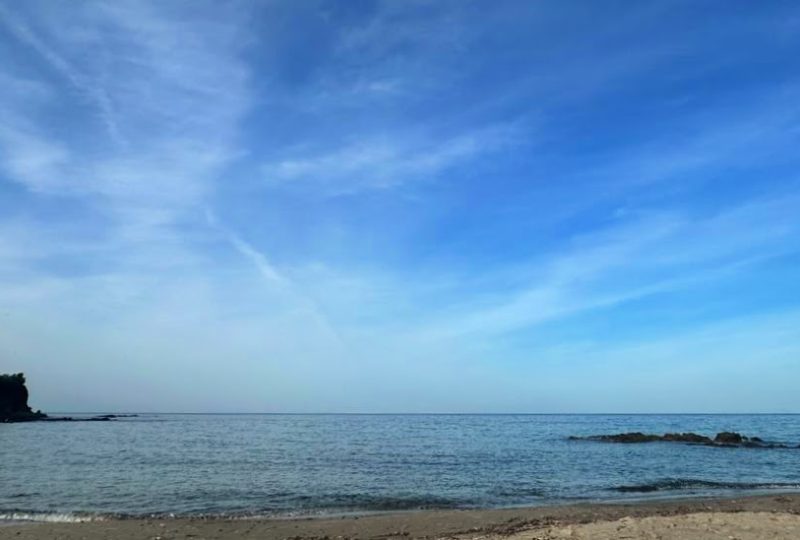
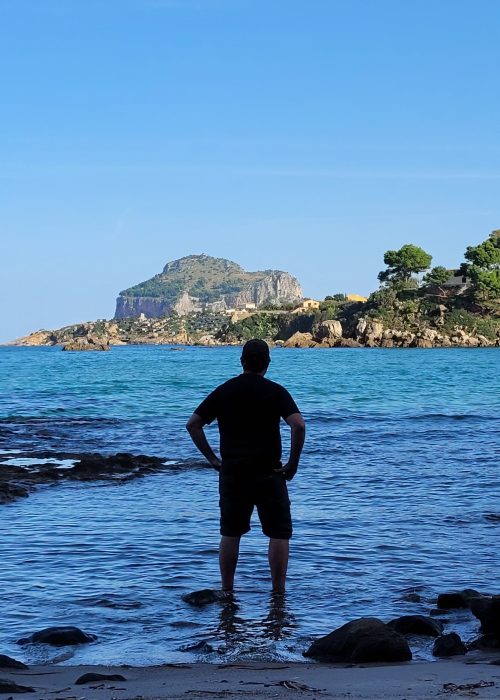
With the warmth lingering longer than expected, Courtney and I loaded our new bikes for a mid-November ride, and we brought our snorkelling gear to a beach called Spiaggia di Mazzaforno.
It’s still possible to swim and snorkel here in Sicily if you choose the warmest hour of the day. The Tyrrhenian Sea doesn’t let go of summer immediately. It releases it slowly, almost reluctantly. We saw loads of fish as we floated around in the water, not sure if any of our family or friends would even believe us that we went snorkelling in November in Sicily.
Around Vancouver Island in Canada, the ocean remains very cold all year, even in the summer months. And the month of November often introduces the winter ‘cold spells’ that remind us all that we have a season of winter to endure before we can return to our treasured summer season. It’s such a novelty to be in Sicily in November and to realize there’s more ‘summer’ than ‘winter’ in each autumn day we get to live here.
The Last Days of the Olive Harvest
Meanwhile, the olive harvest edges toward its final days. Families gather in the groves, filling crates and buckets in time with the rhythm of the season.
Harvesting olives is woven into Sicilian culture, a tradition where generations stand shoulder to shoulder beneath the trees. There are always many hands at work: ladders leaning, poles tapping, and nets stretched wide under the olive trees. Someone shakes the branches, and suddenly it’s raining olives, a gentle cascade that marks the start of winter’s work.
Branches rustle, tractors hum, and from the nearby mill, the scent of freshly pressed oil drifts out—peppery, bright, and full of promise.
I faithfully tasted my first batch of olives each week, and I’m grateful to report that the flavour has steadily improved. The bitterness has slipped away and a softer, pleasant richness has emerged.
When I changed the brine in the final week of November, I was genuinely surprised by how delicious they already seemed. I refreshed the mixture and reduced it to an 8% brine, down from the original 10%. Now all I can do is wait until February, when we return to Sicily, to discover whether this little experiment becomes a triumph or merely a near-miss.
For now, I’m simply happy with how the process has unfolded, and I’m already hoping for an even bigger harvest next year.
A Lunch Date at Antico Baglio (With a Flying Crust!)
If you were to picture a truly Italian restaurant, not the tourist-friendly imitation, but the real thing, what would you imagine the chef doing?
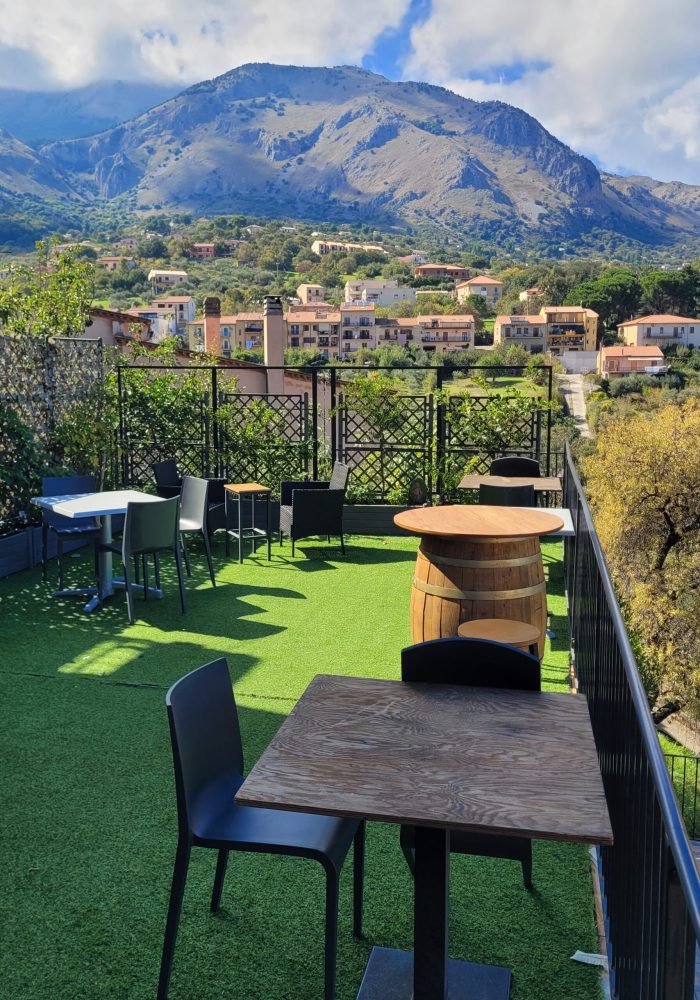
As we descended into Antico Baglio and rounded the corner, we saw him: the chef, arms lifted, sending a disk of dough spinning into the air. Suddenly, the purpose of those soaring ceilings became obvious. They aren’t merely architectural, they’re functional. You need height when you’re launching pizza ten feet skyward!
I have a personal rule: if I walk into a Sicilian restaurant and the chef is tossing dough in front of an open-faced pizza oven, then my decision is already made—I’m ordering pizza. At Antico Baglio, there are thirty-seven varieties. I intend to try them all.
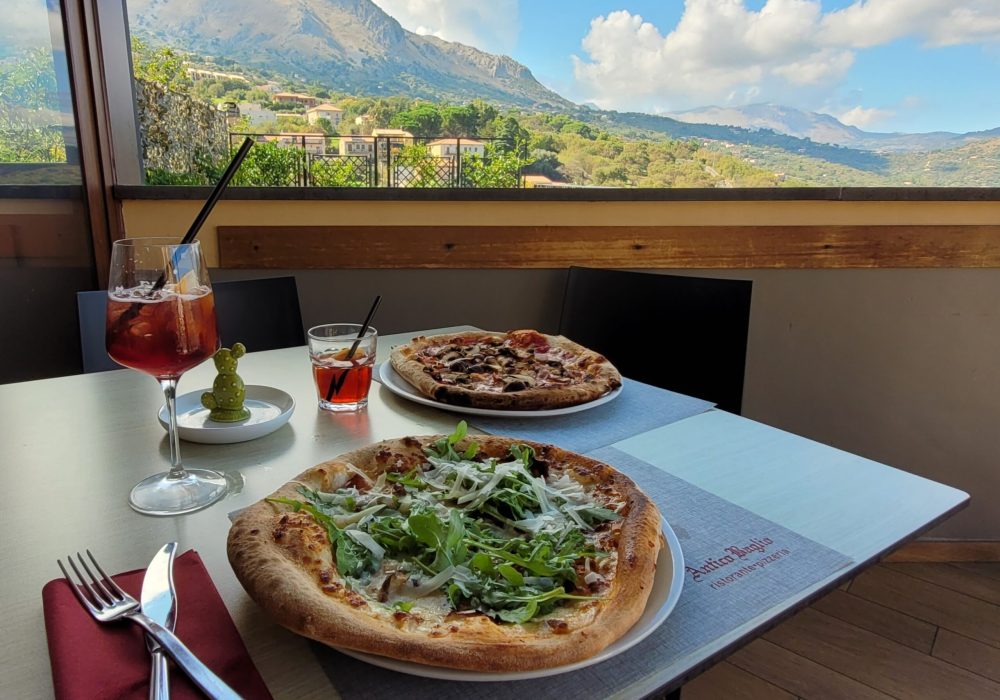
Today, I started with the Capricciosa—tomato sauce, fiordilatte mozzarella (a fresh, creamy, lower-fat mozzarella), fresh mushrooms, cooked prosciutto, sausage, oregano, and olives.
Courtney chose the Madonite pizza, which was topped with fiordilatte, herb-seasoned prosciutto, wild mushrooms, and fresh sprigs of arugula with grana padano. (Grana padano is a cheese similar to parmigiano but slightly firmer, crumblier, and made from semi-skimmed, unpasteurized cow’s milk.)
Our shared love of Sicilian pizza means one thing: we’ll be returning to Antico Baglio. Thirty-seven pizzas takes time, and we’re committed to the journey.
Connecting with Friends Before We Are Required to Leave
Living in Sicily on a 90-day rhythm is both a blessing and a challenge.
For anyone unfamiliar with it, the Schengen Area is a collection of European countries that share a unified visa policy, allowing Canadians like us to stay for up to 90 days within any 180-day period. In practice, it means we can spend three months in Sicily, but then we must leave for roughly three months before we’re allowed back again.
This has been our life for the past two and a half years.
Three months in Sicily, three months out.
Return. Reset. Repeat.
Why does the rule exists? I couldn’t tell you. But it shapes our lives in an unusual way: we don’t live year by year, we live season by season.
Nearly 90 days in Sicily, and then three months elsewhere, waiting for the Schengen clock to renew. It keeps us perfectly legal, but it also makes the idea of putting down roots anywhere feel…temporary.
For us, ‘home’ has never been about the house itself—not the stone, the tiles, or the wooden beams. Home is made from the people who become part of your life. And here in Castelbuono, we’ve been lucky. We’ve met many good, kind people. The people in our small town have made these hills feel like our place in the world.
With our 90 days slipping away once again, our friends A & M invited us to dinner. It was a meal that turned into a small celebration of friendship.
The conversation unfolded the way the best Sicilian dishes do: unexpectedly rich, perfectly seasoned, and meant to be savoured long into the night.
Perhaps that’s the true spirit of Sicily: friendship matters, and the meals we share become the threads that bind us, even when the calendar insists that it’s time to go.
A Visit to Hostaria Cycas Ristorante
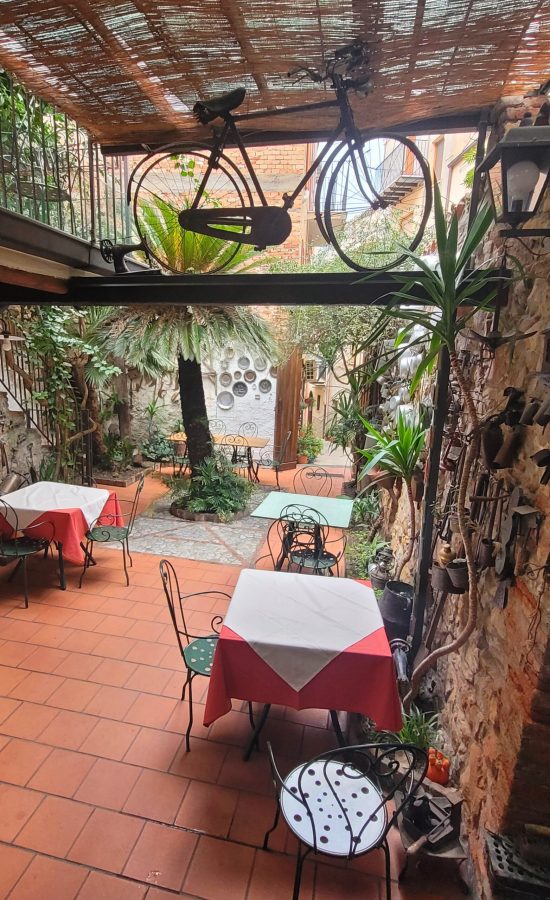
Another friend, one we’re grateful to have, offered us yet another Sicilian ‘shared food experience’ (grazie, T.S.). He brought us to one of his favourite spots: Hostaria Cycas Ristorante.
The atmosphere of this family-run restaurant is everything we adore about Castelbuono. Marcella and Giuseppe infuse their menu with care, passion, and a kind of quiet devotion. And the flavours? They speak for themselves.
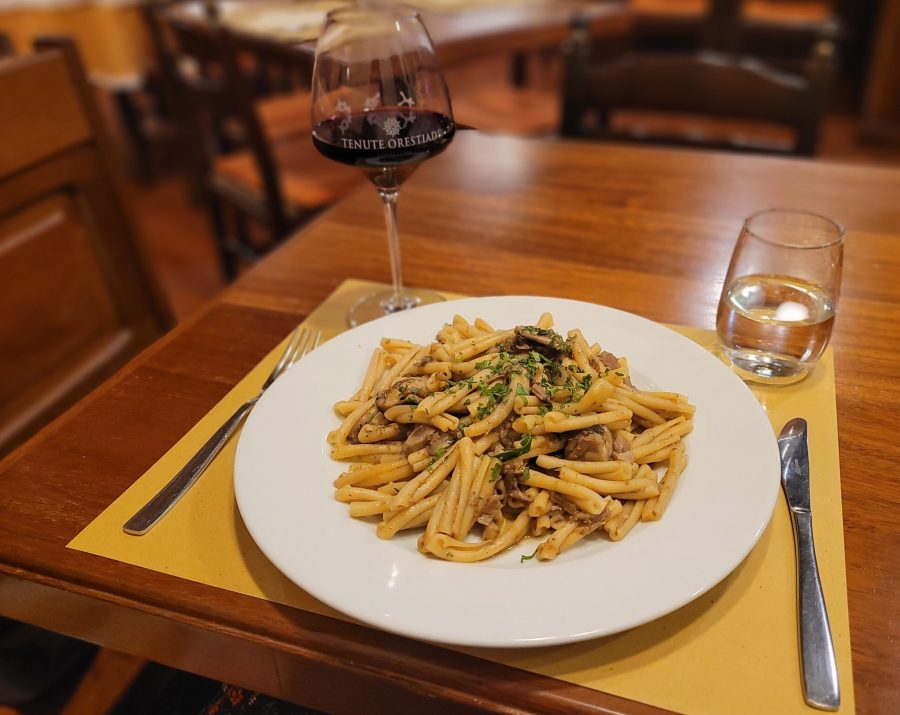
We all ordered the pork with potatoes, while Courtney and I were feeling bold enough to begin with pasta.
There is truly no comparison to fresh pasta. Mine arrived as broad, ribbed ribbons with decorative waves curling along the edges. It’s reminiscent of fettuccine, but thicker and more expressive. Marcella called them onde (meaning: waves). The sauce was rich with local wild mushrooms, earthy and fragrant.
Some meals defy description, and this was one of them. The only proper response to food this good is to slow down, pause the world for a moment, and savour every single bite.
A Trip to the Market Turns Into an Unexpected Neighbourly Bond
Every Thursday morning, as many of you know, Courtney and I wander down to the local market that transforms Castelbuono each week. Dozens of vendors appear, as if by magic, and line the edges of town with their stalls of local goods and foods.
And with them come the charter buses, sometimes dozens of them, unloading groups of tourists speaking German, Polish, Dutch, and a chorus of other languages, as they weave their way through the stalls.
For us, the pull is simple: fresh produce, local cheeses, olives, nuts, fish, meats, and the occasional piece of clothing or household treasure. The market is always alive—hundreds of people sampling foods, admiring artisanal goods, and discovering something new in each corner.
Among the most popular attractions, however, aren’t the vendors at all, but the resident donkeys.
Castelbuono’s recycling team still uses donkeys fitted with wooden side boxes to move through the narrow streets and collect the daily waste. Tourists love them—there is always someone offering an apple or posing for a photo. I’m never sure if the donkeys or the tourists enjoy the ritual more. What I do know is that the donkeys set a beautiful, unhurried pace: one step, one task, one moment at a time.
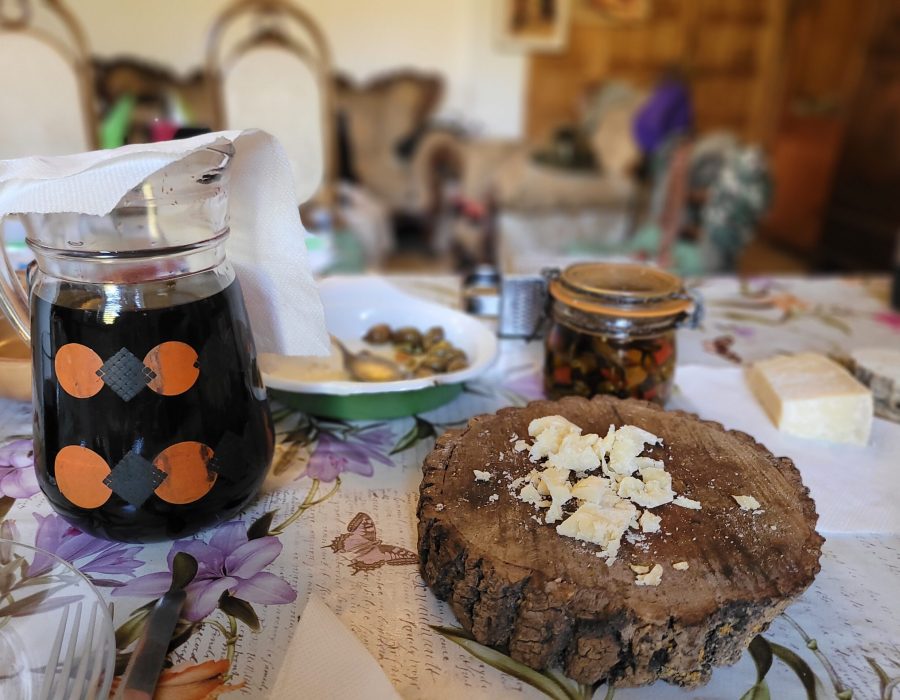
Our weekly visits have become a small ritual themselves, helping us practice our Italian and an easy way to meet the locals. It was during one of these mornings that we met a neighbour, Francesco the poet, who warmly invited us to his home for lunch. (It was a vendor at the market who told us this man, Francesco, was a poet.)
Our Italian lessons must finally be paying off, because that lunch soon expanded into a full tour of his property.
If there’s one universal truth in Italy, it’s this: every Italian must show you their garden.
And every Italian garden has the same ‘problem’—it produces far more food than its owner could ever eat. Which means you must leave with some.
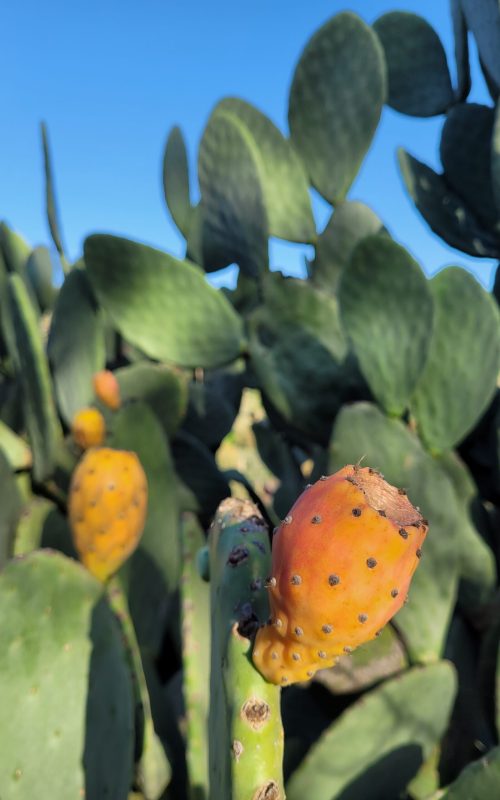
Francesco the poet is no exception. He shared his home-grown olives, explained his brining method, and led us to his enormous patch of prickly pears. According to him, they were ripening far too fast for one man to keep up with.
He demonstrated his harvesting technique, perfected through what I can only imagine was years of accidental pokes and pricks. One hand was in a sturdy glove, and the other was holding a prickly-pear leaf that he used like tongs to pull each ripe fruit from the plant. Then, with a small pocketknife, he sliced the skin, and almost magically, the sweet fruit slid right out of its spiky casing.
I lost track of how many I ate. Five, maybe more. They were unbelievably sweet and juicy.
What struck us more than the fruit was the man himself. At eighty years old, he climbed out onto a rocky ledge, waving us back because it was too dangerous for us to stand where he was standing. There he was, steady, sure-footed, and completely at ease, as he retrieved fruit for us as though it were nothing.
That moment captured something essential about Sicilian life: resilience wrapped in simplicity, vitality rooted in routine. We stood there watching an octogenarian do what many people half his age would never attempt, and both of us silently wished to carry that same strength, that same ease, into our own later years.
A simple Thursday market trip turned into a day of learning, laughter, fresh fruit, and most importantly, a small, growing friendship with a neighbour whose generosity matched the abundance of his garden.
Nomadic Life: A Life Measured by Seasons
Our three months here, from September to November, have been another reminder of how much Courtney and I truly love living in Sicily.
The weather was fantastic, our cycling trips through the Madonie Mountains was magical, and the highlight, as always, is not the food, but the people we encounter and get to share life with along the way.
We look forward to the warmer sun of South Africa, seeing the ‘Big Five’ animals again during our safaris in Kruger National Park, and hearing birds whose names we still don’t know. It feels like our home away from home.
Yet, as we prepare to leave, there is something here in Sicily we already miss. Sicily doesn’t simply stay on the map. It settles into the heart. It feels like home, even as we pack our bags to go.
To live a nomadic life is to step outside the familiar frame of time. Most people measure their lives in years. They speak of next summer as though it is a guaranteed place on the calendar, waiting patiently for it to arrive.
When you stay in a country for only three months at a time, the year becomes too large to mentally grasp. Your life begins to shrink—not in richness, but in scale. You start to measure your existence in seasons instead of years. A season becomes a world.
Three months is long enough to find your favourite café, to learn a neighbour’s name and to be introduced to some of their stories, and to understand which street gets the first morning light. It’s also short enough that you never quite settle. Your roots remain shallow, always ready to be lifted again.
For a couple living this way, Courtney and I have noticed that time stretches and contracts in unexpected ways. A week carries more weight than it used to because there are only twelve of them before the season ends and we become uprooted.
We feel like we notice things that others might miss: the day the breeze begins to change direction, the senses become more alive with not just the sights, but the sounds and taste of each season and what is harvested in each particular season.
Even the sound of a language you are only just starting to understand lingers beyond the season. In our thoughts are threads of languages like Albanian, Zulu, Spanish, Gaelic, and the ever-growing Italian language. It’s a mix of thoughts and expressions from the countries and cultures we are experiencing.
For me, it means that I begin to live more attentively. I notice things that I once never realized. Since nothing lasts long, everything matters more. The smallest rituals become anchor points—where you buy bread, who you greet on the way home, which view you pause to admire at sunset. These things become your local history, even if you are destined to leave it behind.
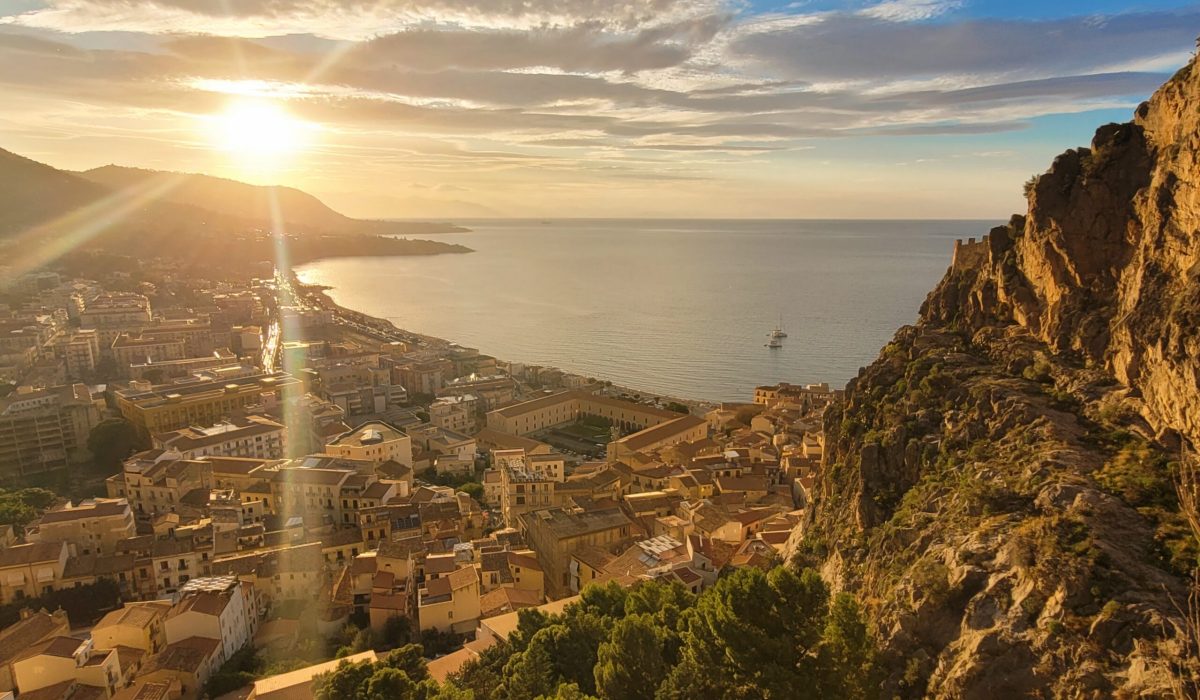
Nomadic life asks you to trade certainty for being present in the moment. You don’t say, “Next year we’ll come back.” Instead, we find ourselves saying, “Let’s notice this now— in three months, it will be gone because we’ll be gone.”
It’s a complex way to live. Some days, it feels like freedom. Other days, it feels like starting over again and again. We’re always the newcomer, and we’re always learning the rules of the season.
When you live this way as a pair, each new place becomes a shared language. We begin to carry our own continuity with us. In the end, I’ve begun to realize something quietly profound: Home doesn’t have to be a permanent address. It can be the person walking beside you, through one season, and then the next.
For me, this is a bond with Courtney that I’ll always remember and treasure. It is, after all, the life we are choosing to live. These shared experiences are the ties that are binding us together. And what a treasure it has been. No one could possibly understand it, least of all myself, that’s for sure.
In South Africa, there’s a common proverb that states,
“If you want to go fast, go alone. But if you want to go far, go with others.”
For Courtney and I, we are choosing to go far, not fast. And so, we are choosing to go together. It’s something I’m learning from Courtney, and something I feel grateful to experience with her as we choose each path forward.
Another ‘Once in a Lifetime’ Trip to South Africa
Although we just visited South Africa last year, this next season in South Africa looks like it will be a whole new sort of experiences. We’re both feeling a complex mix of sadness and excitement at the idea of leaving Sicily for our next season in South Africa. We know the journey will be worth it, even if it is a challenging decision to make.
What challenging decisions are you needing to make for this season in your life?


You May Also Like
St. Lucia, South Africa: Top 5 Best Things to Do
February 6, 2025
Travel Stories of the ‘Big 5’ at Kruger National Park
January 6, 2025