
Newsletter – December 2025
Living in a World of Coincidences
I’ve always loved coincidences—the kind that arrive quietly, one after another, until you can’t help but smile at the timing of it all. This past month felt full of them.
Have you ever bumped into someone from ‘home’ when you’re travelling? You’re miles away in a different rhythm of life, and suddenly, there they are.
Courtney and I had just cleared security at the Palermo airport when I heard an Italian voice behind me call out, “Paolo!”. I turned, wondering who on earth could possibly know me in Palermo, Sicily of all places—and there he was. One of the property owners from whom we bought our land. (There were seven owners in total, spread across thirteen plots—a small community in itself.)
We laughed, exchanged greetings in the warm Sicilian way, promised that when we return to Sicily we’d reconnect over an aperitivo—“Piggliamu n’apiritivu?” (Sicilian for “Shall we grab an aperitif?”).
Of course, in Sicily, an aperitivo isn’t just a drink. It’s a full spread of snacks with olives, cheese (maybe a slice of caciocavallo?), a handful of pistachios, a glass of local wine, conversation that moves quickly, laughter that moves slowly, and waves to every familiar face that wanders past.
We said our farewells and continued on our way. A little later, as we arrived at the gate, I heard the familiar voice again, “Paolo, che coincidenza!” (What a coincidence!). We were taking the same flight—he and his son to Istanbul, and Courtney and I continuing on to South Africa. Two coincidences in an hour. Curious, but still within the realm of ‘fun story.’
Then came the third coincidence.
"Tutto torna." (Everything comes back around)
Courtney and I boarded and took our seats—me in the middle, Courtney on my right, the seat on my left still empty.
I leaned toward Courtney and whispered, “What are the odds that he ends up sitting right here beside me?”
“That would be pretty wild,” she laughed.
Moments later, he appeared in the aisle, smiling like he already knew the punchline. He held out his boarding pass—Seat 13A. The seat right beside me.
Three coincidences—one after the other. The first one made me laugh. The second one made me pause. The third one made the moment feel guided as though life had quietly nudged us back into each other’s orbit.
We took a photo together on the plane and sent it to his wife. By the time we landed, it no longer felt like we were simply two people connected by land and paperwork.
Somewhere between security, the boarding gate, and seat 13A, we’d shifted from acquaintances into something warmer—something closer that I can only understand as our growing Sicilian family.
Hiking Around Graskop—Where the Earth Shows Off
Along with doing several days of safaris within Kruger Park, Courtney and I wanted to experience many of the hikes and waterfalls surrounding the Graskop area just west of Kruger National Park.
Graskop is a little town perched on the edge of the escarpment in Mpumalanga — the kind of place that feels unhurried, surrounded by forests, waterfalls, viewpoints, and scenery so big it makes you rethink your place in the universe (in a good way).
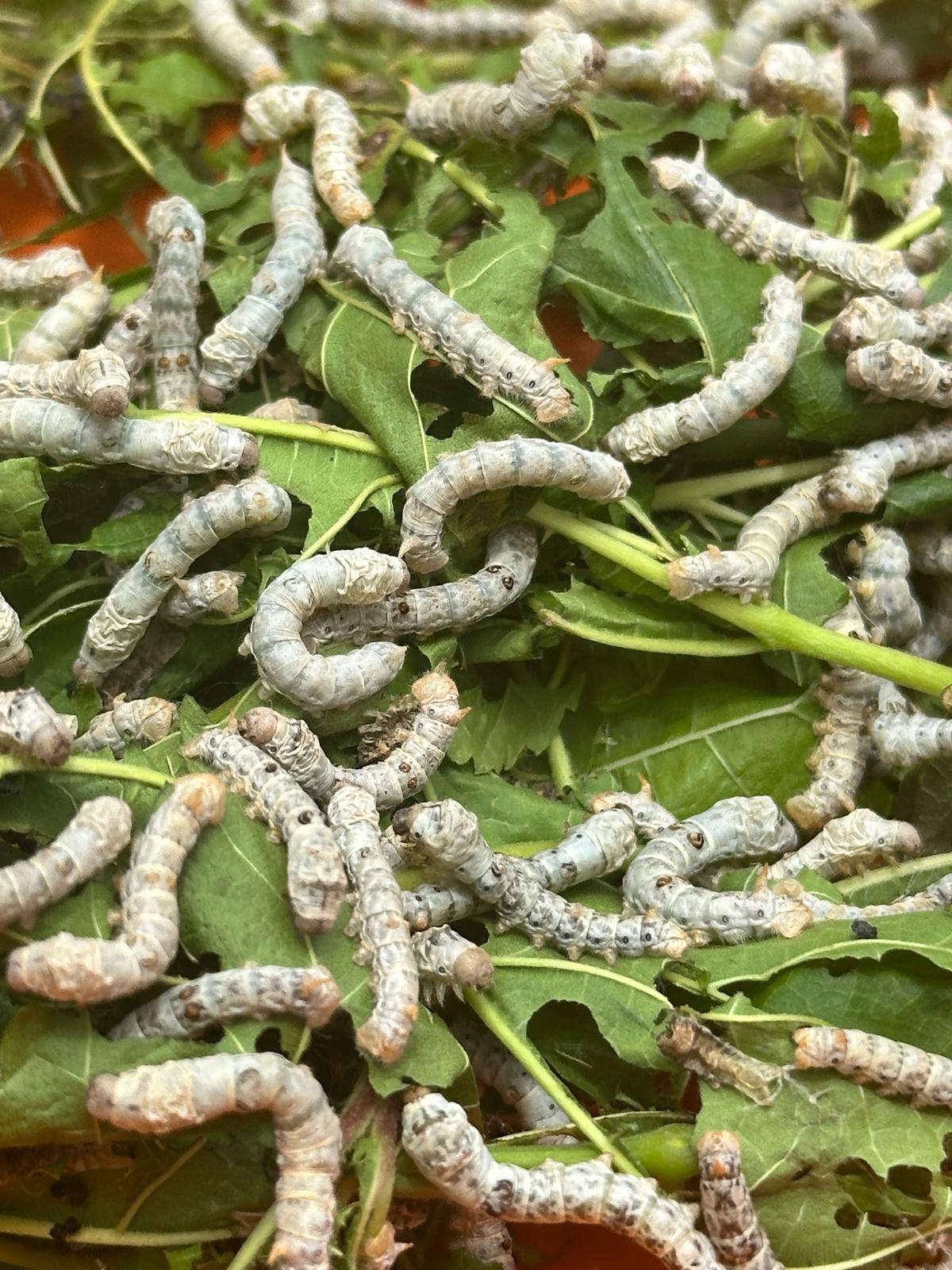
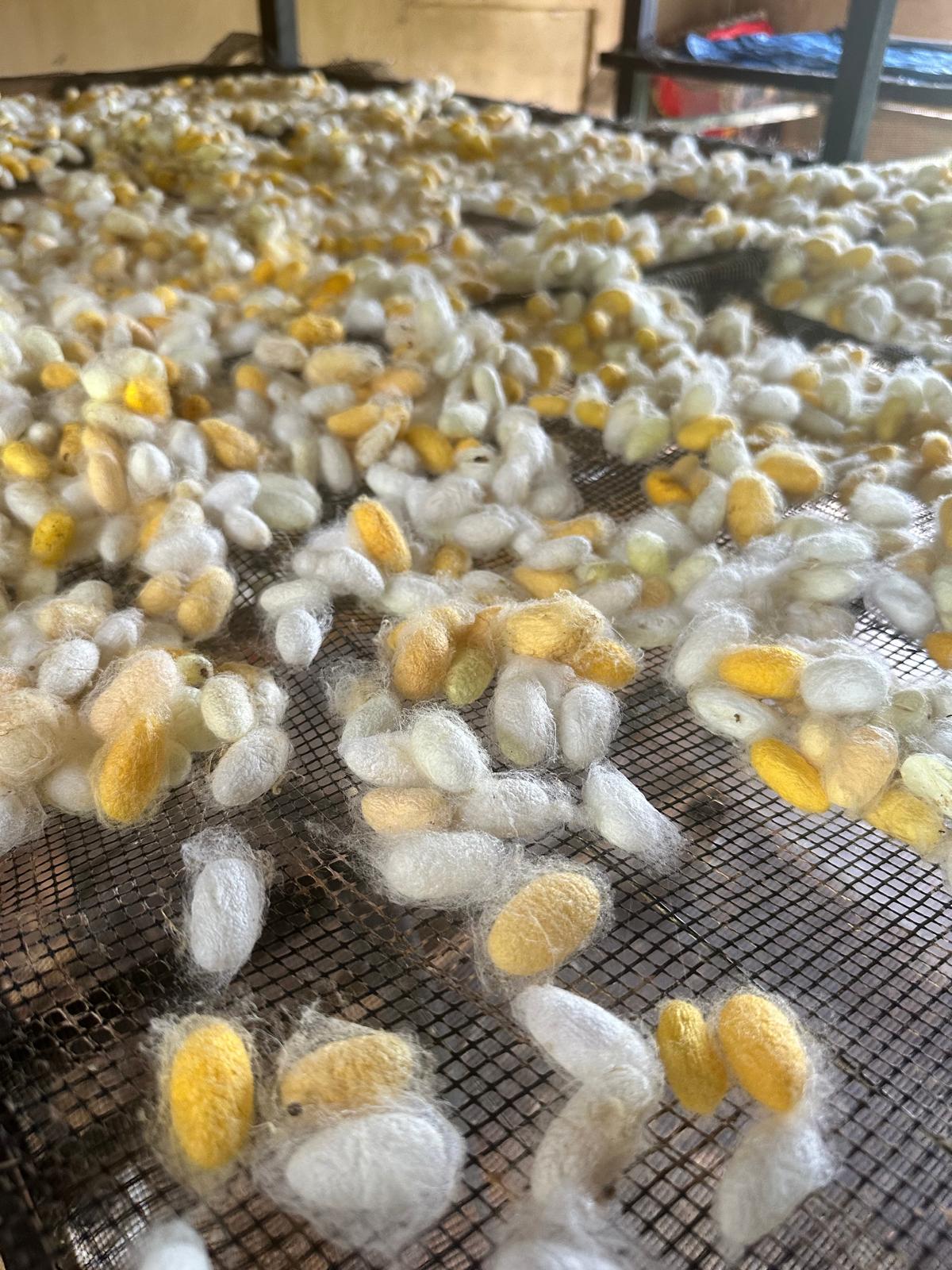
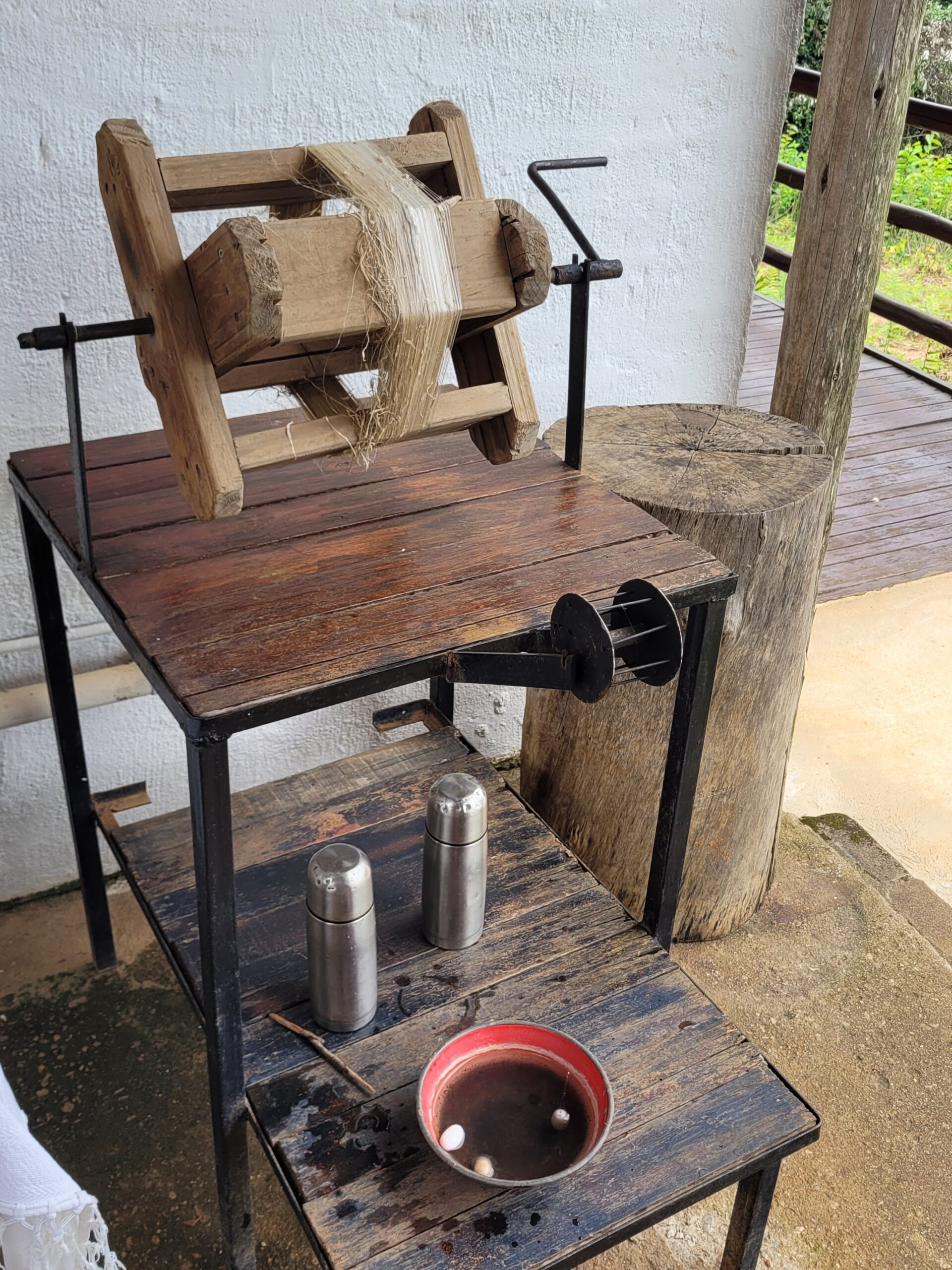
After visiting Harrie’s Pancakes, a local hotspot for all-day breakfast, and the local shops around Graskop, Courtney and I even got the chance to tour a local silkworm farm to witness the production of locally made silk sheets, scarfs and various silk products.
Blyde River Canyon
The Blyde River Canyon is one of the world’s largest canyons. Unlike the Grand Canyon, this one wears a coat of deep green rainforest and grasslands. It feels alive, layered, and ancient.
The three hikes we did that stretched along the canyon were the Bourkes Luck Potholes, the Three Rondavels and God’s Window. Each of them gave us the opportunity to marvel at the majestic beauty along the Panorama Route. This natural gateway is home to some of the most spectacular viewpoints, and also an excellent place to test how many photos a single human can take of green mountains and winding rivers. Spoiler: a lot.
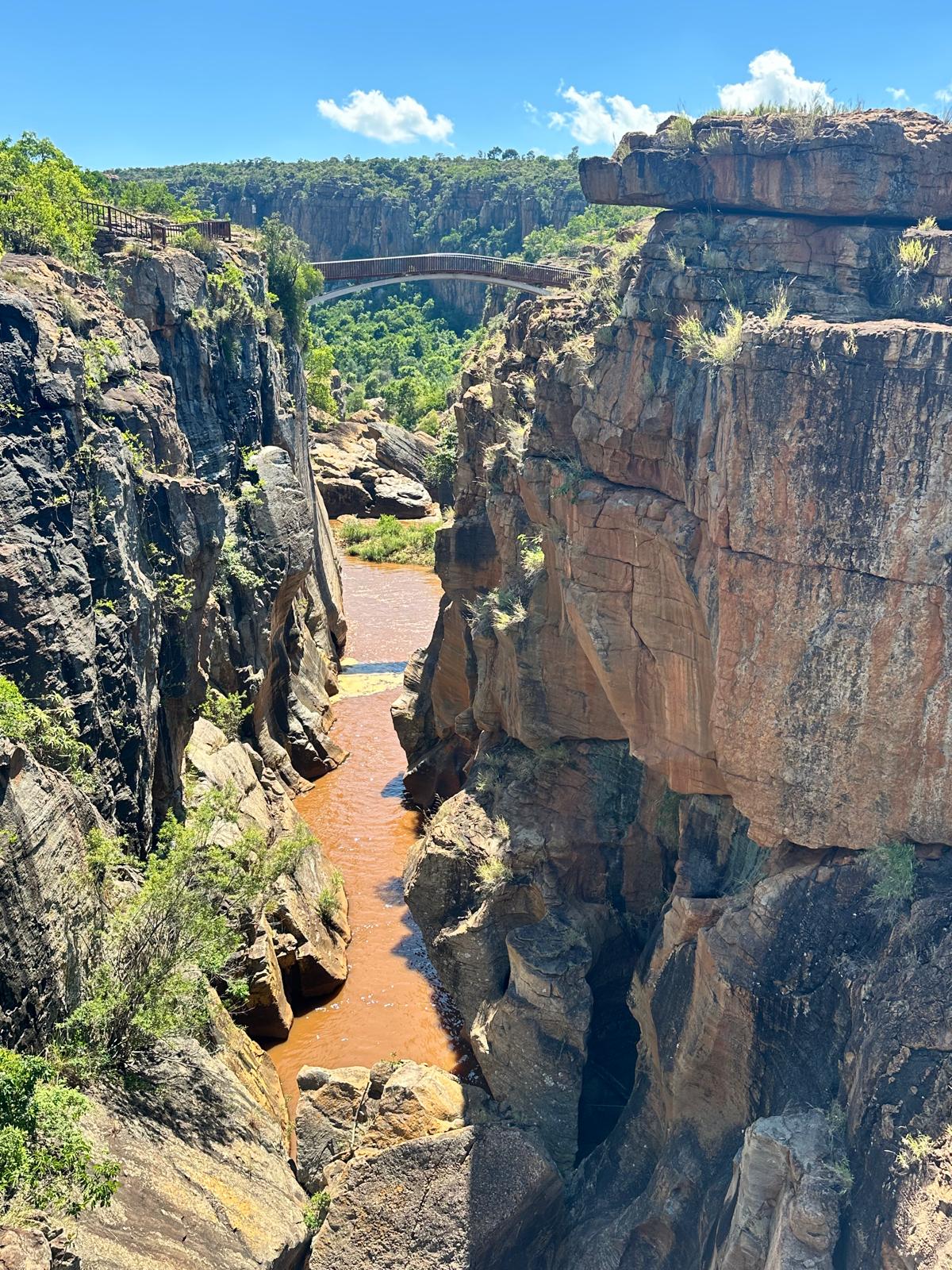
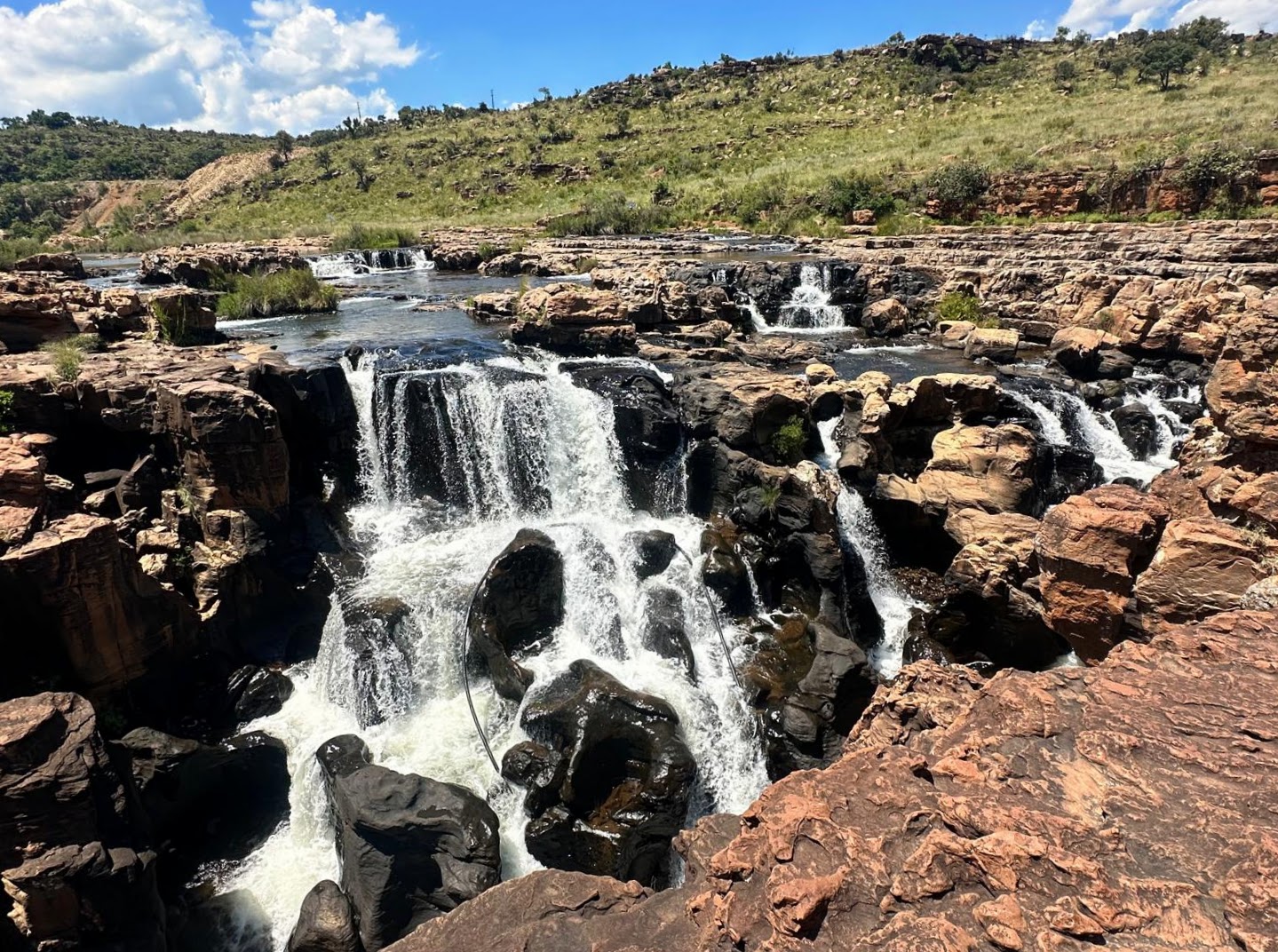
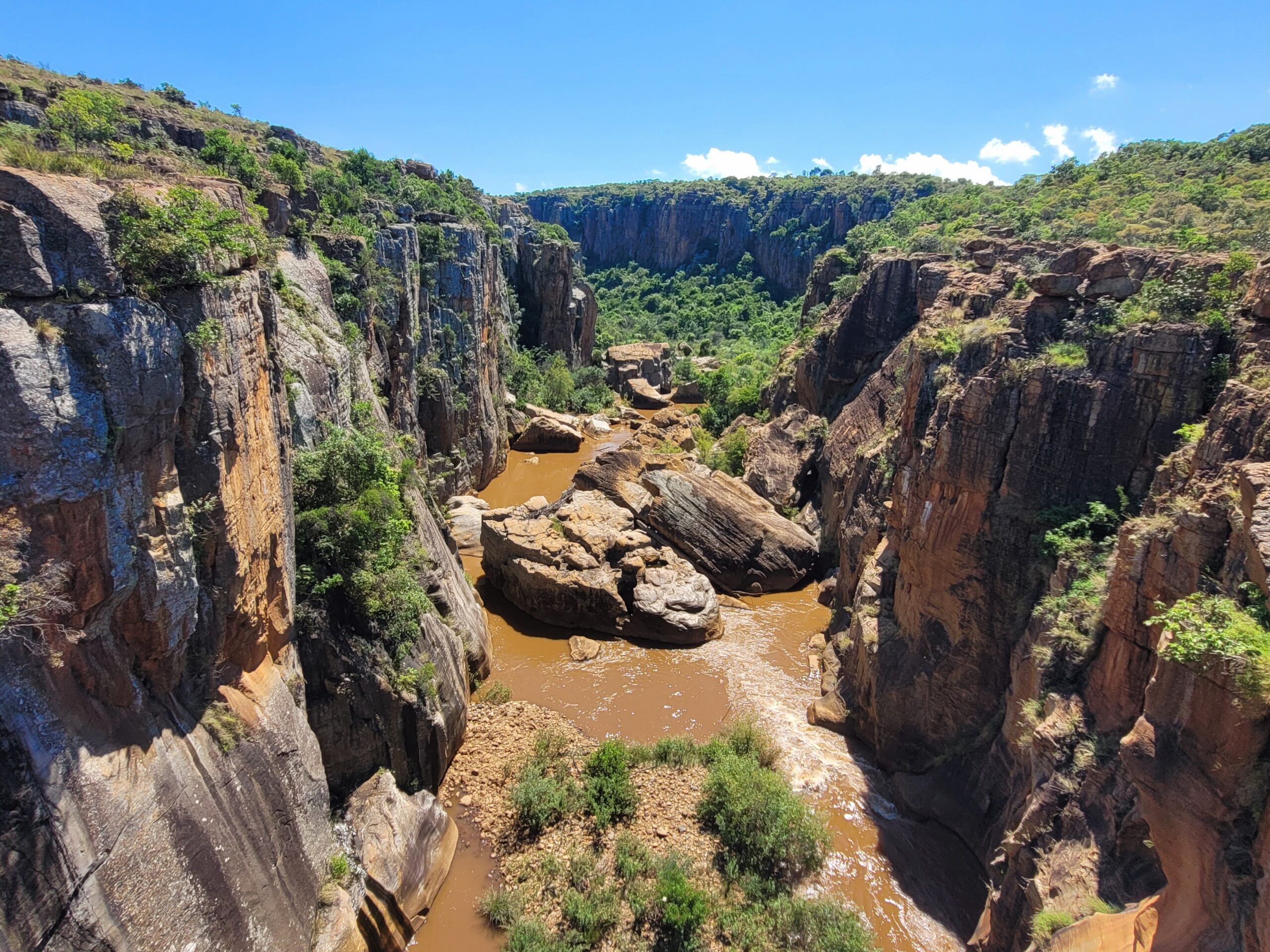
Bourke’s Luck Potholes
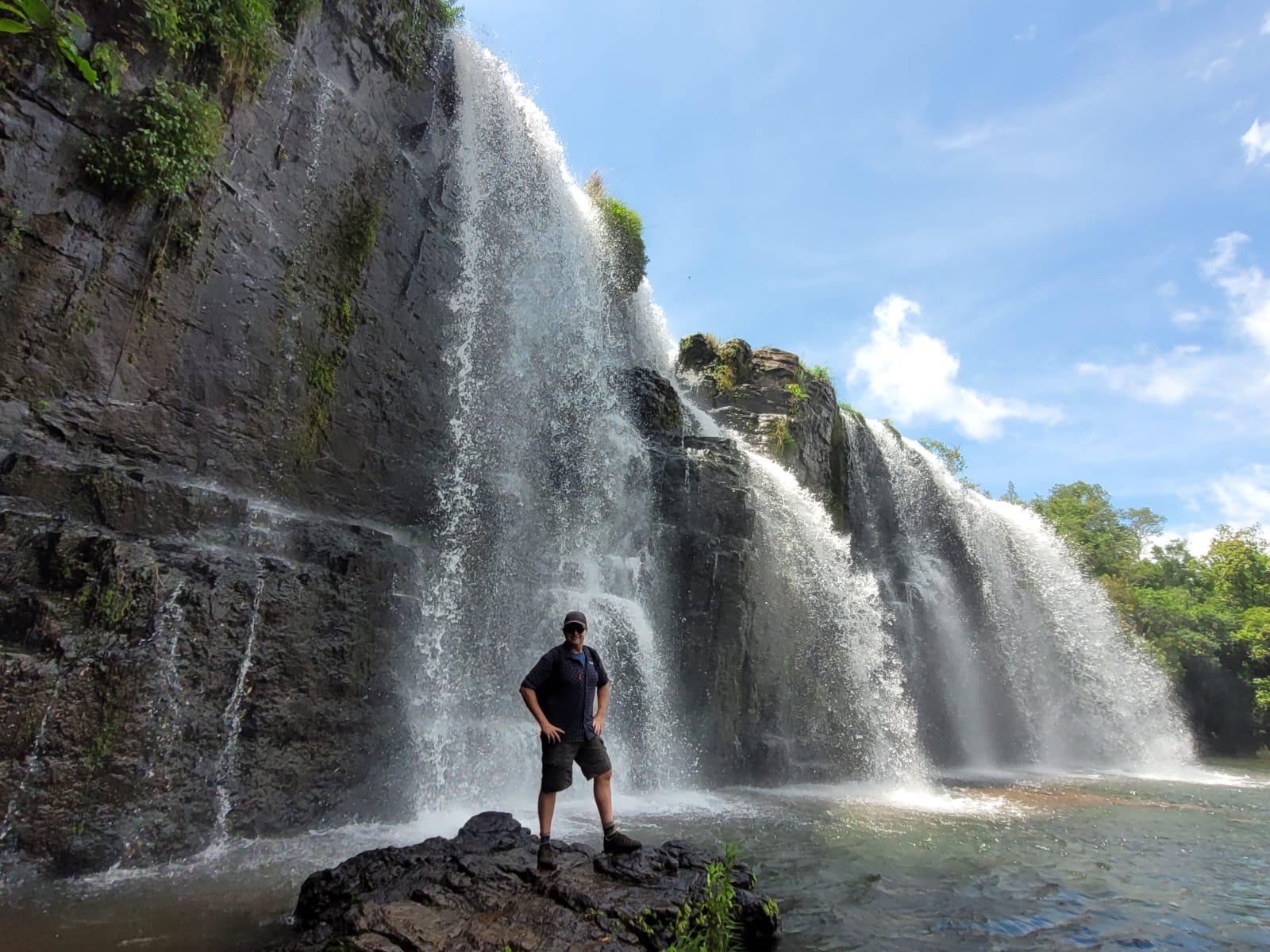
At Bourkes Luck Potholes, you’ll see sweeping cliffs dropping into a winding turquoise-green river, sheer rock faces that look carved rather than eroded, and mist drifting through valleys like the canyon is thinking about something important.
There are lots of viewpoints for photos, as well as various trails, ranging from ‘pleasant stroll in sandals’ to ‘let’s pretend we’re in a National Geographic documentary.’
Three Rondavels
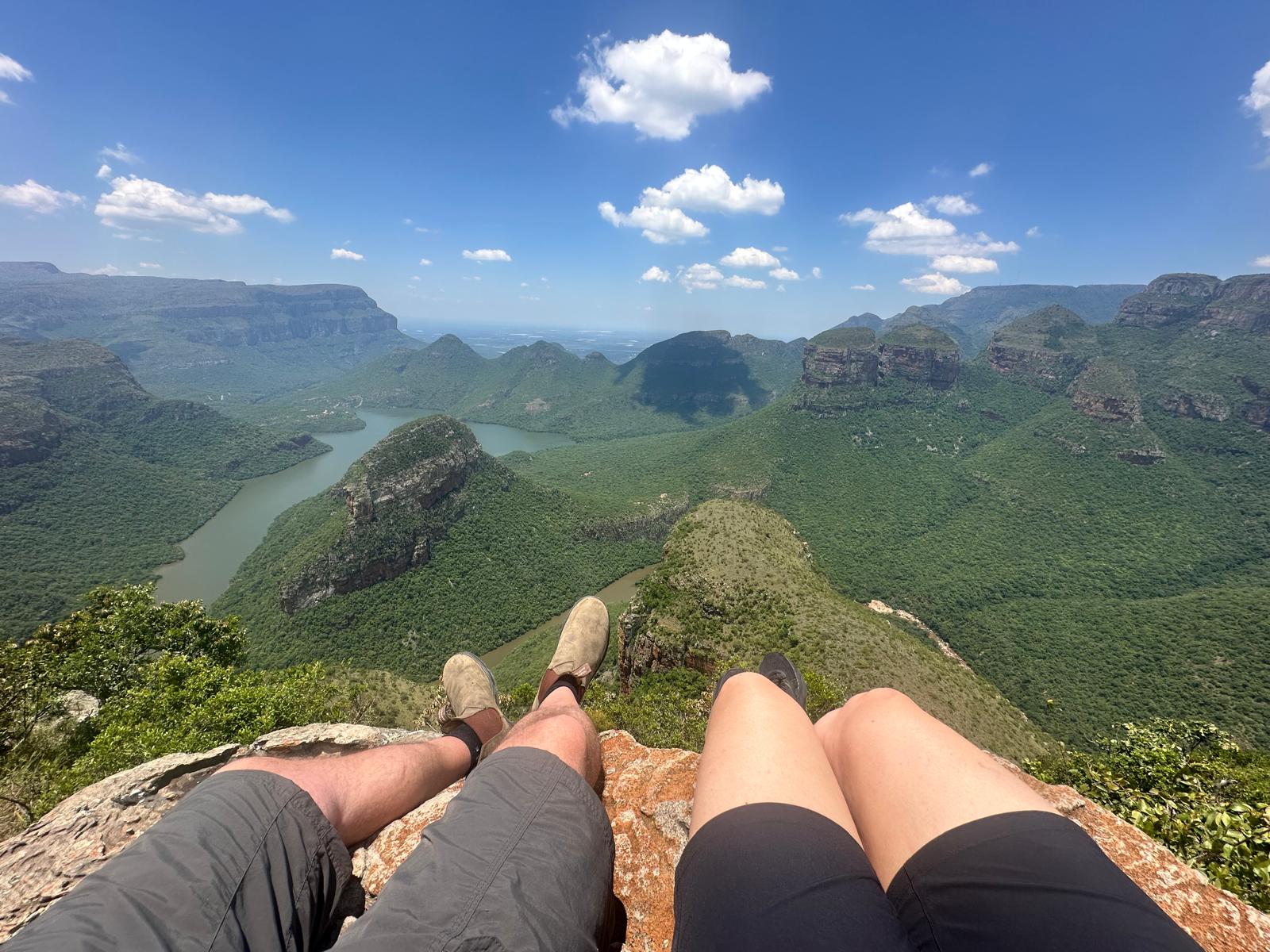
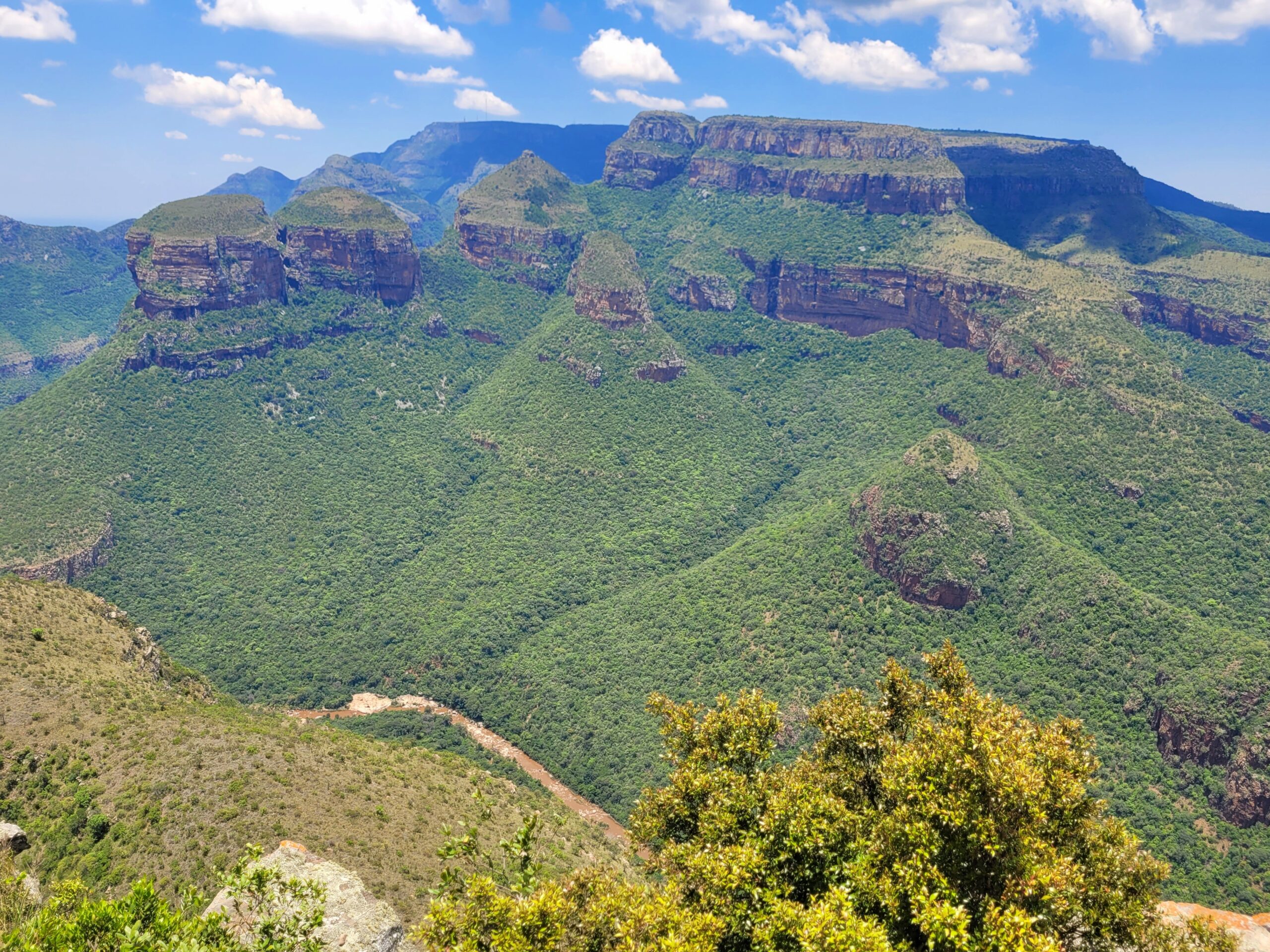
The Three Rondavels are three massive, rounded peaks rising up from the canyon rim, shaped remarkably like traditional African round huts with conical roofs. They’re officially named after the wives of a Bapedi chief (which feels wonderfully poetic), but everyone knows them as the Three Rondavels. It’s nature’s version of thatched huts—except 700+ metres tall!
Standing at the viewpoint, you’ll feel tiny, amazed… and grateful your camera has a wide-angle setting! The wind often sweeps across the cliff edge, the canyon stretches endlessly into the distance, and the layers of rock glow gold and red in the afternoon sun.
It’s one of those places where silence becomes the default response, right before you whisper something like, “Wow… okay… unbelievable.” And it is, in the best way possible.
God’s Window
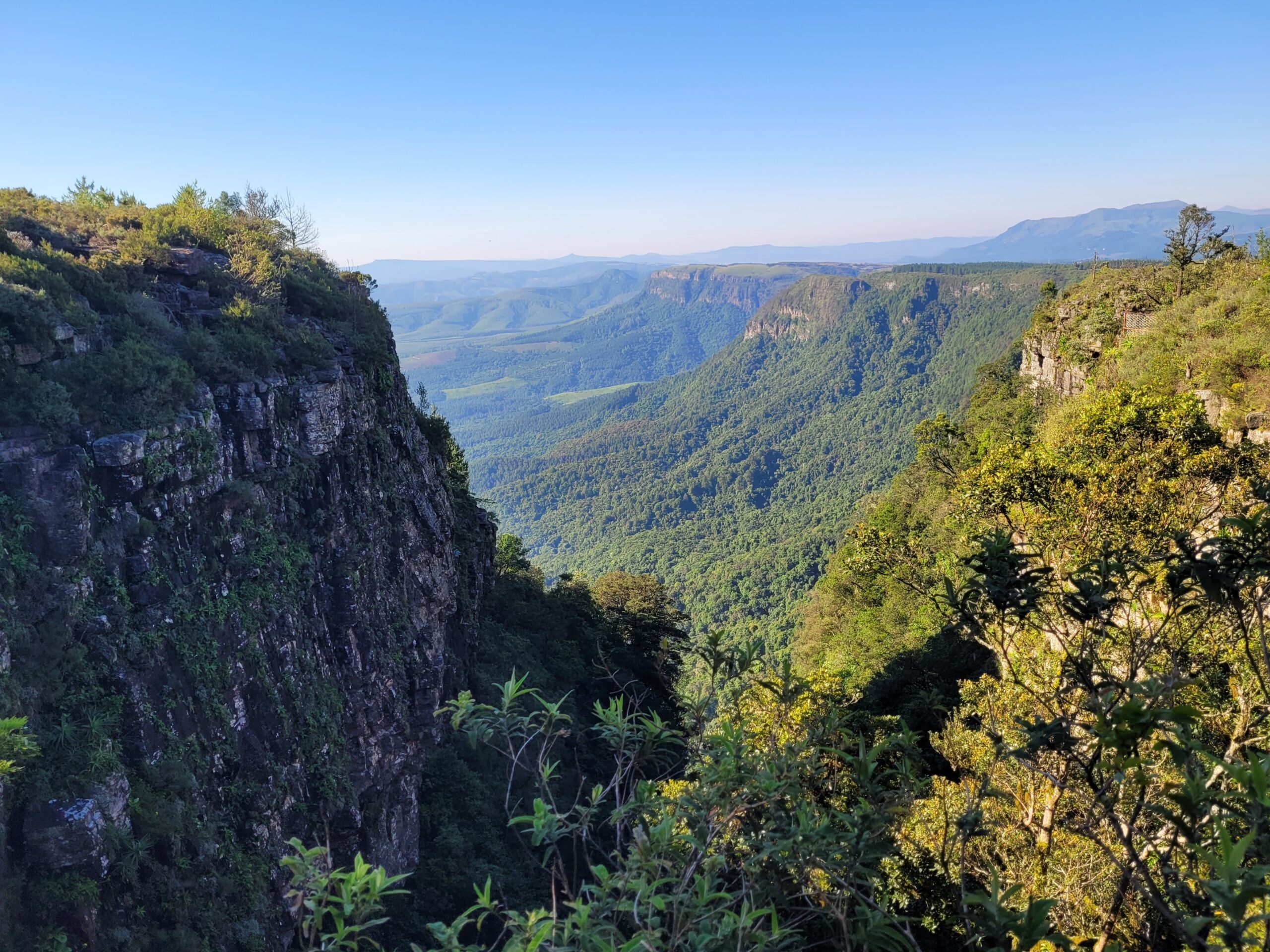
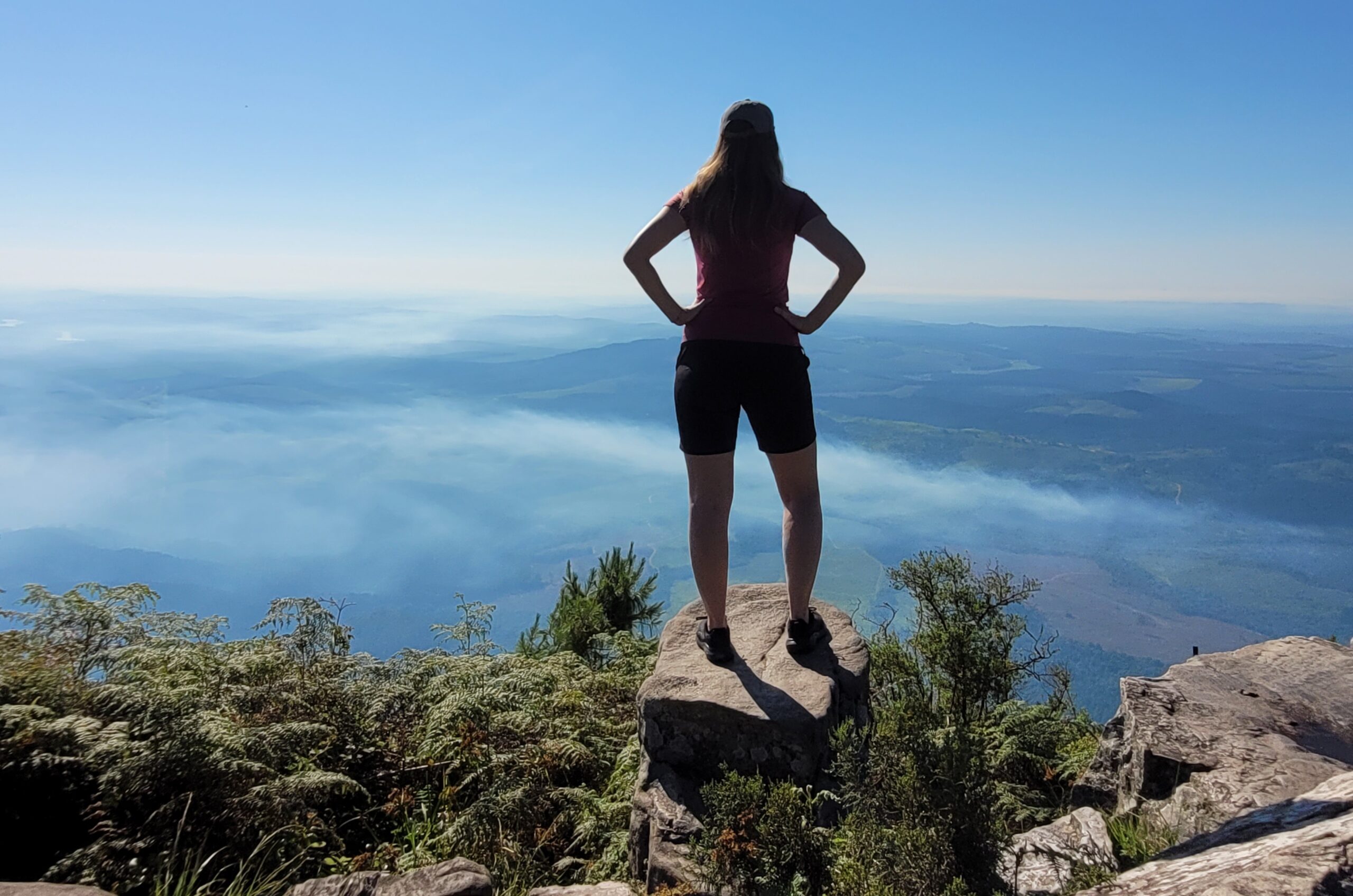
God’s Window isn’t just a poetic exaggeration. When the weather cooperates, as it sometimes likes to play coy behind clouds, the views stretch across rainforest-covered escarpments, sweeping lowveld plains, and distant mountains fade into blue. The name set expectations very, very high, and somehow, it still delivered.
The views feel endless, like someone removed the horizon. On clear days, you can see all the way to Mozambique!
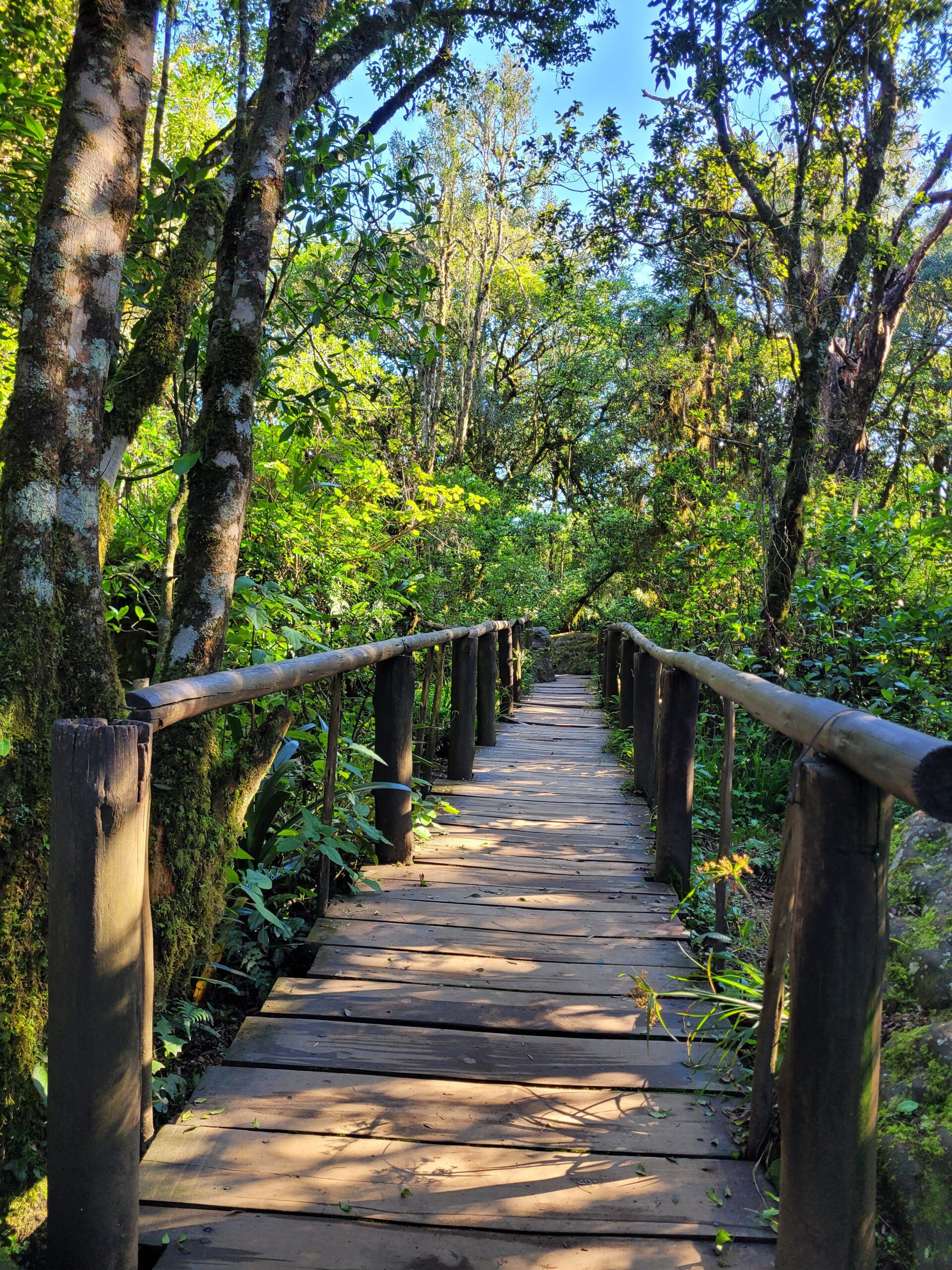
There are many interesting paths and viewpoints, and some through surprisingly lush rainforest where ferns and moss covered trees happily grow. It reminded Courtney and I of hikes we did in the rainforest on Vancouver Island.
We were the first ones to arrive in the early morning hours with nothing but the sound of nature. It felt like the kind of place where you half expect a wise and magical bird to land nearby and offer life advice.
I now understand more about the ‘spectacular’ and ‘breathtaking’ descriptions when seeing such natural beauty.
A Safari Extravaganza
Wildlife, potholes, and horrendous engine noises!
Courtney and I enjoyed our safaris in Kruger National Park so much last year that we decided the logical thing to do was to return and do even more of them. Apparently, our idea of a holiday now involves waking up at ridiculously early hours that only owls and confused roosters normally experience.
It’s difficult to explain the appeal to anyone who values sleep or predictability. You wake before sunrise, drive for 10–12 hours through the bush, and stare at trees in case one moves. Then, when something does move, you whisper about it excitedly, as though the lion might be offended by full-volume appreciation. Personally, I find this thrilling. Others might call it ‘a long ride in a moving vehicle.’
Despite Courtney and I already spending most of our lives within conversational distance of one another, our long drives together in Kruger still managed to produce new topics of conversation—usually somewhere between hour eight and the point where the caffeine wears off. It’s amazing what the human brain can generate when surrounded by elephants.
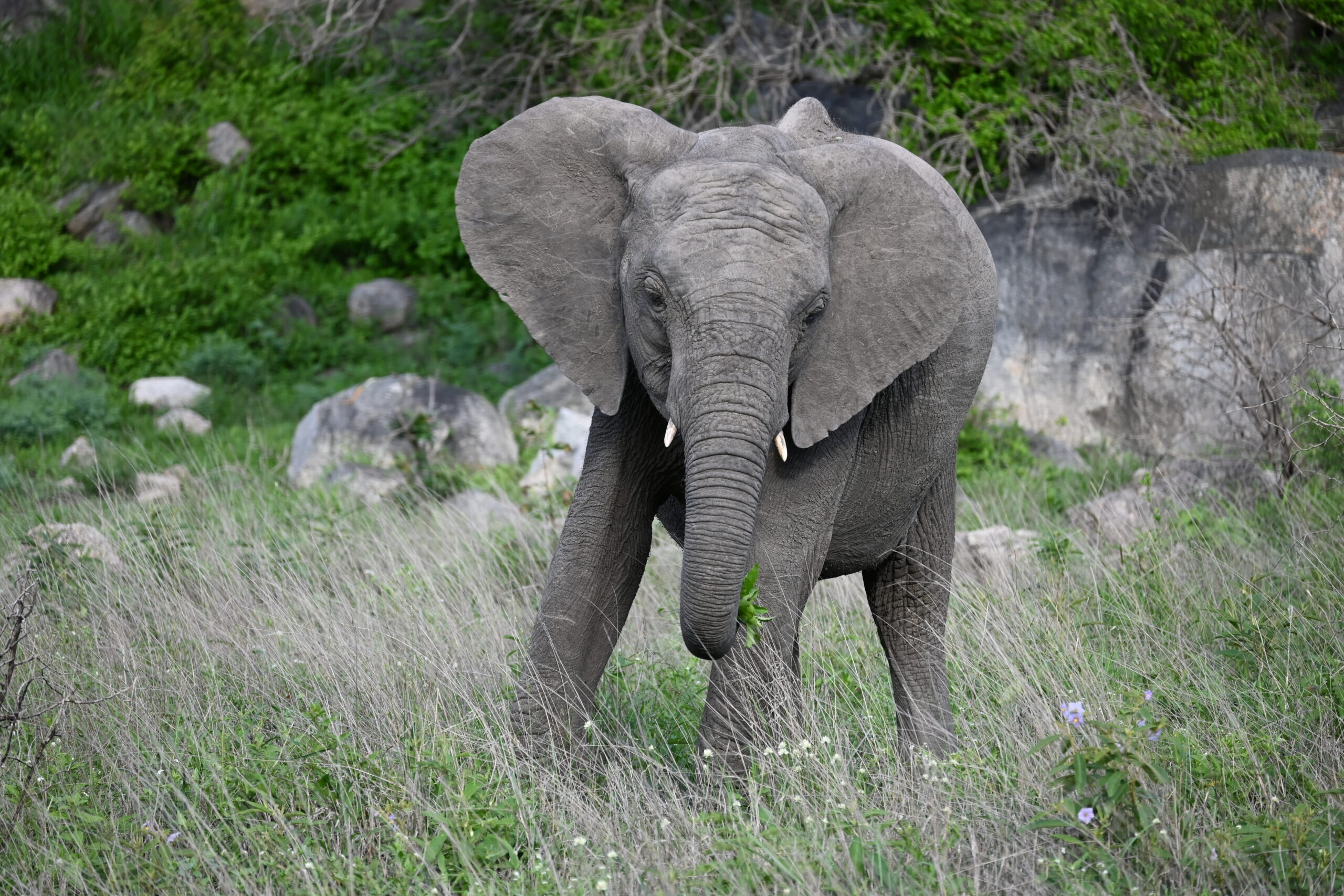
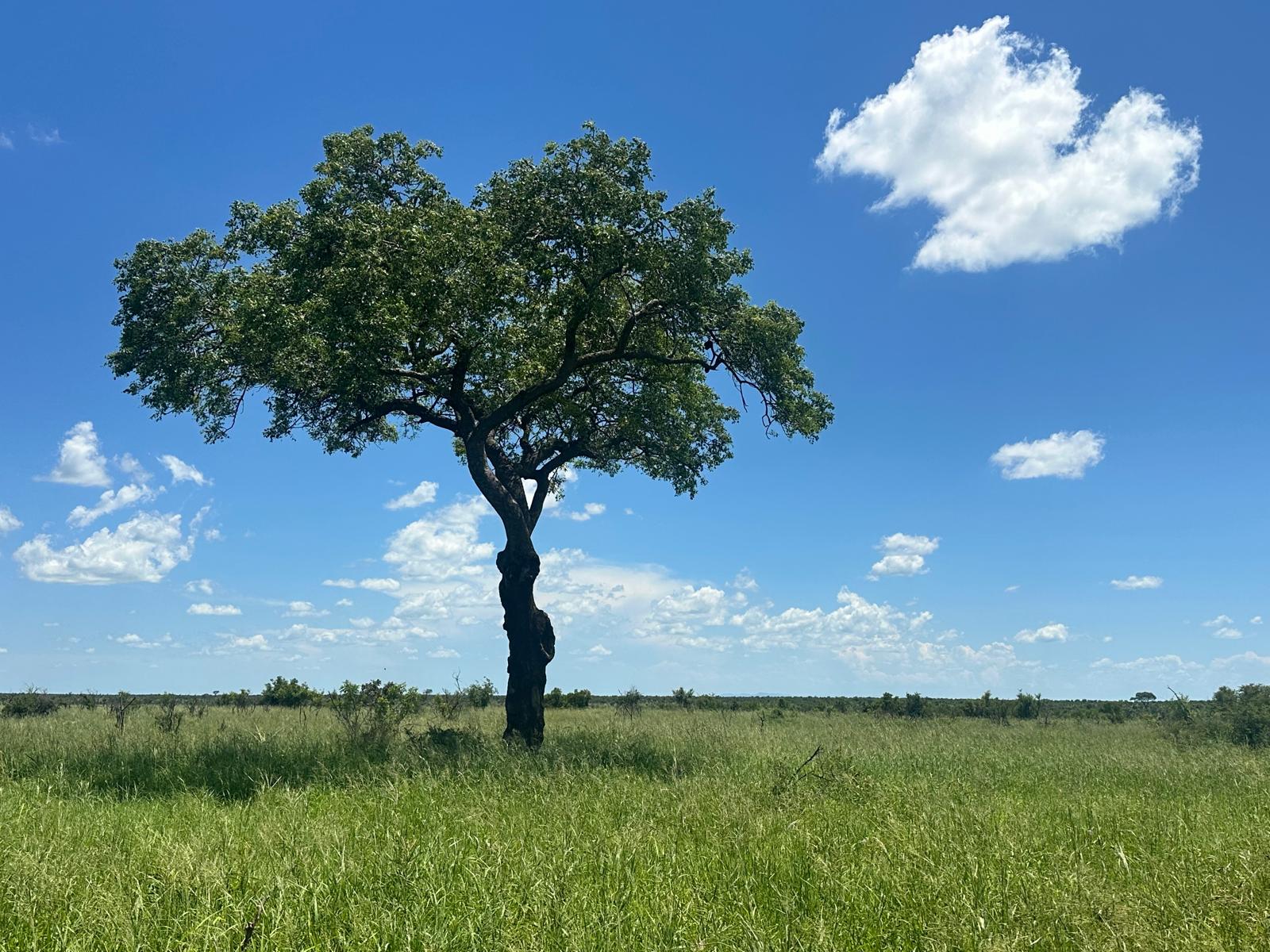
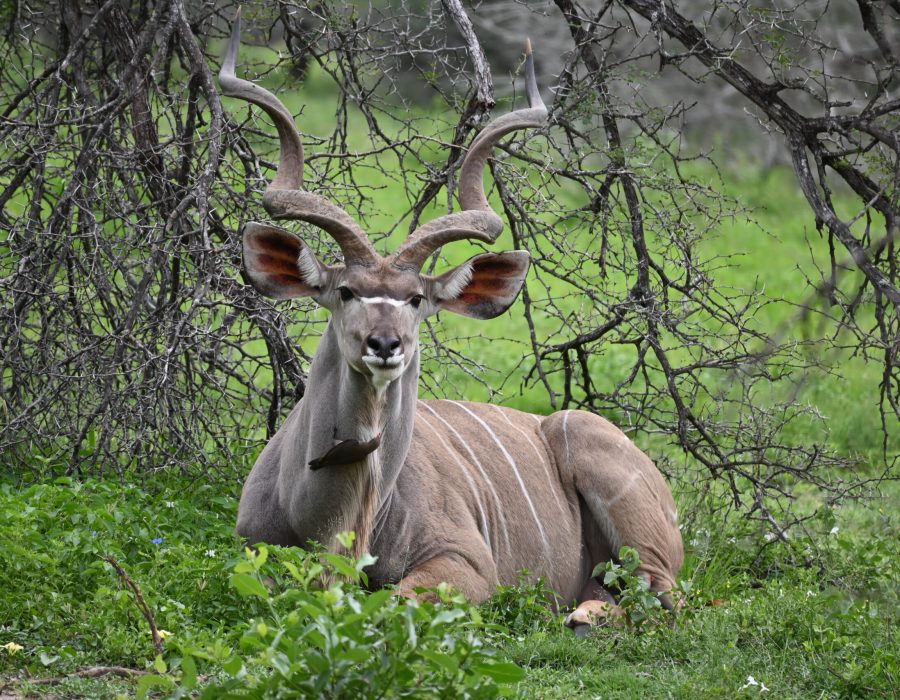
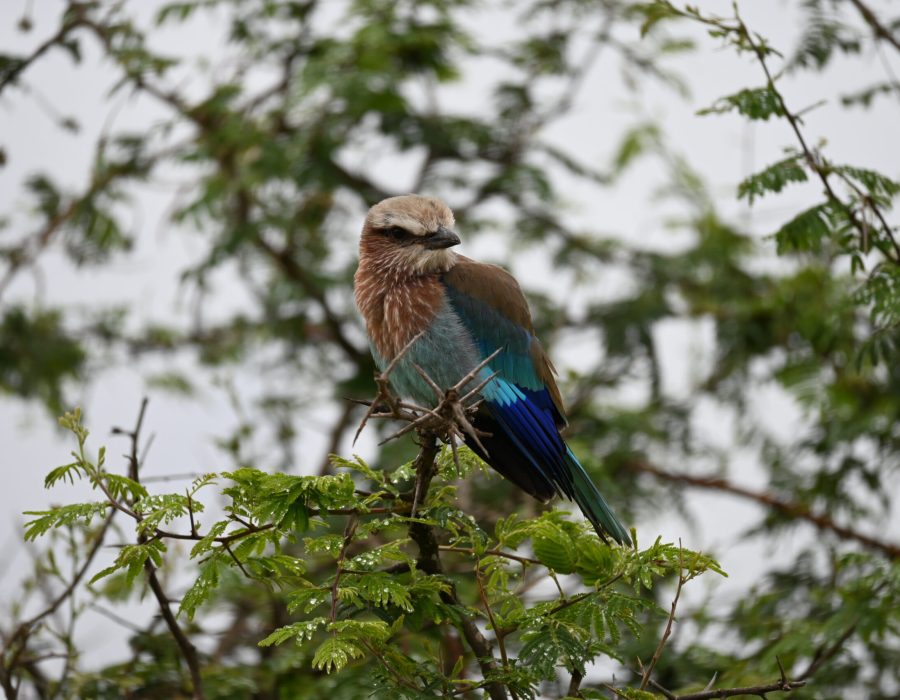
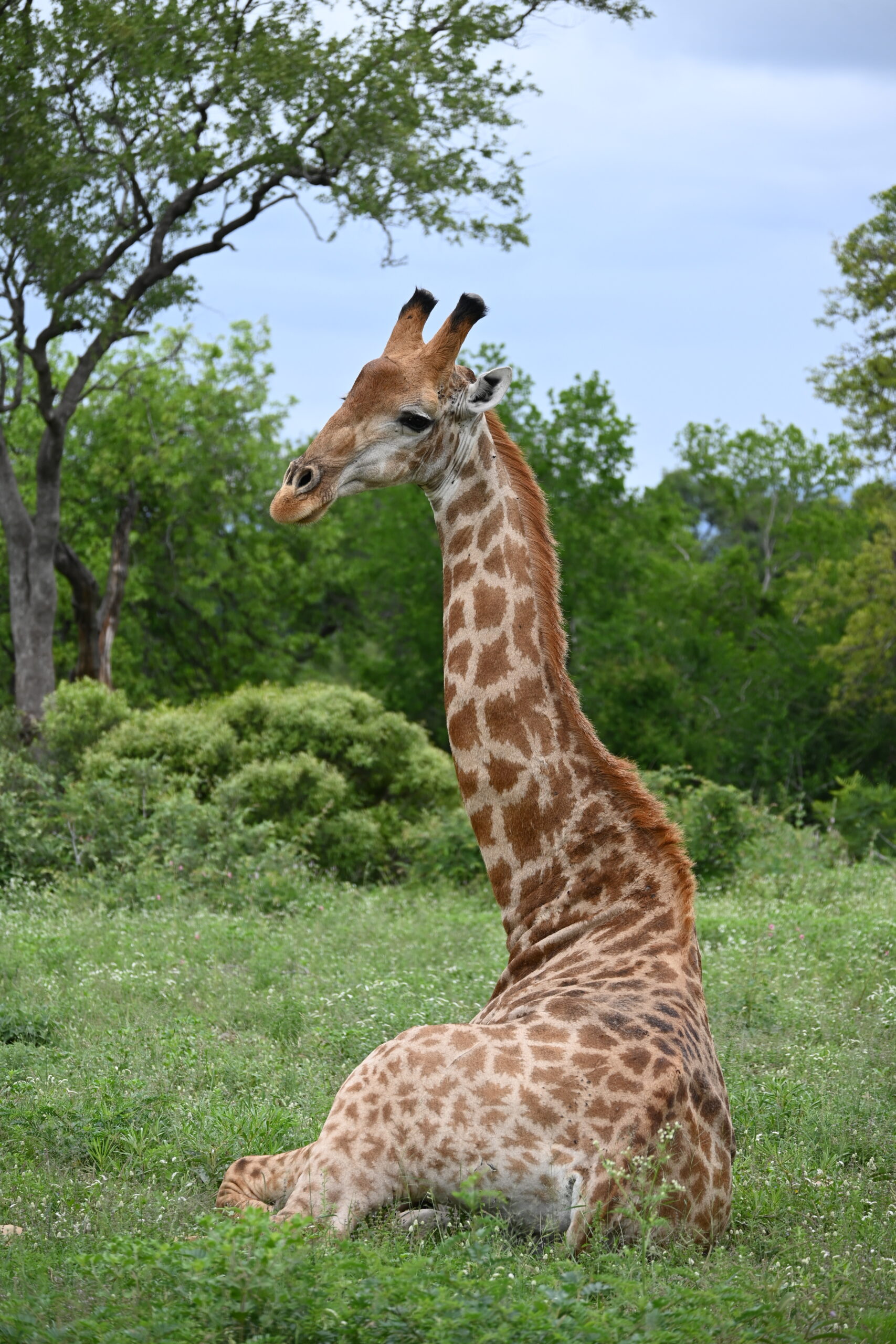
After 10 safaris last year and now 11 more this year, we’ve developed a system: Paul drives, trying best to navigate the often rough terrain, while Courtney spots the animals. I confirm they are, in fact, animals, and find the best on (or off) road location to admire the animals without intruding or provoking the animals.
Then we both proceed to take several photos and videos with these wild creatures. Courtney will happily admit that she turns into the paparazzi if baby elephants are around.
This year was no exception—lions wandered close enough to remind us of what a natural ‘fear’ still feels like when they were within striking distance of us. Elephants politely escorted us along their routes to water, something Courtney and I fondly refer to as ‘joining the parade.’ We also encountered a particularly focused leopard who demonstrated the difference between strolling and hunting with intent.
On our last day in the park, Kruger decided to add a bonus module to our safari education program: Unexpected Mechanical Lessons in the Wild.
In Canada, bridges are straightforward—water goes under them. Kruger, however, prefers variety. After heavy rains, the water sometimes goes over the bridge. Our Haval H6 4×4 handled this admirably right up until our final safari, in the final hours, when I pulled aside on a narrow dirt road to let another vehicle pass.
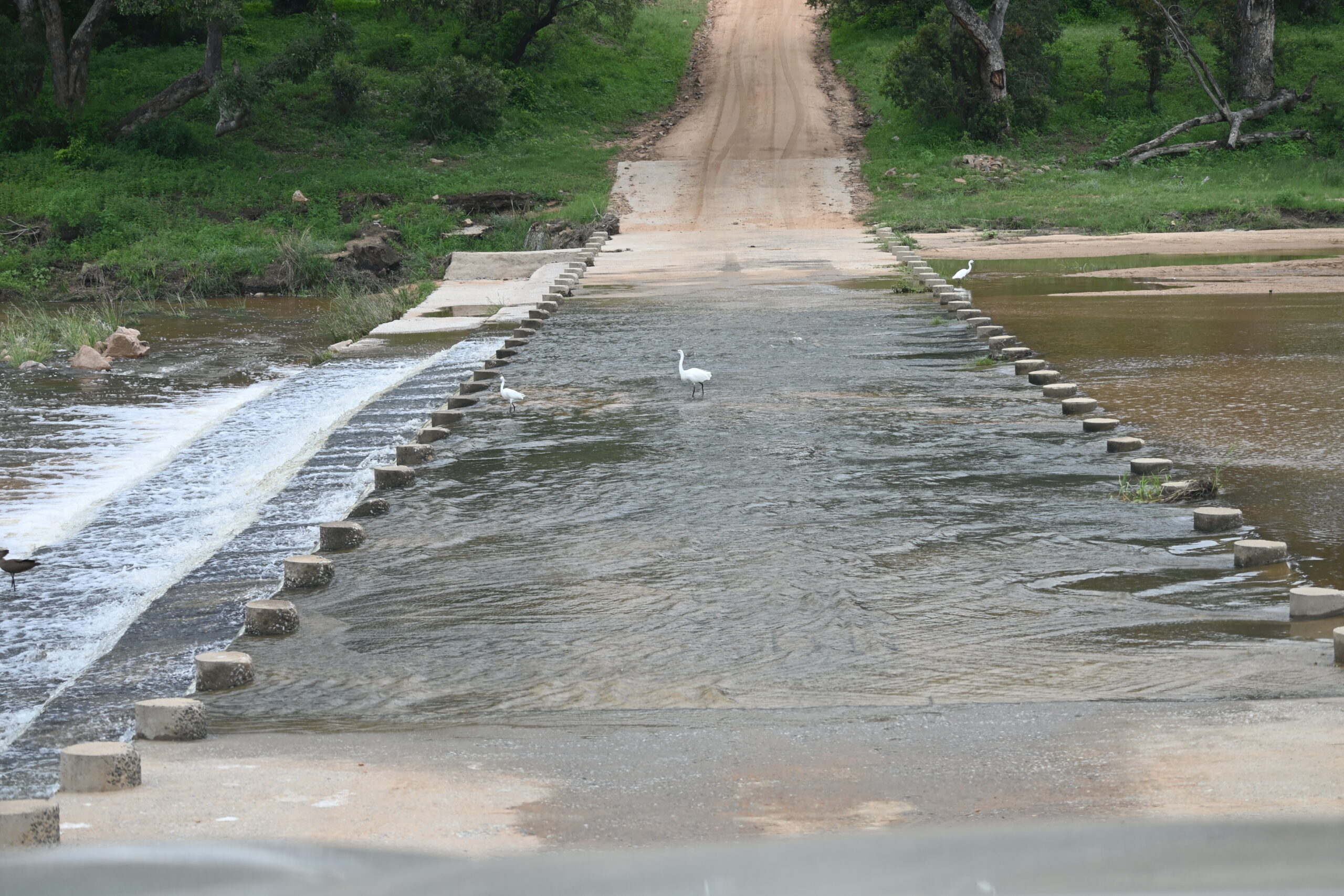
As I returned to the road, the front right side of the vehicle started sounding like it was auditioning for a scrapyard orchestra. All I could think was, “This will be an interesting conversation with the rental company.”
Everything worked, apart from the throttle. For a car, the throttle is what oxygen is for breathing: technically optional, but not recommended.
Pressing the gas pedal produced an aggressive metal-on-metal grinding sound, the kind that inspires spiritual reflection. Stepping outside to investigate was discouraged due to the possible ‘deadly predators’ situation. So, naturally, I asked Courtney to keep an eye out for hungry animals while I leaned upside-down out of the driver’s seat to inspect the undercarriage—the universal sign of a man solving a problem.
Unfortunately, nothing obvious was stuck or broken. The noise, however, remained impressively confident in its existence.
We soon discovered that if I very gently applied the accelerator uphill and coasted downhill, we could move forward while only sounding moderately catastrophic. And since there were no warning lights, we reasoned that continuing on, slowly, was still preferable to explaining to a lion that we were sleeping in the car.
Once on the highway, we blended in remarkably well. South Africa has a healthy ecosystem of vehicles in questionable mechanical condition, so our grinding engine simply joined the chorus.
The rental attendant heard our Haval arriving from a distance— useful, really—and informed us that this model had a bit of a history, which is apparently rental-car code for “Good luck”. We gratefully exchanged it for a Toyota Fortuner, which immediately felt like an upgrade into the category: Vehicles Designed to Keep Operating.
After driving rental cars in 12 countries over the past 2.5 years, we can now confidently rank the Fortuner among our favourites, especially after the locals cheerfully told us we’d need a PhD to tackle the roads in the Eastern Cape. We were briefly impressed, until they clarified that PhD stands for: Pothole Dodger. Happily, the Fortuner graduated with honours.
Witsieshoek Mountain Lodge, Tugela Falls & Christmas with the Sotho People
We left Kruger from the southeast corner, the part tucked near the Mozambique border, and we began what we knew would be an 11–12 hour cross-country journey to Witsieshoek Mountain Lodge. Just us, the open road, and a hopeful faith in South African road signage.
After a brief delay returning our previous rental vehicle, we were handed the keys to a shiny Toyota 4×4 Fortuner. A vehicle with the rugged confidence of something that has seen potholes before.
And with that, we were officially Drakensberg-bound.
Drakensberg Mountains
Mountains, Birds & Weather with Personality
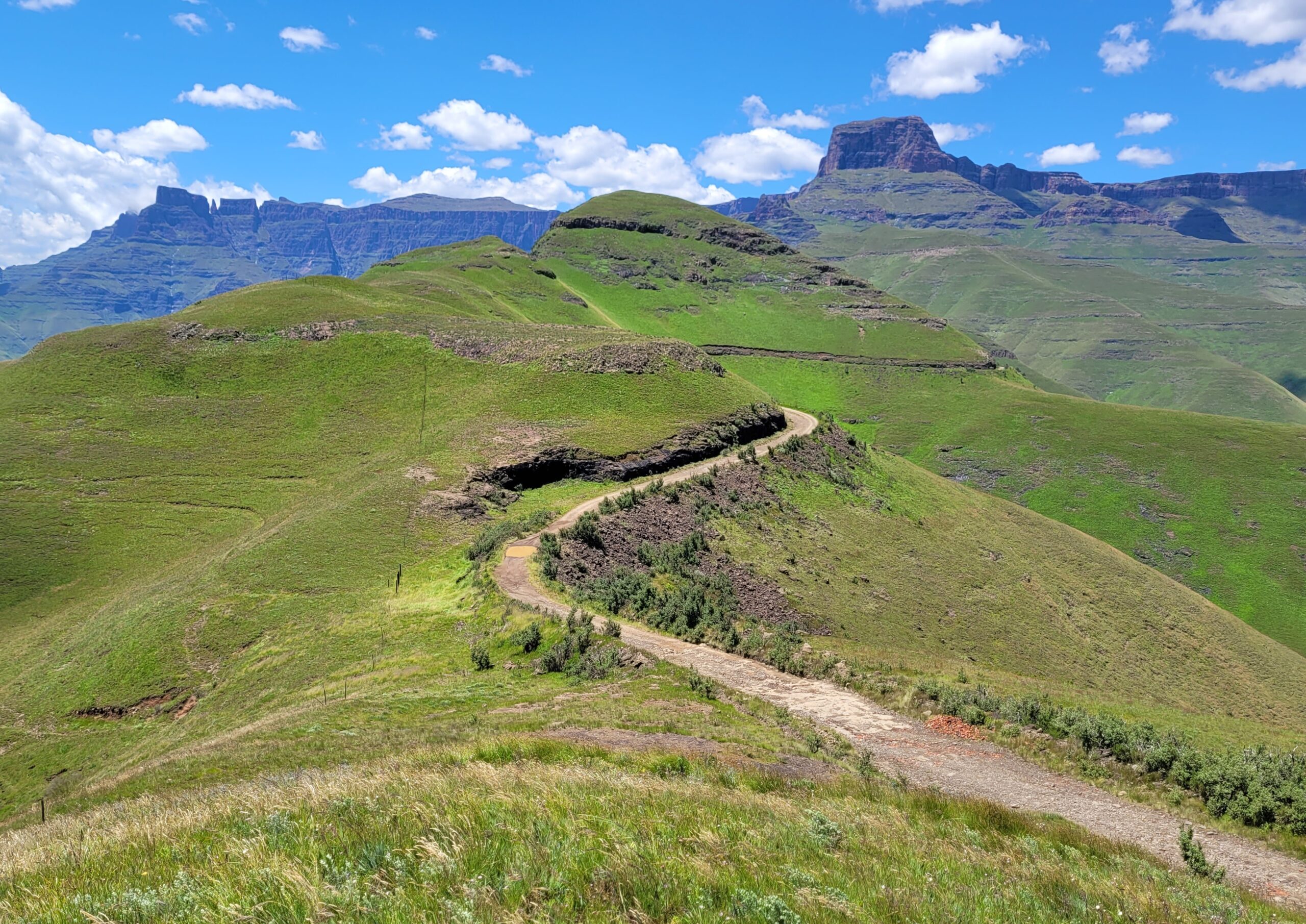
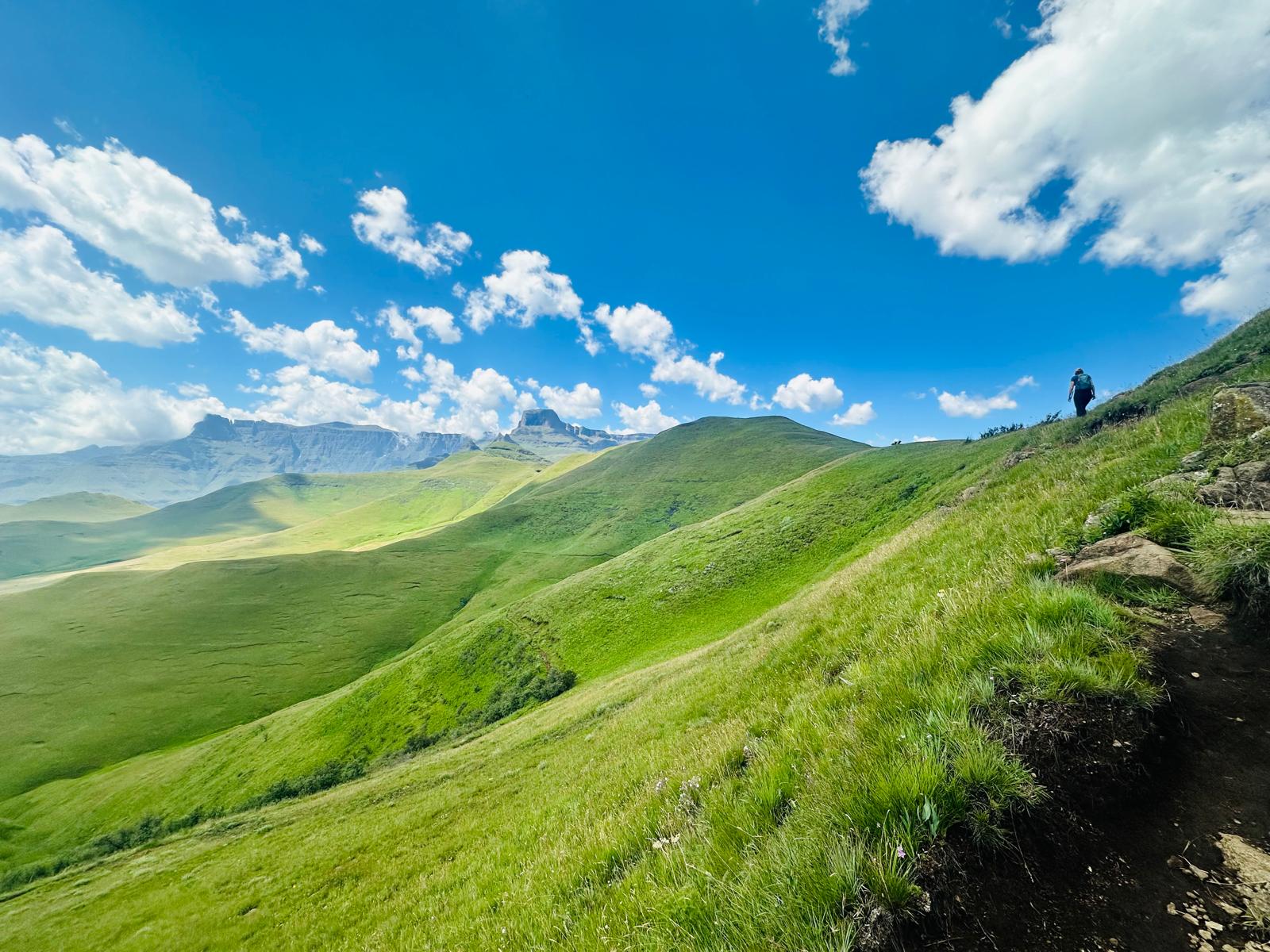
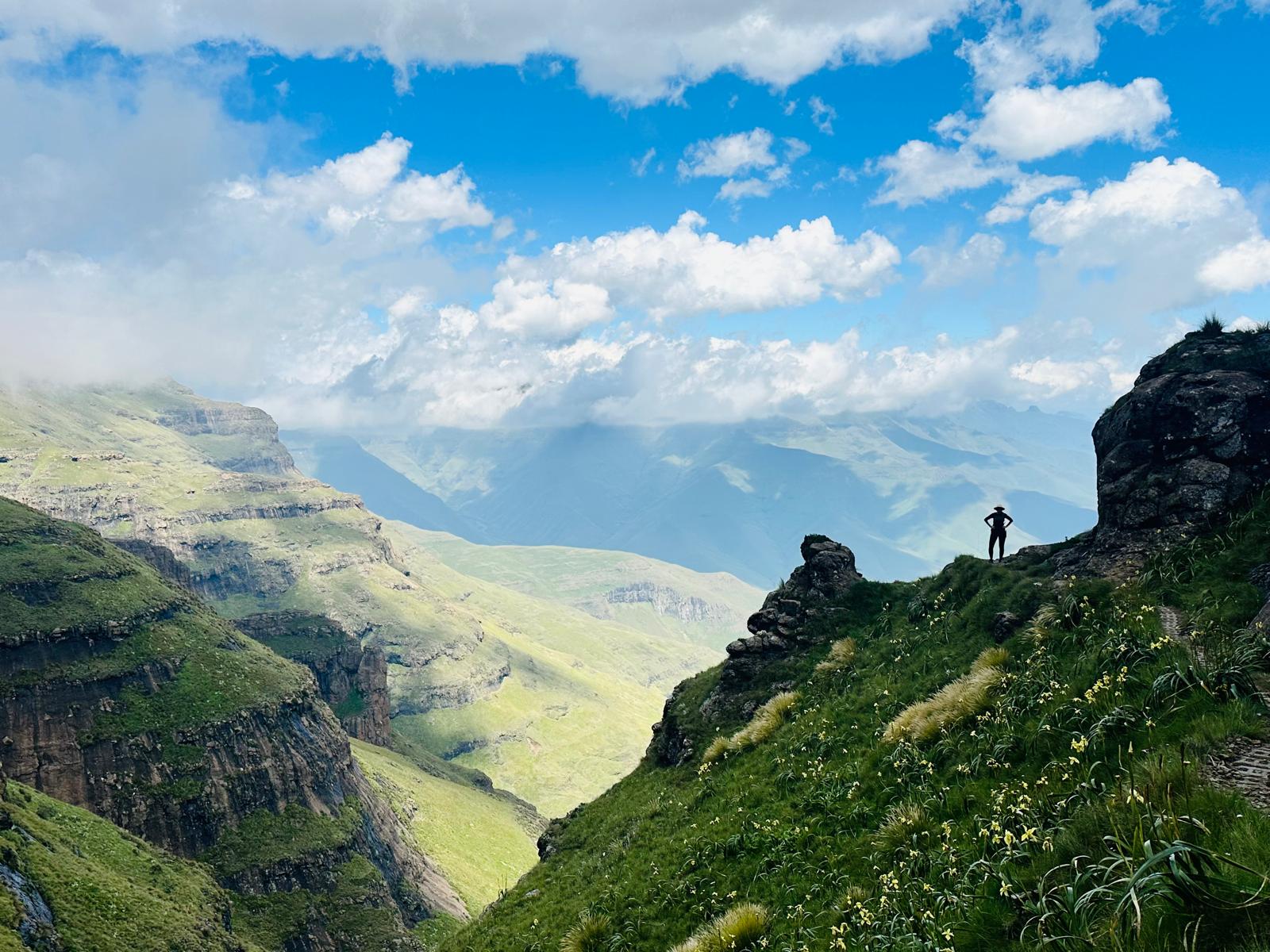
The Drakensberg Mountains stretch dramatically along South Africa’s eastern spine and into the high-altitude kingdom of Lesotho — a land that feels part Tolkien, part National Geographic. Together they form the Maloti-Drakensberg Transfrontier Conservation Area, which is really just a grand way of saying, “Prepare to be amazed.”
The landscape here doesn’t do subtle—towering escarpments, sheer cliffs, and the Amphitheatre: a kilometre-high wall of rock so enormous it makes mountains elsewhere look like they’re still in training.
Just nearby is Tugela Falls— one of the tallest waterfalls in the world, which tumbles nearly 948 metres down the escarpment. This alpine-style hike became our Christmas mission. Because nothing says holiday season like steep trails, thin air, and unpredictable weather.
Beyond the rock formations, the Drakensberg is full of rolling grasslands and delicate ecosystems. Birdwatchers flock (literally and figuratively) to spot rare species like the endangered bearded vulture, who looks like he’s perpetually thinking deep philosophical thoughts.
The weather, however, has its own sense of humour.
Sunshine? Absolutely.
Mist? Of course.
Wind? Why not.
Sometimes all three before breakfast. We even had the opportunity to experience a hike during a dramatic thunderstorm, although it was the nearby lightning, fog and hail that were more concerning than the loud thunder. As I often tell Courtney, this current storm is nothing to be worried about, as we often eat challenges for breakfast.
It’s the kind of place that rewards early risers and hikers with patience—and a decent jacket.
Life at 2,286 Metres: Witsieshoek Mountain Lodge
Perched at 2,286 metres above sea level, Witsieshoek Mountain Lodge sits at the foot of Sentinel Peak—one of the highest lodges in South Africa. Our room faced directly toward the Amphitheatre and surrounding peaks, which made our morning view look suspiciously like a postcard.
Courtney and I chose a Sentinel Room because if you’re going to wake up early anyway, you might as well have mountains staring back at you while you do it. Every time we stepped out the door, we were filled with a sense of wonder.
The lodge vibe is rugged-cozy—less ‘five-star resort’, more ‘mountains first, coffee second’. There’s a central restaurant and lounge serving proper hearty meals for hikers who have earned their calories the honest way—one step at a time.
And the guests? A rotating cast of hikers, photographers, wanderers and people who saw the word ‘view’ on the brochure and said yes.
A stay here feels like stepping into the mountains rather than simply observing them. You wake to silhouetted peaks quietly greeting the dawn. During the day, you walk through high alpine scenery that feels ancient. And at night, you return to warmth, a good meal, and that satisfying tiredness earned honestly.
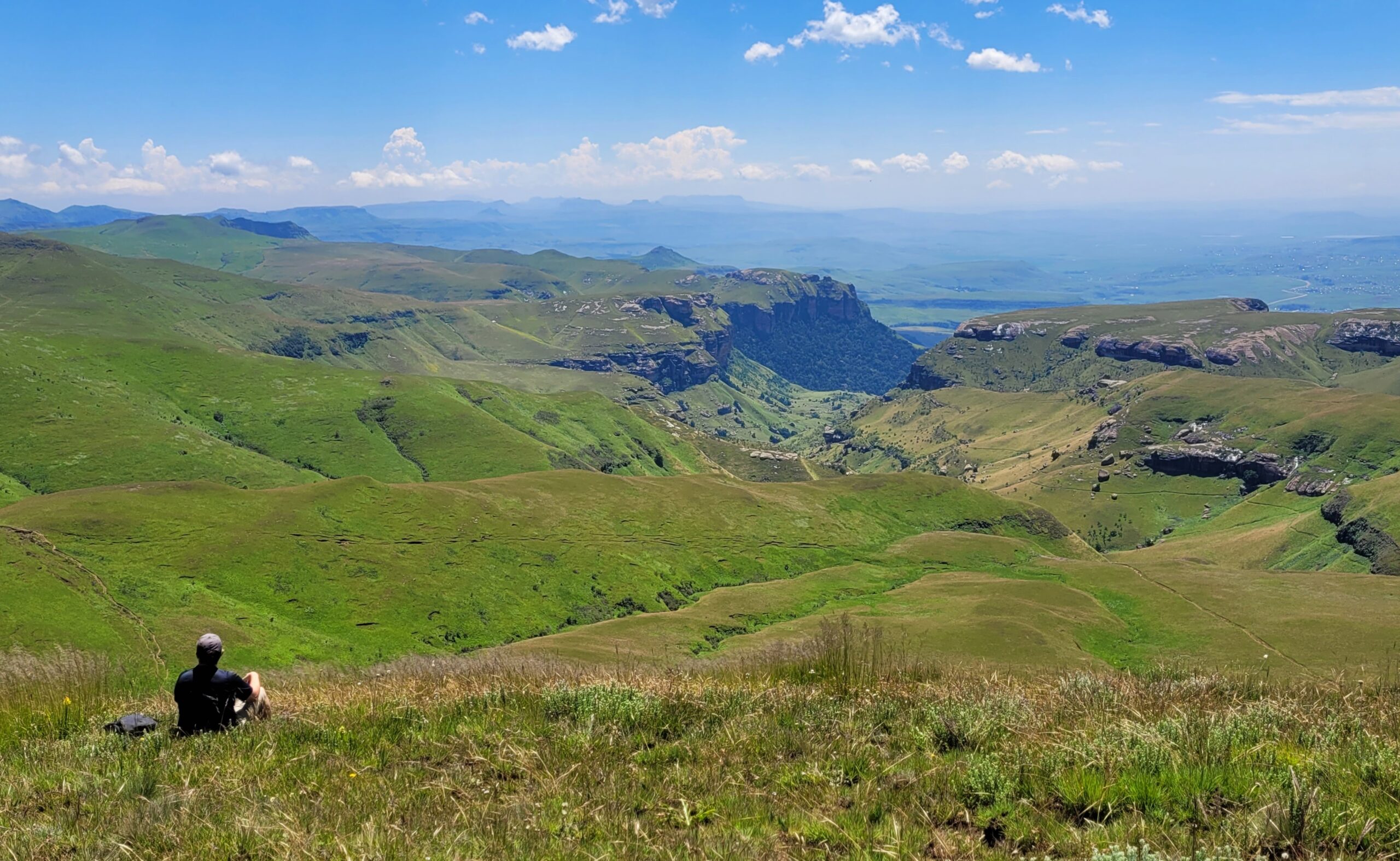
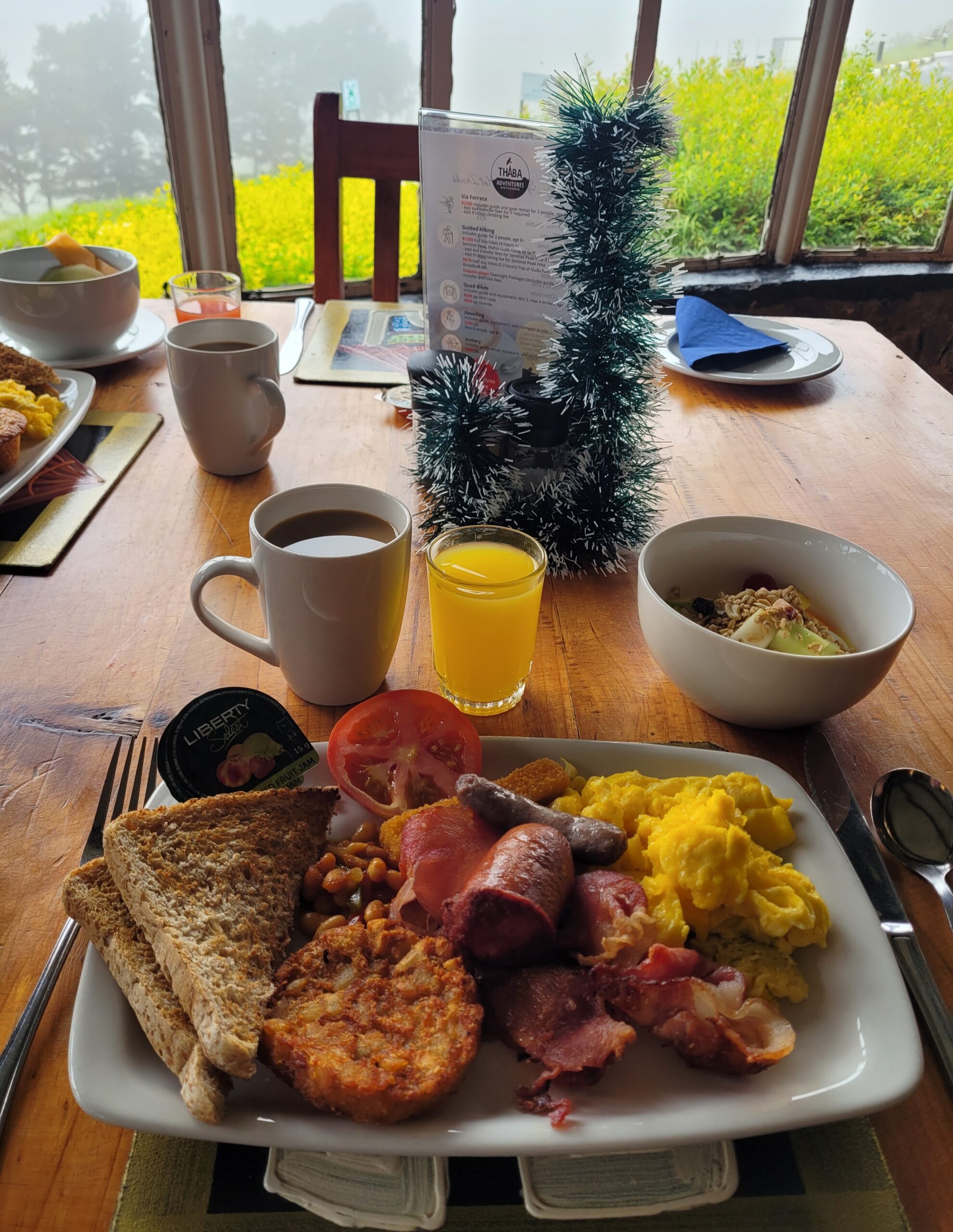
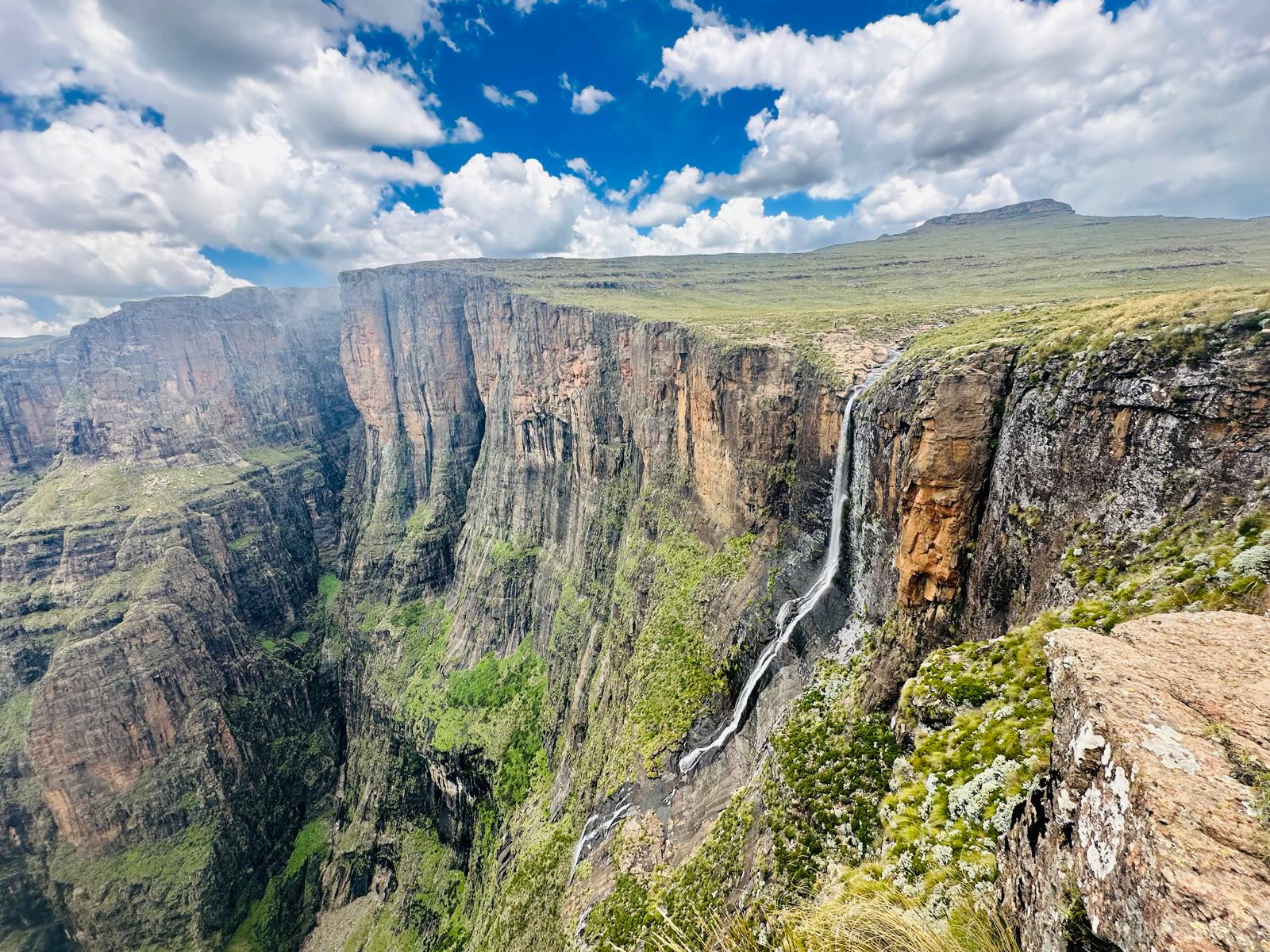
It’s the perfect place whether you’re a serious hiker — or simply someone who likes their scenery tall, dramatic, and generously supplied with fresh air. One of the best parts of Witsieshoek is that your hiking trail practically begins at your slippers. From here you can wander into:
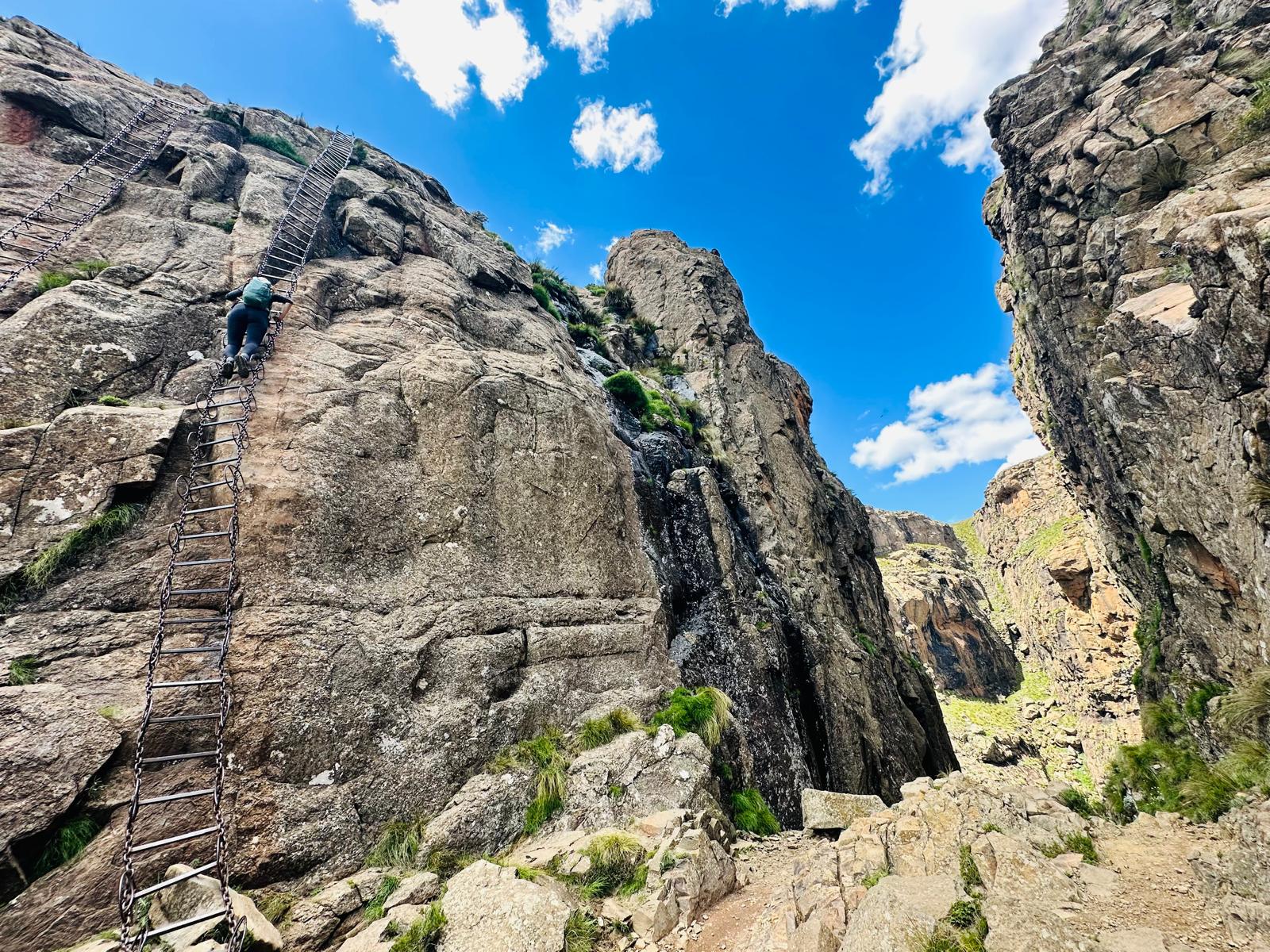
* Sentinel Peak & the Chain Ladders—for those who don’t mind heights and a jolt of adrenaline
* Gudu & Tiger Falls—waterfalls because gravity is beautiful
* Mahai Valley—green, quiet and peaceful
*And plenty of gentle walks for those who want mountains without mountaineering
Naturally, Courtney and I wanted to do all of them. Every path offered something new—sweeping cliffs, laughing streams, birds pretending not to notice you, and views that make silence feel appropriate.
And yes — we also saved a little room in our adventure schedule for something even more meaningful… a Christmas visit with a Sotho tribe.
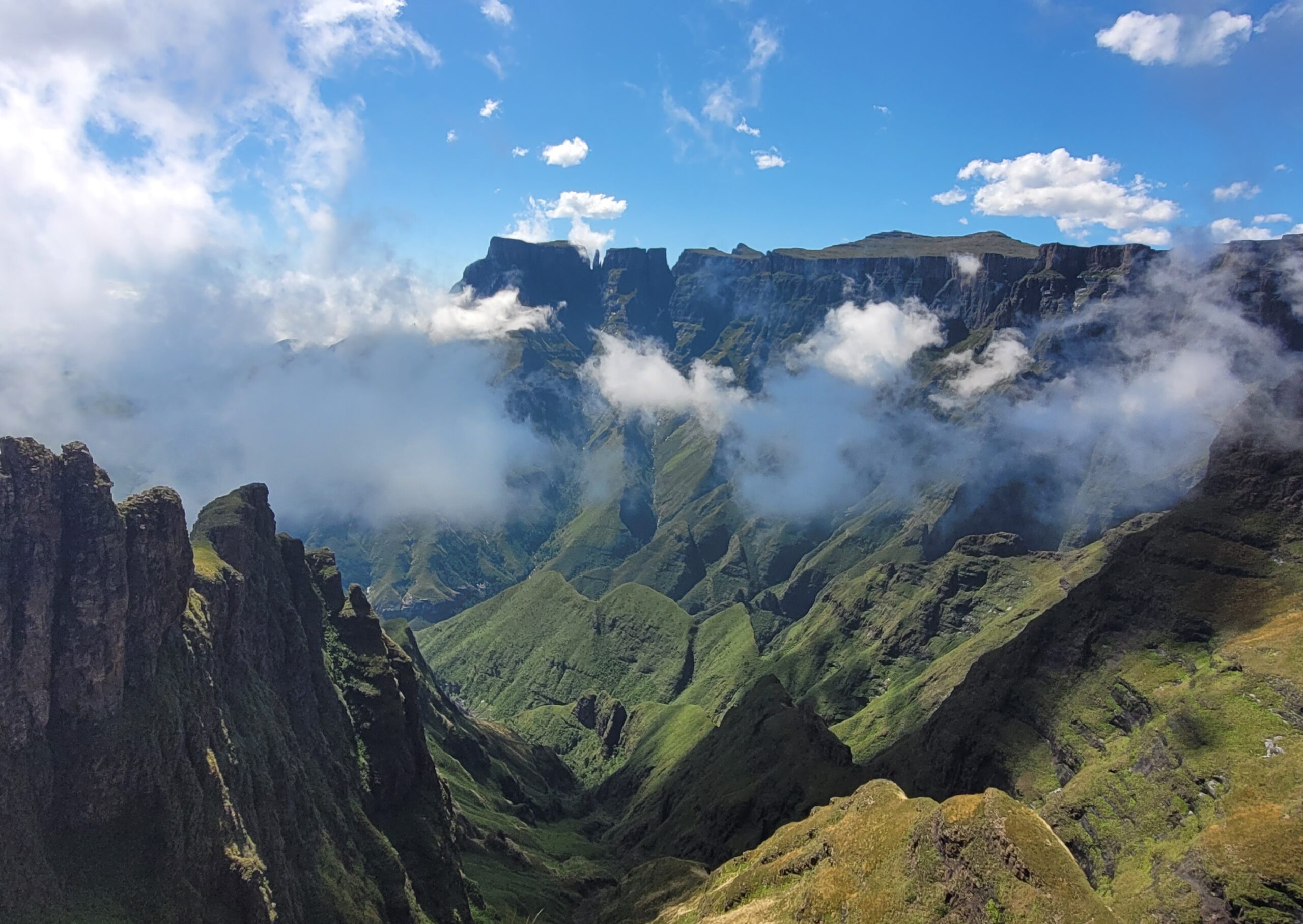
Our Christmas Tradition
It began in Baja, Mexico—our very first Christmas together. Somewhere between the desert heat and the salty air, we wondered, “What if Christmas wasn’t about buying each other gifts, but about doing something meaningful for someone else?.”
So that year, instead of wrapping paper and ribbons, we bought school supplies and donated them to a local teacher. It felt right—simple, thoughtful, and human.
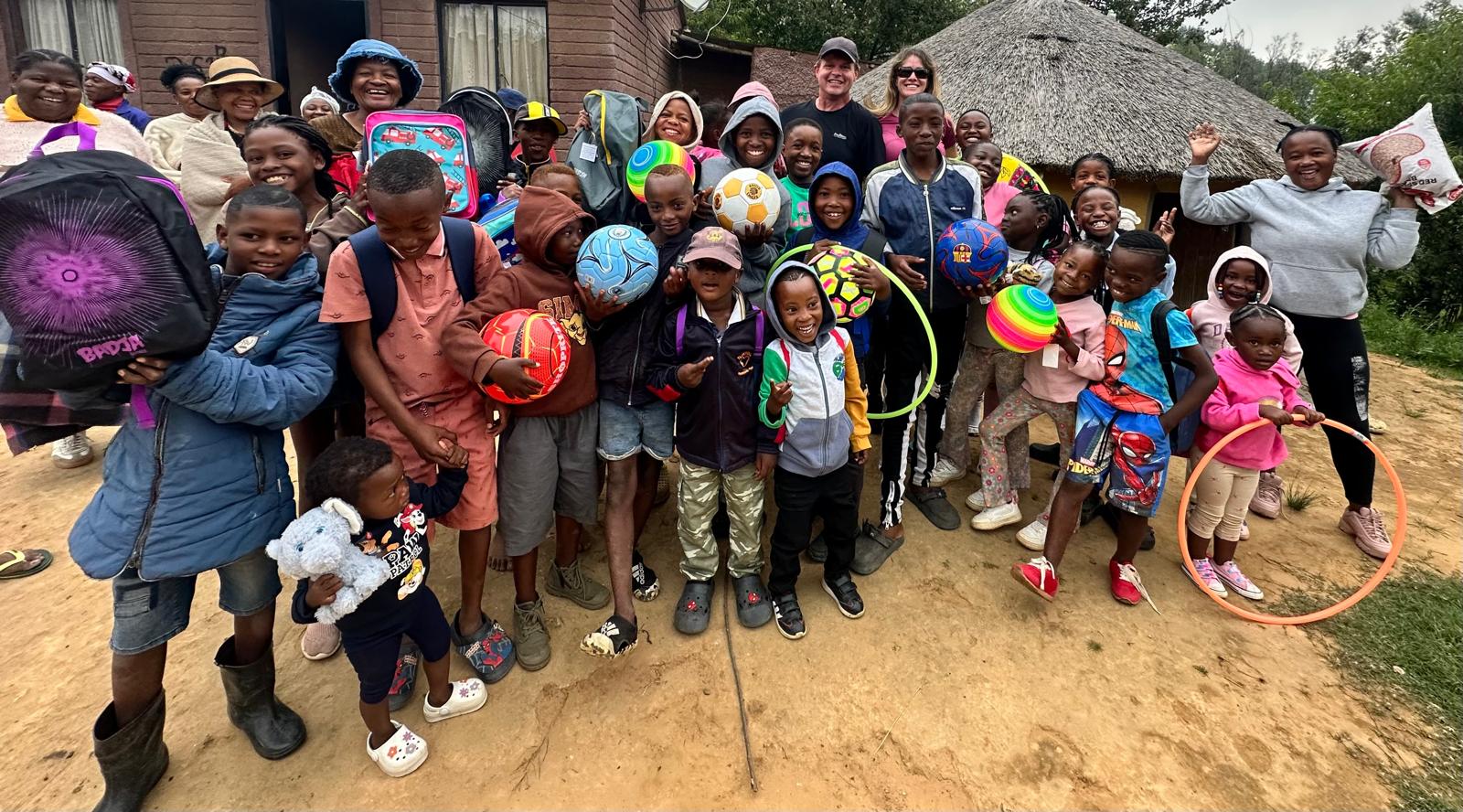
Last Christmas brought us to South Africa’s East Cape, where we stocked up on soccer balls and toys, and we handed them out to children in a nearby Zulu village. It turns out that few things travel better than a soccer ball—it speaks every language.
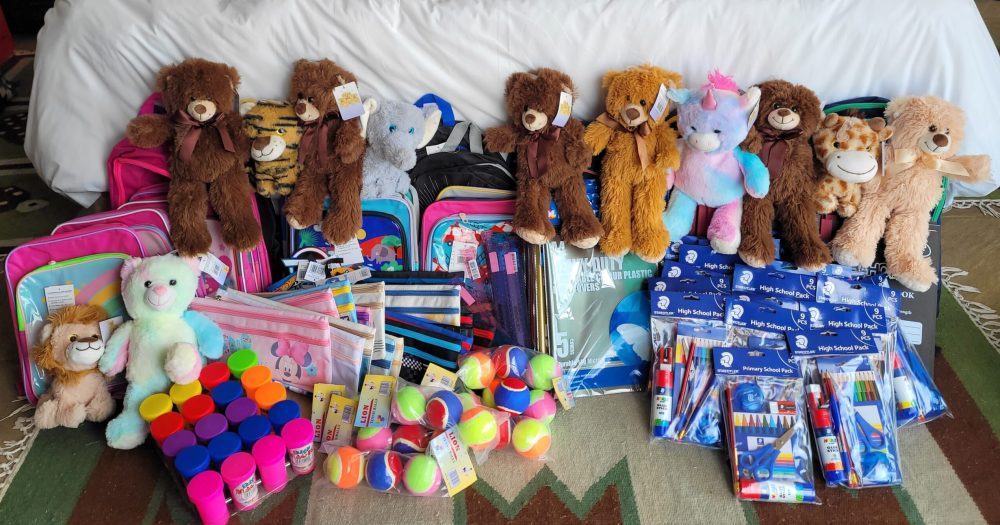
And this year, our Christmas tradition was officially real. This time, we went big:
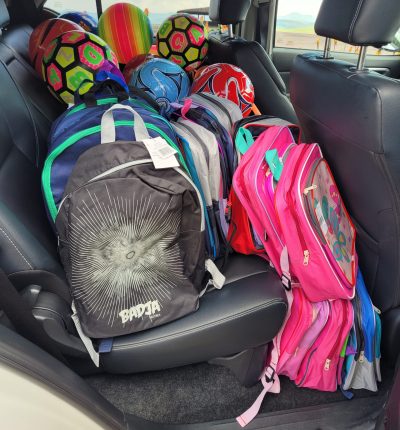
- Backpacks filled with school supplies and everything a student might need—notebooks, pens, book covers, etc.
- Soccer balls (obviously!)
- Stuffed animals
- Food parcels so families wouldn’t go hungry for the holidays
There was just one small challenge—we had no idea where to bring the donations. That’s when we met Lucky—the gate attendant at Witsieshoek Mountain Lodge. Lucky is possibly one of the most appropriately named humans on earth.
We connected instantly. He was curious about ‘these Canadians’ wandering around the mountains near Lesotho, and we were just as curious about life in the nearby villages. When we asked whether he knew of anyone who might appreciate school supplies and toys for Christmas, he didn’t hesitate in saying, “My village would be honoured.”
We thought we’d simply drop things off quietly and slip away. Lucky had other plans.
After his shift, he climbed into our 4×4 and guided us down rugged red dirt tracks to his village—a traditional South African community of round thatched huts (rondavels) tucked at the base of the mountains. Our Toyota Fortuner handled the road like a champ. A regular sedan might still be there today.
When we arrived, the village was singing. Not politely humming— singing with passion! About 50 to 55 people, perhaps with 30 children among them, gathered to welcome us.
To our surprise, some of the children had never seen white people before. One of Lucky’s nieces even admitted she had been afraid of white people until she saw Courtney smile.
Before any gifts could be shared, tradition came first. All of the supplies were laid in front of the spiritual healer’s rondavel. We were dressed in ceremonial garments, including a headdress made from animal skin, and invited inside. While long white candles flickered and incense burned, the village elder beat a handmade drum while women sang and clapped in rhythm.
The healer prayed, as he sought guidance from the ancestors—asking whether this offering was safe, genuine, and good for the village. For nearly an hour, the hut was filled with song, prayer, and the kind of reverence that makes time feel different. Eventually, the healer danced as he announced that the ancestors blessed our gift and it could be accepted.
At one point, a Sotho warrior’s shield and spear were brought forth—symbols of protection for the tribe. It was both ceremony and metaphor—a reminder that caring for the community is an act of strength.
For two Canadians who just thought we were dropping off school supplies, it was deeply humbling. What we intended as a simple act of kindness meant far more than we had imagined.
One of the South African mothers later told us—through Lucky (our translator)—that these things would have been impossible to provide on their own to the children, that these truly were a gift from above. What struck us most was the joy, gratitude, and sense of togetherness — not measured in possessions, but in smiles, songs, and an open-hearted welcome.
And the children? Their bright eyes and huge grins could even warm the Grinch’s heart. At one point, it seemed the entire village decided Courtney was their new favourite person—and honestly, I couldn’t blame them. To call it an emotional experience would be an understatement.
It was a Christmas we will never forget—not because of what we gave, but because of what we received: perspective, connection, and humanity.
Our month has been a reminder that generosity rarely moves in a straight line—it doesn’t begin with one person and simply land with another. Instead, generosity seems to spark at a single point—a simple act, a smile, or a shared meal—and then radiates outward in quiet circles, touching lives in ways we couldn’t have predicted. Somehow, in giving, we find ourselves receiving much more in return.
Our New Czech Friends
As our month unfolded with one meaningful coincidence after another, yet another appeared during our off-road 4×4 drive to the start of the Tugela Falls hike.
Calling it a road feels generous. After recent rains, entire sections had simply surrendered to the water, leaving deep flooded stretches and rocky gullies behind. We crept along the edge of the mountain, the tires hugging the cliff as the track curved sharply ahead, and that’s when we saw them.
Just beyond one of the flooded sections stood four travellers beside their RAV4, all staring silently at the vehicle as though willing it to repair itself. I pulled over, stepped out of our Toyota Fortuner and called out, “It looks like you’re all having a fun day!”
They laughed—the kind of laugh that comes after the moment of panic has passed—and explained that a hidden rock (or perhaps a small boulder masquerading as one) had been lurking beneath the muddy water. The RAV4, brave as it had tried to be, simply didn’t have the clearance for the terrain, and the undercarriage had taken the hit.
As chance would have it, we had exactly four spare seats.
And that is how we met ‘Jerry & Co.’—four Czech travellers from Prague who, within minutes, felt less like strangers and more like companions on a shared adventure. There’s something about a situation like that which instantly bonds you to others, whether it’s the vulnerability, the goodwill, or the unexpected kindness. You skip straight past small talk and land firmly in friendship.
Sometimes the road gives you potholes, floods, and rocks hidden underwater, and sometimes it gives you new friends.
A Look Back to Better See the Future
As I look back over our December, I sometimes wonder how Courtney and I managed to fit everything into the space of a single month. There were moments where the days seemed stitched together into one long ribbon of conversations, journeys, laughter, planning, exploring, and unexpected connections. And yet, through all of it, we never once felt burdened or overwhelmed. Instead, it was as if time graciously expanded to hold the fullness of each experience.
Maybe that’s the pace of life when you’re living nomadically — where each place becomes both temporary and deeply meaningful. There’s a heightened awareness that every encounter is fleeting, every shared story precious, and every goodbye only a “see you later” whispered into the unknown. You begin to lean into the present more fully, because the present is the only constant you have.
Through it all, staying connected has become something sacred. Family remains an anchor — their voices grounding us when everything else feels in motion. Old friends remind us who we’ve been, while new friends meet us where we are now. And somehow, though our lives stretch across continents and time zones, the thread of connection grows stronger rather than weaker.
In many ways, December became less about where we were and more about who we were with — and who we were becoming. It reminded us that the future is often easier to see when we pause long enough to look kindly back at the path behind us, noticing the people, gestures, and generous moments that guided us forward.
And so the journey continues — not in a straight line, but in ever-widening circles of gratitude, curiosity, and quiet generosity, radiating outward from wherever we happen to be standing.


You May Also Like
Newsletter – October 2025
November 7, 2025
Cape Town, South Africa: 5 Fun Things to Do
March 7, 2025